Your Turkey Brine Is Craving Some Pickle Juice
When it comes to turkey-talk, brining is almost always part of the conversation. The process involves soaking a turkey in a heavily salted water solution for a day or two in order to give the meat more flavor and moisture during the cooking process.
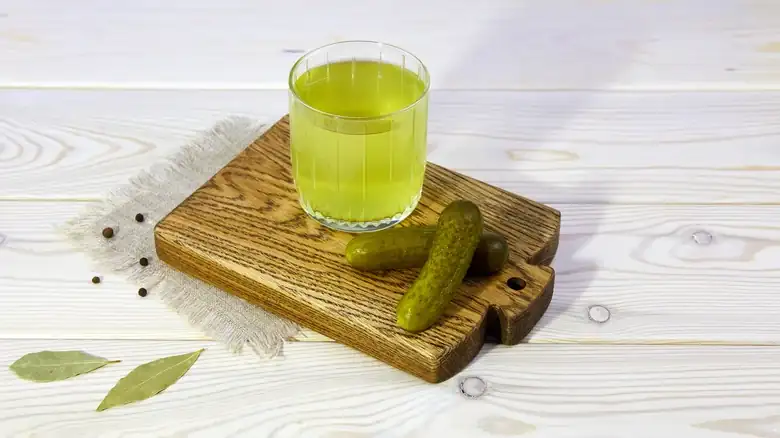
Essentially, pickle brine contains water, vinegar, and salt, so it's just begging to be used as a brine. Typically, it has its own seasoning that will flavor the meat, like dill and garlic — so it could be as simple as pouring pickle brine and water into a large container with your turkey and be done with it — no extra seasonings to deal with. Of course, depending on how large your bird is, you may need quite a lot of brine, so it's a good idea to start stashing away your pickle brine now, and tuck it away in the fridge or freezer until the next holiday or whenever you get the hankering for turkey.
How brining works
Brining is a great method to use on any meat that doesn't contain a lot of fat. Fat makes meat moist and juicy, and lean meats like turkey, chicken, and pork loins just don't naturally contain a lot of it. Brining basically breaks down some of the muscle fibers in lean meats, making them more tender. It also absorbs some of the brining liquid, making it juicier. Of course, because there's a good amount of salt involved, brining will flavor the meat, too.
You'll want to use enough pickle brine to ensure that your turkey is fully submerged, just as you would using a standard water and salt brine. To help with this, plan on placing something large and heavy on top of the bird, like a casserole dish or a Dutch oven lid, to help keep it under the liquid. People use such containers as large stock pots, coolers, large, heavy-duty plastic bags, and really big bowls to place their turkey and brine in. As breast meat tends to be the driest, consider brining your turkey upside down (breast tissue down) to ensure it soaks up all that lovely liquid.
The most important thing is to keep it cold, so be sure you have plenty of room in your fridge to accommodate the container. Once brined, just cook your turkey as you normally would.
What else is craving pickle brine?
Once you experience the wonders that pickle brine can do to your turkey, just think about all its other hidden talents, many of which have been discovered, but perhaps not by you yet. For example, pickle cocktails have seen a major uptick in interest, from a pickle-y bloody mary to pickle-back whiskey shots to dirty martinis made with pickle brine instead of olive brine. Creamy salads get a tasty boost of vinegar flavor when you add pickle brine to them — think chicken, tuna, egg, and potato salads.
When it comes to vegetables, you don't have to settle for boring sautéed or steamed asparagus and carrots. Try adding pickle brine to your saute and steaming your veggies with the brine instead of water. You can substitute pickle brine for vinegar in your homemade salad dressings and even drink it straight-up for one of the best hydration boosts you can get. Not that anyone ever really needs an excuse to buy more pickles, but now you've got several anyway.