Oil Vs Butter: What's The Best Choice For Making French Toast?
Back during the days of the Roman Empire, there was a recipe circling around called "pan dulcis." This is believed to be the earliest version of one of our favorite breakfast dishes, and many are often surprised by these unexpectedly ancient origins of French toast.
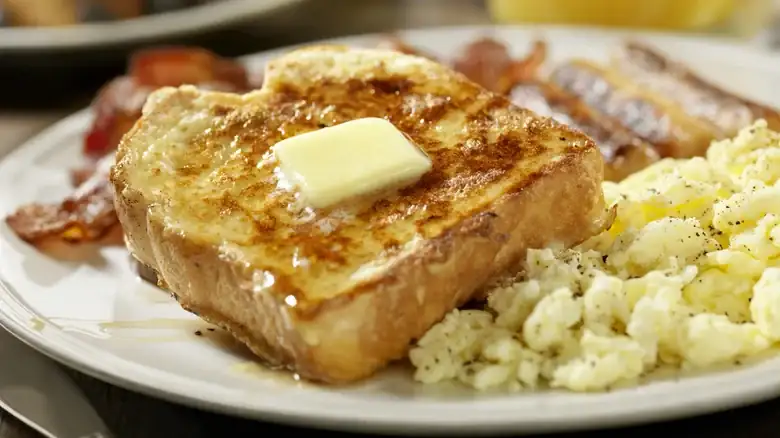
Instead of choosing between one, frying your French toast in butter and oil will result in a perfectly browned exterior. After soaking your bread of choice in the egg, milk, and cinnamon batter, place several tablespoons of butter and just one teaspoon of oil onto your skillet. Turn to a medium-heat setting, and cook away!
Regardless of the oil you use (although canola is ideal since it doesn't interfere with the flavor profile), it will serve as a regulator of the butter's smoke point (which is around 350 degrees Fahrenheit). Therefore, the oil slows down the browning of the butter (avoiding any burning), and creating the most golden French toast you have ever laid your eyes on.
Additional tips to step up your French toast game
Along with frying in butter and oil, there are other tips for achieving drool-worthy French toast. One of the most important features of brilliant French toast is the bread. Duh! The best option out there for French toast is oven-roasted bread. All you need to do is plop slices of bread on a wire rack and bake for 8 minutes on each side at 300 degrees Fahrenheit. This extra step will allow your bread to withstand the egg and milk mixture without getting soggy or mushy.
If you are craving even more texture, there's an extra crunchy step you shouldn't skip for crispy French toast — use coarser bread that's filled with poppy seeds or nuts or try sourdough, which works great because it has more structure. But if you are wanting to stick with the tried-and-true brioche, instead add things like cereal or cornflakes to your batter, which will lead to the ultimate crunch.
As for toppings, the typical French toast you order at a restaurant is adorned with berries, powdered sugar, and maple syrup. But what else is out there? To mix things up, try adding a coat of peanut butter, several slices of bacon, or a sprinkle of coconut flakes. To take a spin on the presentation, test out our Banana-Stuffed French Toast recipe, which involves creating a secret pocket in the bread, filling with the fruit, and then continuing with your normal French toast proceedings.