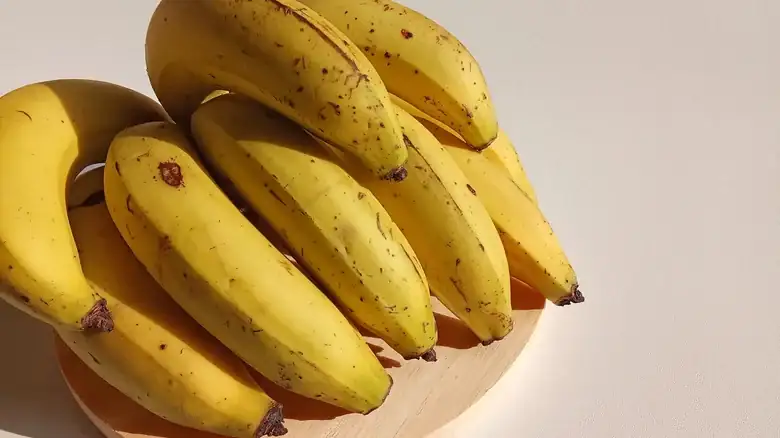
Por qué deberías empezar a envolver tus plátanos con cinta adhesiva al almacenarlos
Conservar los plátanos correctamente no es tarea fácil. Un día están verdes, otro día parecen perfectos, y al siguiente están magullados y marrones por todas partes. Si quieres ralentizar este proceso y mantenerlos en su punto óptimo de maduración durante más tiempo, prueba a envolver los tallos con cinta adhesiva.
Properly storing bananas is no easy feat. One day they're green, another day they seem perfect, and the next they're bruised and brown all over. If you want to slow down this process and keep them at perfect ripeness for longer, try putting tape around the stems.
You may have seen bunches of bananas with taped stems and thought nothing of it. Maybe it keeps the bananas grouped together, or maybe it's just a common practice when packaging bananas. Actually, the tape keeps the bananas ripe for longer by stopping ethylene gas from escaping through the stems. Fruits release ethylene when they ripen, and once the fruit is exposed to that gas, the ripening accelerates.
Bananas left at room temperature will typically ripen in one to five days, and release ethylene through their stems as they do. Within a week, they'll be spotted and browning. But taping the stems could slow this down and make them last a bit longer. You can also use other coverings like plastic wrap or aluminum foil to secure the stems.
Another benefit of taping your banana stems is preserving other fruits you may have around them. Bananas produce a moderate amount of ethylene and are less sensitive to the gas than other fruits like plums, peaches, pears, or melons. If you have any of these more ethylene-sensitive fruits around your un-taped bananas, the gas released from the bananas could cause them to ripen and go bad faster.
Keep your bananas cool to keep them ripe for longer
Bananas ripen quicker in warm temperatures, with their ideal storage temperature around 54 degrees Fahrenheit. This is probably right between your fridge's temperature and your kitchen's temperature, so how you choose to store your bananas will depend on how ripe you like them.
Taping your banana stems isn't the only way to make sure the bunch doesn't go bad. If they're at your preferred ripeness already, cover those stems and put them in the fridge. Keeping them in colder temperatures won't do them any harm, as bananas can actually be frozen (without their peels so they don't get mushy) to help them stay ripe.
If your bananas need to ripen up a little, keep the stems covered and leave them in a cool, dry place away from sunlight and other fruit. Conversely, if you bought a green bunch of bananas and need them to ripen quickly, skip the tape and leave them in a warm place or where sunlight will hit them.
Because bananas ripen so quickly, taping the stems when storing them is a useful habit. And now, next time you're at the supermarket, you can confidently select groups of bananas with tape around their stems.