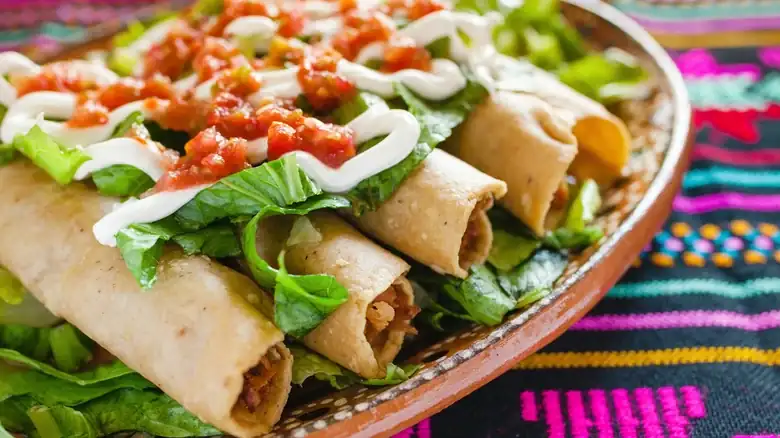
Flautas vs. Taquitos: ¿Cuál es la diferencia?
En el ámbito de la cocina mexicana y tex-mex, algunos platillos son tan similares que los comensales a menudo los confunden. Un ejemplo de esto son las flautas y los taquitos. Si bien estos dos platillos comparten similitudes clave, existen diferencias importantes que los distinguen.
In the realm of Mexican and Tex-Mex cuisine, some dishes are so similar that diners often get them confused. One such case is flautas versus taquitos. While these two foods definitely share key similarities, there are important differences that set them apart. Once you get to know these food relatives — cousins, certainly, or even siblings, but by no means identical twins — it's easier to tell the entree from the appetizer. (Hint: that's one of the main distinguishing differences!)
The confusion that comes into play regarding these two foods is justifiable because the names used to identify them and even their characteristics when prepared can vary by location. Since the strict definition and distinction between the two isn't always honored, who could help but be confused?
Both flautas and taquitos consist of rolled-up tortillas that enclose a filling and are deep-fried (sometimes baked). So, foundationally, they are indeed quite similar. But diving into the details of each dish reveals the telltale differentiators.
Flautas: a more substantial and authentic main dish
One important characteristic that distinguishes flautas is their size — they are typically bigger in terms of girth and also considerably longer than taquitos, reflecting the literal Spanish translation of the word flauta, which is "flute." Flautas are sometimes rolled into a cone shape, with one end being narrower than the other, but a flute-like shape is the norm.
This dish — both larger in stature and more filling than its taquito counterpart — is frequently served as a main entree. Flautas can also be viewed as more authentically a part of Mexican cuisine, as the dish originated in that country.
Flautas generally employ a flour tortilla to enclose their contents, and these larger wrappings facilitate the size difference, more closely resembling the vessels that encase burritos. While various ingredients can be stuffed inside both flautas and taquitos, beef and chicken are the most typical foundational fillings found inside, with the heartier shredded version of the meat most often being used in a flauta. In further keeping with the main dish premise, they can also come filled with other entree-esque proteins, like shrimp. If you're keen to try your hand at cooking them in your own kitchen, leftover rotisserie chicken is the perfect excuse to make flautas at home.
Taquitos: smaller, snack-like, and more Americanized
The origins of the taquito have been traced to California, making it more appropriately a Cal-Mex dish than true Mexican fare. It's shorter and more of a snack-sized food item, in contrast with the more substantial flauta. Taquitos are also most commonly consumed as an appetizer, not the main event — so you're more likely to order several and munch on them by hand, as opposed to receiving them served up as a full meal complete with rice and beans, as you frequently will with flautas.
Insider the smaller taquito you'll generally find ground meat, in comparison with shredded beef or chicken, and this filling is most traditionally packaged inside a smaller corn tortilla, not a large, flour-based wrapper. If you're a vegan or vegetarian, the protein can easily be swapped for something plant-based, as with a baked vegetarian black bean taquitos recipe. If you're opting for a homemade version of the snack, a clever flour tip will seal your taquitos easily. Simply create a slurry with water and flour, and use this substance to secure the rolled edges of your taquitos so they don't open up and spill their contents while frying or baking.