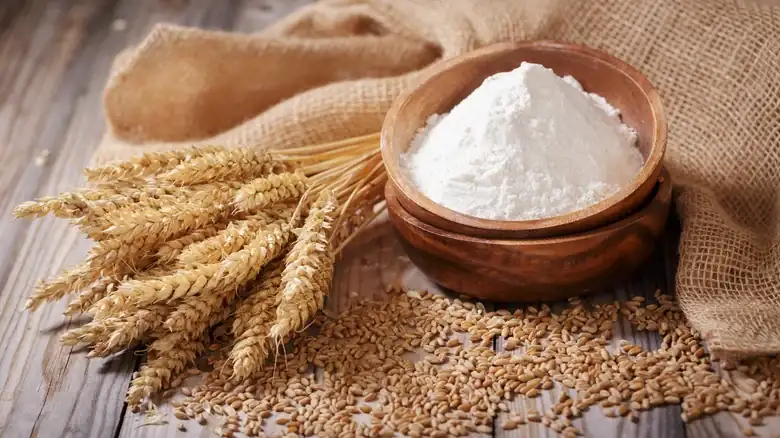
How To Mill Flour At Home Without A Dedicated Miller
Milling your own flour at home is a great way to bake better muffins, breads, and other homemade goodies. Freshly grinding flour from whole grains brings out flavor nuances like nuttiness and sweetness that are absent from store-bought flours. Grinding whole grain kernels also unleashes nutrients.
“You can buy a small countertop mill from brands like KoMo, Mockmill, or WonderMill, or buy a mill attachment for your KitchenAid stand mixer — these will give the finest and most consistent texture.”
If you do want to buy a mill, Guy says, "You can buy a small countertop mill from brands like KoMo, Mockmill, or WonderMill, or buy a mill attachment for your KitchenAid stand mixer — these will give the finest and most consistent texture." Alternatively, "A high-speed blender like a Vitamix, food processor, or even a coffee/spice grinder can work in small batches, though they may not achieve the same fine consistency as a mill... You will probably need to use a sieve or fine-mesh strainer to sift out any larger bits afterwards," she says.
Home-milled flour tips from Jerrelle Guy
When you're milling flour without a specialty appliance, there are some tips to keep in mind to help you achieve desirable results. "If you're going to use a high-speed blender or food processor, over-processing the grains can generate heat and affect the flour's overall quality," Jerrelle Guy cautions. "Work in short bursts to keep things cool."
Since results with an alternative device can vary from what a countertop flour mill delivers, you may need to take some extra steps. "If, after milling, your flour feels too coarse, you may need to re-mill it, or, again, just pass it through a sieve to remove larger bran pieces," Guy explains. To make the sifting process mess-free, use a drinking glass to control the flow of flour into the sieve and keep it from scattering.
Guy adds that a home-milled product also requires slightly different treatment in baking. "[Because] freshly milled flour absorbs more liquid than store-bought, add a little extra water or milk to your dough or batter to keep your baked goods from becoming too dry," she says. Additionally, the same qualities that can make home-ground flour a preferable choice over store-bought also give the homemade product a shorter shelf life. Guy recommends, "Because freshly milled flour can turn rancid faster due to its natural oils, start small and mill only what you need for the next few days."