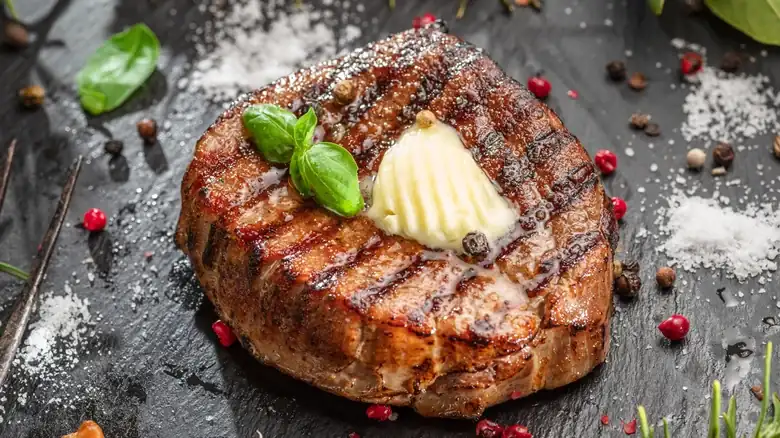
Why Do Chefs Cook Steak With A Knob Of Butter?
There is nothing quite as rewarding as taking a bite of a meal you made yourself and having it taste like it was cooked by a private chef. The key to achieving this, of course, is cooking like the professionals do — and when it comes to making steak, the secret ingredient is a knob of butter. Feeling skeptical?
“When you tilt the pan and spoon hot butter over the steak, it gently cooks the surface, preventing one side from overcooking,”
According to Littley, butter is what takes an average home-cooked steak to the next level. "Butter adds richness and... helps with browning and keeping the steak juicy," Littley says. "As it melts, it mixes with the steak's natural juices, creating a sauce that adds a deep, nutty flavor."
This effect is even more pronounced when you dress up your steak with an herby compound butter, layering extra spices onto the tender, earthy taste. Essentially, the butter acts as a tenderizer, breaking down tough proteins and giving you the ultimate juicy bite. Littley also notes that basting steak with butter promotes even cooking, particularly for thicker cuts.
"When you tilt the pan and spoon hot butter over the steak, it gently cooks the surface, preventing one side from overcooking," he explains. "The butter keeps everything moist, adds flavor, and helps create a delicious golden crust."
Best methods for adding butter to steak
While butter is a great addition, it benefits steak more in some situations than in others. "Filet mignon, ribeye, and New York strip are perfect for basting because they have the right balance of fat and tenderness," Dennis Littley says.
New York strip, in particular, shines when seared in a skillet, and you can use Littley's butter techniques to enhance its flavors. He also points out that "leaner cuts, like filet mignon, don't have much marbling, so butter adds extra richness." Marbling refers to the intramuscular fat that, when cooked, provides extra tenderness — hence where the butter comes in.
Now, you may have noticed that basting with butter almost exclusively applies to cooking steak in a pan or skillet over a stove. Indeed, Littley reminds us that butter isn't always necessary. "If you're grilling over an open flame, butter can burn too quickly because of its low smoke point. Instead, it's better to finish the steak with butter after cooking rather than during."
This aligns with other expert advice on upgrading grilled steak — by adding butter once the steak is off the heat, the juices soak in more slowly, tenderizing the meat and deepening the flavor. "Some steaks, like a well-marbled wagyu, already have so much natural fat that they don't need the extra richness," Littley says. In these cases, he recommends using only a small amount of compound butter or beef fat. But as long as you use the right methods, you can't really go wrong with enhancing your steak with butter.