Sauce Vs Marinade: What's The Difference?
A liquid component adds depth to food, which is why you'll almost always see fine dining restaurants serve meat and vegetables with some sort of purée, chimichurri, or gravy.
There's a blurry line between what ingredients make up a marinade and sauce, so it's best to define each by their function. A marinade is a liquid that covers meat, fruit, or vegetables before cooking, while a sauce is a liquid or semi-liquid added to food during or after cooking. A sauce can simmer with food, be served alongside it, or be poured on top.
When understanding the difference of these components, it helps to know what really happens when you marinate food. A marinade uses oil, seasonings, and an acidic ingredient like lemon or vinegar to tenderize and infuse flavor into food before it hits the pan. The oil coats your dish evenly with flavor and helps with browning, while the acidity tenderizes it.
Are marinades and sauces interchangeable?
Typically, marinades are used before cooking your food, and sauces are used during or after — but that doesn't mean some aren't interchangeable. You can use a marinade as a sauce, but if it has made contact with raw meat, it must be brought to a boiling point to kill bacteria before eating. For example, a red wine steak marinade can be made into a delicious reduction sauce by simmering it with the steak juices and butter. Marinara or Worcestershire sauce can also be used as marinades because they already contain an acid (tomato juice and vinegar, respectively). Dilute them with oil or vinegar to thin the consistency and give your oven-baked chicken a zesty twang.
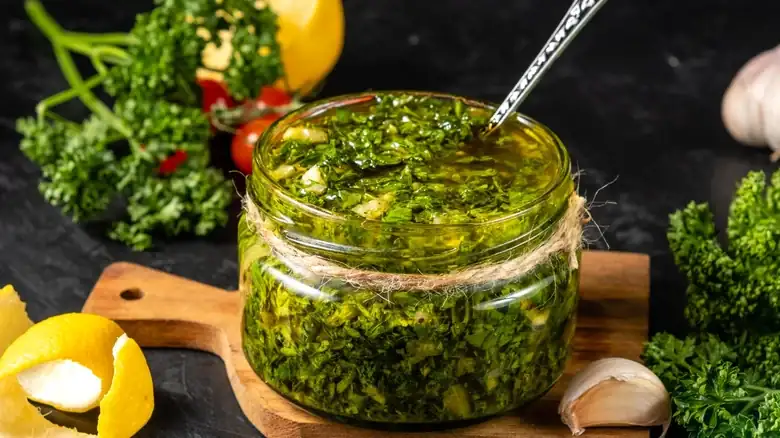
Several sauces and marinades overlap. Chimichurri can sink into a raw steak or be plated with the final dish. Teriyaki (which can be made with only two ingredients) makes a lovely sauce or marinade because it can be applied at any point in the cooking process. Likewise, you can lather smoky homemade barbecue sauce on a pork shoulder before it roasts or use it as a condiment to top off a pulled pork sandwich. There's a world of possibility when making marinades and sauces — the key is to make sure they accentuate the dish you're bringing together.