Por qué debes evitar el pescado azul al preparar ceviche
Pocos platos son un mejor vehículo para el marisco fresco que el ceviche. La vibrante marinada de zumo de cítricos cocina el pescado, reafirmando la carne y conservando sus notas naturales. Es un estilo de cocina de baja intervención que se utiliza tradicionalmente con cualquier pescado fresco.
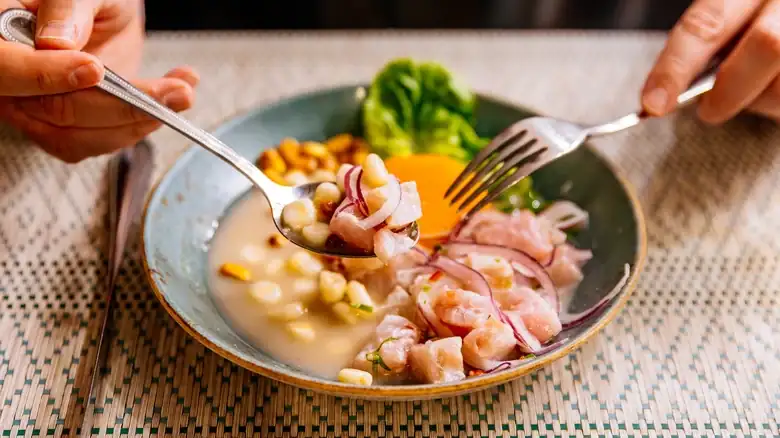
Few dishes are a better vessel for fresh seafood than ceviche. The vibrant citrus juice marinade cooks the fish, firming up the flesh while still preserving natural notes. It's a low-intervention style of cooking that's traditionally used with any fresh catch. The options are expansive, including popular choice sea bass, flat fish like sole, other seafood products such as scallops and octopus, and even mushrooms.
While malleable, you should nevertheless put some thought into choosing the best fish for homemade ceviche. And that means passing on fatty fish — they aren't a good fit for the dish. For one, oily varieties tend to pack in a more intense flavor, which will overpower the zesty and tangy ceviche notes. Plus, oily fish can contribute to an unappealing mouthfeel that decreases enjoyment. And finally, you'll want to stick to lean white-flesh varieties for a firmer texture, that won't turn overly mushy whenever subject to the acid cooking process. So, keep such characteristics in mind, and you'll get a tastier ceviche as a result.
The texture and flavor of oily fish creates unappetizing ceviche
Oily fish come in many varieties. Definitely steer clear of small marine varieties like herring, anchovies, and sardines; they contain among the highest fat content. Furthermore, species in the mackerel and bluefish umbrella aren't a good call either — save them for grilling and smoking contexts. And while a few tailored recipes exist, salmon leans a bit too strongly flavored, and tuna's too fatty for ceviche applications. Sometimes, chefs will add a small amount of such oily fish for flavor, but generally employ a different variety as the ceviche base.
Generally, white-flesh varieties are preferred — you'll want a fish that's well predisposed to the acid style of cooking. And keep in mind you'll also want to avoid buying fish that's sourced from freshwater and is stale. Make a selection with care, the flavors and texture of the ceviche will pay off in multitude with this dish type. And if you're unsure regarding what's sold at the counter, remember to ask a friendly fishmonger.