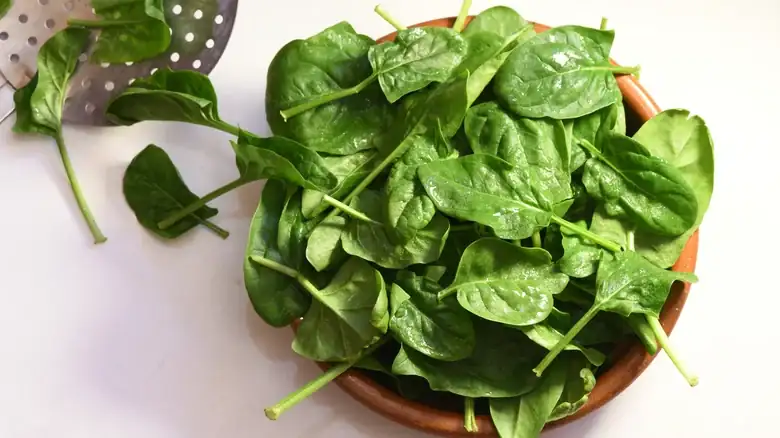
Tu guía infalible para lavar espinacas
Las verduras de hoja verde se encuentran entre los grupos de alimentos más ricos en nutrientes que existen. Verduras como la col rizada, la rúcula y la lechuga son sin duda estrellas brillantes en esta categoría, y por supuesto, la verdura por excelencia, la espinaca, tampoco puede pasar desapercibida.
Leafy greens are among the most nutrient-dense food groups to exist. Produce like kale, arugula, and lettuce are no doubt shining stars in this category, and of course, the quintessential vegetable, spinach, can't go without mention either. Spinach is chock-full of vitamins and nutrients like vitamin A, vitamin K, magnesium, potassium, and folate. However, these copious benefits can be rendered useless if they're overpowered by bacteria growth. And the chances of that occurring aren't impossible, especially if you're not washing your spinach properly. After all, leafy greens are one of the most recalled food items.
Spinach has no outer layers, such as peels or rinds, to protect it from dirt. This makes it much easier for germs to work its way into the veggie's crinkles. Not to mention, spinach is grown in soil, which can easily cling onto your produce and last all the way from the grocery store to your kitchen countertop. This is why it's generally advised for people to rinse certain produce before cooking and consumption, as even buying good-quality spinach isn't guaranteed to ward off the possibility of food poisoning from bacteria like E. coli, salmonella, and listeria.
How to properly wash spinach
Thankfully, cleaning spinach takes very little time out of the preparation process, so it won't take too long before you can get started on that high-protein spinach and artichoke dip or lasagna verde. But before you can begin, a crucial step would be to thoroughly wash your own hands to limit the transfer of bacteria. You should then pick out any pieces among the bag or container that are damaged. This includes any spinach that is slimy, moldy, brown, wilting, or has holes.
From there, place your spinach in a bowl filled with cold water. Submerge and swish the contents around, allowing for any dirt to come loose. You can let the vegetables sit in the bowl for a few minutes to provide more time for more stubborn debris to come off, though it's not required. Then, transfer the spinach into a colander where you'll rinse it again under cool running water. Lastly, gently pat the spinach dry with a paper towel and remove the stems if desired.