Why smoked turkey legs remind you of pork
Smoked turkey legs are fascinating for their originality and flavor. But anyone who tries them at a fair might briefly wonder if they ordered pork by mistake: the sensory similarity is unsettling.
The answer lies in the preparation. The leg is first cured in brine, which draws out moisture, breaks down proteins, and tenderizes the meat. This key step is fundamental to the distinctive texture reminiscent of ham.
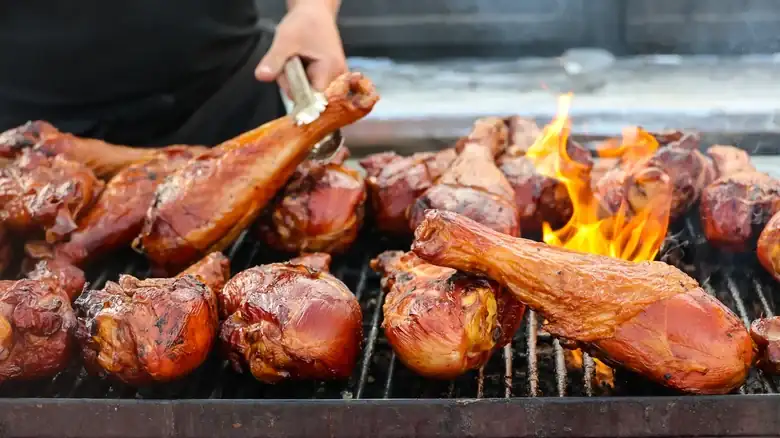
Wet curing involves the addition of sodium nitrite, a preservative used in products like sausages and bacon. This compound accentuates similarities in both flavor and color: the meat takes on a pinkish hue, a characteristic that intensifies the initial confusion.
Smoking marks the second crucial stage. Common in ham and bacon, it not only creates an irresistible aroma but also a deliciously crispy rind. It intensifies the pink color and imparts a distinctive flavor, more commonly associated with pork than poultry.
These steps transform a chicken leg into a delicacy reminiscent of cured pork. Typical fairground dishes that seem physically impossible find their explanation in this process. If more cooks prepared turkey using this smoking method, this bird would have many more fans.