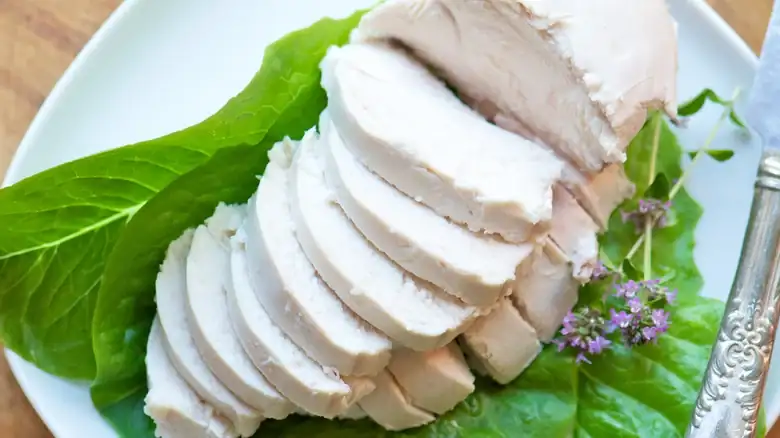
La clave para escalfar pollo sin que quede gomoso
El pollo brilla en una variedad de métodos de preparación. Asa a la parrilla, dora, hornea o fríe la proteína, y podrás disfrutar de un plato delicioso. Sin embargo, hay otra técnica que a menudo no recibe el aprecio que merece: el escalfado.
Chicken shines in a variety of preparation methods. Grill, sear, roast, or fry the protein, and you'll be able to enjoy a delicious dish. Yet there's another technique that often doesn't get the love it deserves — poaching. Sure, it doesn't require a captivating flame, nor do aesthetic sear marks or colored caramelization appear on the chicken. And many home cooks fear the dreaded rubbery kind of meat that can result from the technique.
However, knowing how to poach chicken so it tastes good results in a tender texture that simply delights. Most crucially, you'll want to keep an eye on the temperature of both the chicken and the water bath. Too often, cooks throw the raw meat into boiling water, and then visually judge doneness — a fast track to a rubbery consistency.
Instead, start by placing the chicken in cold water, and gradually start simmering. Keep a thermometer in the vessel, maintaining the temperature at the intended internal doneness; around 160 degrees Fahrenheit for white meat. It's fine if the water becomes warmer, but avoid anything close to boiling territory, as this will lead to a tough texture. Then, test the chicken for doneness by probing with the thermometer. Once it's 5 to 10 degrees below the ideal temperature, remove the meat, rest for several minutes (it will continue to rise to 160 degrees even after it's removed from the heat). Then simply slice it for serving.
Patiently poach chicken low and slow to avoid a rubbery texture
Overcooking is the most common culprit for unpalatable poached chicken — it's simply too easy for poaching liquid to get excessively hot. Nevertheless, it's not the only reason that chicken turns rubbery. Such an unsavoury texture is also possible due to not enough time in the cooking liquid; undercooked meat will be elastic-like and off-colored. And in this case, the chicken might spread foodborne illness, too — all the more reason to invest in a thermometer.
Additionally, a rubber texture can occur when you purchase low-quality meat. Referred to colloquially as woody chicken breast, some chicken breast is more fibrous in texture, no matter how the bird's cooked. No one's quite sure why this happens, but overly-fast growth, chicken age, and volume all contribute — a reason why Ina Garten recommends smaller chickens. As a result, stick to organic, modest sized chicken when poaching. Plus, smaller cuts require a shorter cooking duration, aiding cooking.
Once your poultry's purchased and the proper method is in place, poaching becomes a dependable technique. It's the best cooking method for effortless shredded chicken, letting you easily rework the protein into a further range of applications. As a blank canvas for flavor pairings, your succulent poached chicken will be ready for diverse dish options.