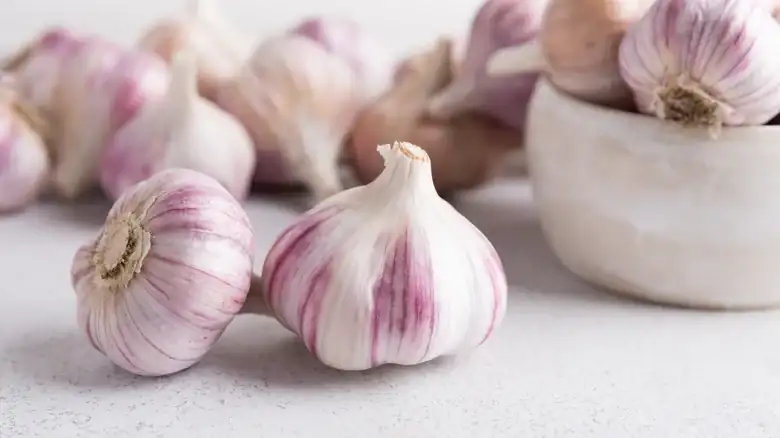
Por qué no debes guardar los bulbos de ajo en el refrigerador
Si te encanta el pan de ajo con un sabor intenso, las gambas al limón y ajo o el puré de patatas con un toque de ajo tan pronunciado de Julia Child, seguramente tienes a mano muchos de estos ajos. Sin embargo, si los guardas en la nevera, es hora de dejar de hacerlo.
If you're a fan of ultra-flavorful garlic bread, lemon-garlic shrimp or Julia Child's absurdly garlic-forward mashed potatoes, chances are you have plenty of this allium on hand. However, if you're tossing those bulbs in the refrigerator, it's time to stop. Storing garlic in the fridge is unsafe and can threaten its taste, a flub that puts all your beloved garlicky dishes at risk.
Storage mistakes can ruin your food, and while some produce should be stored in the crisper drawer of your refrigerator, garlic isn't one of them. When left in the cold fridge, garlic can quickly sprout. Those sprightly green shoots aren't dangerous to eat, but once you see them poking through, the garlic's flavor has arguably become more pungent and bitter. Cornell University also cautions against storing garlic in the refrigerator, as it is susceptible to Clostridium botulinum, the bacteria responsible for botulism. Luckily, storing garlic correctly can prolong its shelf life and preserve its flavor.
How to store garlic correctly
Unpeeled garlic should be stored at around 60 degrees. When kept in a cool, dry environment, whole bulbs can hold up for months. You should keep it in a dark, room-temperature location in your pantry or kitchen. A mesh produce bag (the kind grocery store garlic is sold in) or wire baskets serve as optimal storage options for unpeeled bulbs.
To stash away large quantities, get creative and freeze whole bulbs or chopped cloves, dry it into a powder, simmer up a confit, submerge it in vinegar or wine, or roast and refrigerate it to add rich, caramelized flavor to mashed potatoes later. After storing garlic in wine or vinegar, you can cook with both the veggie and the liquid to amp up savory pasta dishes. You can also use garlic confit to add extra flavor to winter soups and plates of scrambled eggs.