The Asian root used in plant-based shrimp
In our modern world of meat alternatives, we can eat carrot-based bacon, jackfruit-based BBQ pulled pork, and sausages made from seitan. So, what should we use for shrimp?
In our modern world of meat alternatives, we can eat carrot-based bacon, jackfruit-based BBQ pulled pork, and sausages made from seitan. So, what should we use for shrimp? Seafood in general can be harder to mimic for vegan alternatives: fish fillets, lobster, and shrimp tend to have a more delicate texture and flavor than meat. It's easy enough to grind beans, vegetables, and spices to make a pretty decent veggie burger, but seafood requires a bit more creativity. Hearts of palm can be a good substitute for lobster, but shrimp can be more difficult to achieve. This is where konjac root comes in, the secret ingredient for making plant-based shrimp.
Konjac isn't a root vegetable you'd typically find in American supermarkets next to beets. It originates from Asia, specifically China, Japan, and Southeast Asia. In this region, it's used for both medicinal and culinary purposes. It's generally boiled until it forms a gelatinous, bland block, which is then seasoned and eaten on its own or added to desserts and soups. Konjac powder or flour can also be used to make noodles. What makes this product nutritious is glucomannan, a water-soluble fiber that aids digestion, improves gut health, and promotes a feeling of fullness.
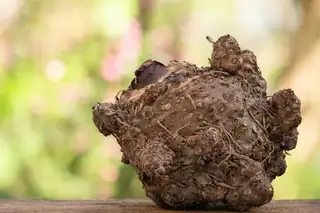
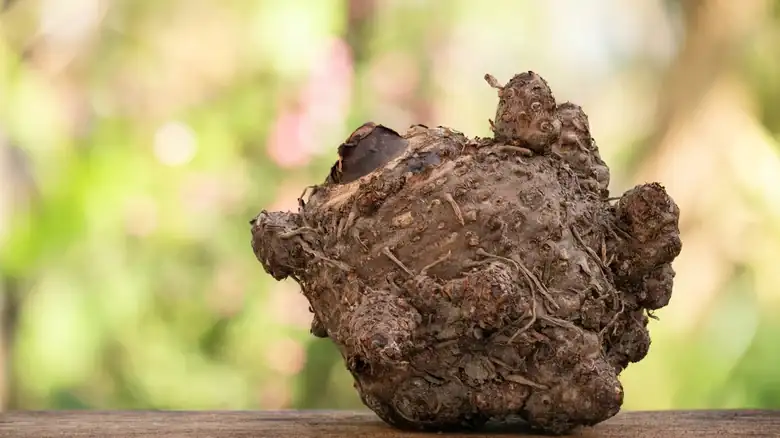
This raw root is rather peculiar. It has a rough, knobby, earthy surface, reminiscent of a darker version of celeriac or a firmer potato. Although not found in the produce section, this root is used in low-carb, keto, and gluten-free products. You may have seen products called "miracle noodles": these are carb-free noodles made from konjac root.
How konjac root becomes vegan shrimp
The gelatinous texture of konjac root makes it the perfect ingredient for creating shrimp alternatives. Raw shrimp has an almost gelatinous texture, and when cooked, it remains firm and pliable. Only if overcooked does the texture become rubbery or dense. Konjac root is naturally gelatinous and retains an elastic and pliable texture when cooked. In addition to preparing shrimp, it can be used to make other seafood alternatives, such as squid or scallops, or even a steak. If ingredients like tofu or pea protein were used to make plant-based shrimp, the result would likely be a dense and firm product. One drawback of konjac is that it contains no protein, unlike some other popular ingredients in vegan alternatives.
Because konjac is bland, it's easy to add flavors to mimic the seafood taste of shrimp. On its own, shrimp flavor isn't the most complex among seafood. It has a salty, umami taste that can be replicated with plant-based ingredients. Seaweed provides a salty flavor, while yeast or added flavorings contribute umami. Several companies make plant-based shrimp from konjac root, such as ISH, Plant Based Seafood Co. and Lily's Vegan Pantry. These companies use konjac powder or flour, along with other ingredients like starches and vegetable gums, to achieve the right, shrimp-like texture.