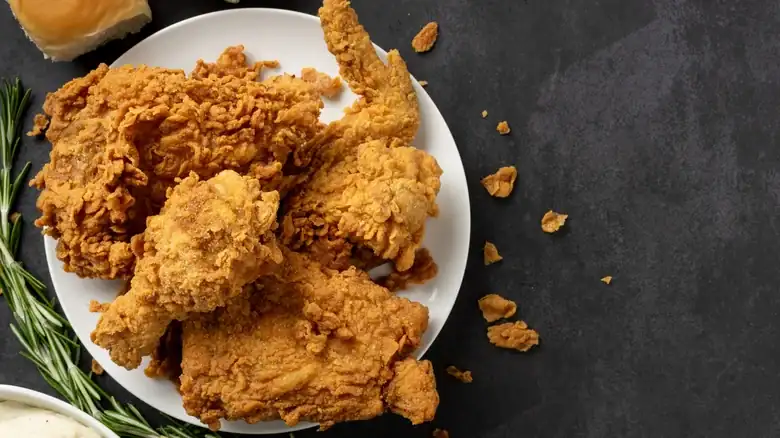
El error de última hora que arruina la piel de pollo perfectamente crujiente
Si te has animado a freír pollo o a preparar una pechuga de pollo crujiente a la plancha, o incluso has intentado hacer una piel de pollo confitada increíblemente crujiente, harás lo que sea para proteger esa corteza exterior crujiente, ¿verdad? Claro que sí.
If you've taken the plunge (into hot oil) and made your own fried chicken or a pan-seared crispy chicken breast — or even tried your hand at shatteringly crisp confit chicken skin – you'll do anything to protect that crunchy outer crust, right? Right. After spending time perfecting your meal, you'll want to ensure that the interior of your bird is moist and succulent with the outside crunchy and crispy.
But after removing your chicken from the hot pan, you'll want to let it rest. And you've likely rested the majority of your cooked mains by draping aluminum foil over the top to keep everything hot and toasty before you serve. But doing so could ruin all of your hard work.
Say no to foil
When you drape foil over your perfect fried chicken, you create a sort of sweat lodge for your meat. Doing so results in steam generated from the hot chicken pushing that hot air up on to your cover or tin foil. Boom, condensation. That wetness is going to dribble back down on to your chicken, slowly making that crispy skin less and less crispy.
So, how can you retain that crunchy, crispy skin while letting your chicken rest and letting it stay hot while you get the rest of your meal together? You could use the warming element in your oven and let your chicken hang out in the there, uncovered, until the rest of your meal is ready. The temperature shouldn't be more than 250 degrees Fahrenheit; just enough to keep things toasty without adding moisture to that delicious, crunchy skin. You can also cool your chicken on a wire rack, which will let air circulate around the chicken, cooling it without adding any moisture. Whatever you do, we trust you'll take the necessary steps to not ruin your hard work.