¿Qué significa llevar el agua a ebullición?
Anoche, mientras ponía a calentar agua para los linguini que acompañarían a unos camarones picantes con mantequilla de ajo y limón, me detuve un momento a observar la olla. Así que nunca llegó a hervir. Bromas aparte, pareció que tardó una eternidad.
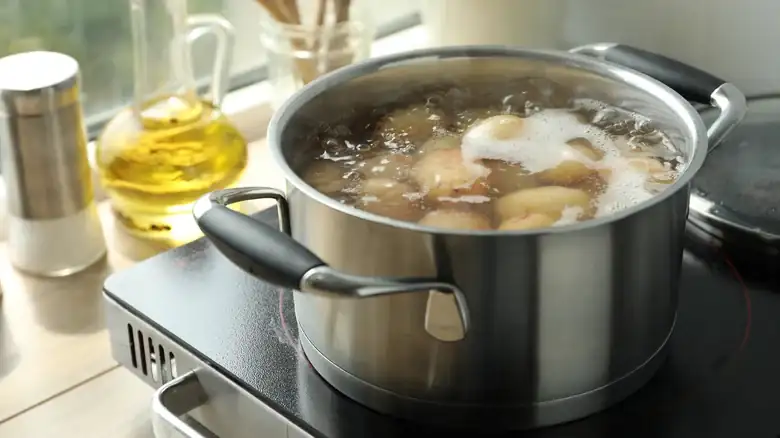
Last night, as I began to heat water for linguini to accompany a spicy lemon garlic butter shrimp, I really took a moment to watch the pot. So it never boiled. Jokes aside, it did seem to take forever. And while I waited, I paid close attention to the water's ascending levels of animation. Straight from the tap, it was still, set to high on a gas burner. A few minutes later, little bubbles like you'd see in a flattening flute of Champagne began drunkenly tumbling upward. At 185 degrees Fahrenheit, around the same temperature as, say, a cup of tea, air was just beginning to escape, creating a simmer. Those tiny bubbles turned into bigger bubbles, like a snorkeler might produce, a stage sometimes called a rapid simmer (about 205 degrees Fahrenheit). A full boil followed, with the classic cartoon cadence caused when the water reaches 212 degrees Fahrenheit. A full boil is also known as the "rolling boil" that factors into so many recipes, with the rapid agitation of the water caused by the consistent high temperature that forces out more and more air.
Like, say, a pan sauce reduction, you'll know a rolling boil when you see it. What were once distinct vapor spheres now seem to move in symphony, a tumbling churn like you might imagine in a witch's roiling brew. You can also just check the temperature. This higher heat is best for holding that temperature as ingredients are introduced.
Why rapid bubbles matter in a rolling boil and how long they take to achieve
You should take a recipe's boiling directions as seriously as you would any other temperature instruction. Last night's pasta, for example, needed a rolling boil to cook through and even bounce the pasta around a bit to keep the strands from sticking together. Its sauce, however, was only required to simmer. Had I swapped those two temps, the linguini would have failed to finish, likely congealing in the process, and the sauce would have reduced far past the half I was looking to evaporate. As seemingly simple as it is, failing to reach a proper boil is one of the most common pasta mistakes one can make.
The length of time it takes to reach a rolling boil will vary based on the quantity of water you're working with, your pot size and material, your heat source, and even environmental factors like altitude. However, contrary to myth, cold water does not boil any faster. And if you've exceeded 10 minutes with no rolling boil, you might want to check your flame, as that H2O should really be rocking by then under most circumstances.