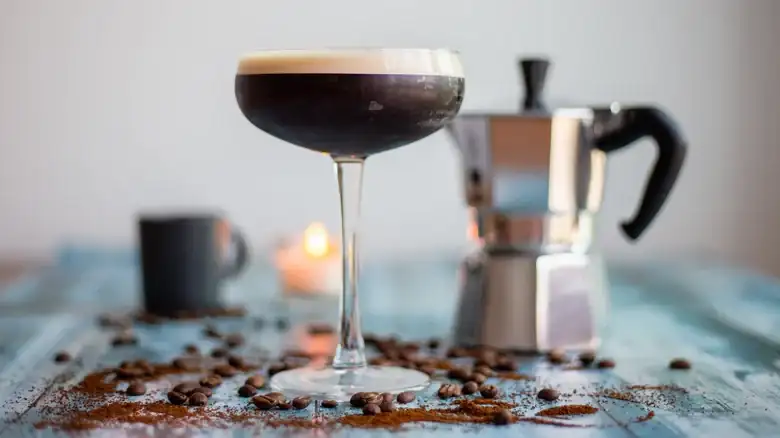
Hacer tu propio licor de café es mucho más fácil de lo que piensas
El espresso martini está de moda. Parece que todos los bares y cocteleros caseros tienen su propia versión, ya sea la clásica o alguna variación (como el espresso martini Winter Woods).
The espresso martini is having a moment. It seems as if every bar or home mixologist has a version, whether it's a classic or variation (like a Winter Woods espresso martini). It's also the perfect cocktail to make with Guinness draught, and even Alton Brown has his own take on the espresso martini which comes with a unique twist.
But at the core of your martini is an ingredient that is also quite delicious all on its own — coffee liqueur. And believe it or not, you can make this stuff at home pretty simply — if you've brewed coffee and boiled water, you can probably pull this off no problem. All you have to do is start by bringing sugar and water to a boil and then reducing it down to a simple syrup by simmering. Once you've got this sweet stuff prepared, it's time to introduce a coffee element.
Some recipes call for instant coffee, while others recommend brewed. If you intend to use the former, be sure to add it as soon as you remove the simple syrup from the heat so that it dissolves properly. You'll also typically need less instant coffee by volume than brewed, although you can adjust the amount of coffee to your taste and needs as you experiment (which gives you a point of personalization for your liqueur). Once your coffee component is in the mix, simply add the alcohol — along with any flavors that speak to you.
Customizing your coffee liqueur
Being able to customize the coffee liqueur is a major perk of making your own at home. Some commercial iterations can be cloying, so you can take control of the sweetness factor in addition to the coffee level. Try out different amounts of simple syrup, or instead of white sugar, use brown, which will contribute a molasses-y depth.
You can also decide which alcohol will best suit your needs and taste. Vodka or grain alcohol will be the most neutral, which means it won't interfere or influence your finished product much. With that said, you may opt for something with a bit more personality, like bourbon or rum. Vanilla will be a flavor booster (as it is in all its applications) and you can either choose to use an extract, or if you're up for a touch more work, scrape a bean pod into the liquid (which also leaves those delightful flecks suspended in your drink). And much like coffee itself, you can give your liqueur a little character from extracts like hazelnut or almond — or even peppermint or pumpkin to mimic those seasonal favorites.
Once you've landed on your flavor profile and elements, package up your liqueur in clean containers. Some schools of thought will allow you to dive right in, while others suggest waiting a few days or weeks for flavors to meld and infuse. Either way, this caffeinated cocktail staple is a simple but super impressive party trick.