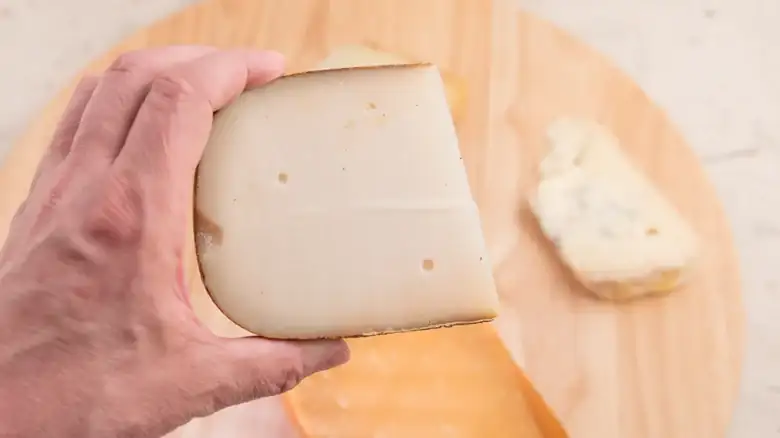
The Key Signs Your Goat Cheese Has Gone Bad
Whether you want to add a luxuriously creamy touch to a burger, give a tangy twist to pizza, or improve a peanut butter sandwich, goat cheese makes a great go-to. Often referred to as chèvre (which means "goat" in French), the versatile product clearly deserves a spot in your fridge — but for how long?
Another clue that goat cheese has gone bad is that it will also look bad. If you see dots of black, green, or blue, mold has set up house in your chèvre. Those noxious dots might also be encased inside cheese that has turned from white to yellow. If it has changed colors, take this as another sign to toss it.
It probably goes without saying that if your creamy cheese has turned to crumbling marble on you, it isn't fit to eat, either. Conversely, it could take on a slimy appearance and texture when no longer edible. When you squeeze the package, the cheese should have a firm texture. If it has turned mushy and even watery, that's a bad sign.
How to preserve your goat cheese
Left unopened in the manufacturer's packaging, chèvre will sidestep many of the spoilage issues highlighted above for about two months. Once you open the cheese, that time window slides way down to one to two weeks. All of this is to say, chèvre isn't meant to be bought up when it goes on sale and added to the bulk cheese pile in your fridge. It ought to be enjoyed right away, so don't make it so precious that it goes bad before you can eat it.
After opening the package, you'll need to take some steps to prevent it from getting slimy. It shouldn't be wrapped up directly in plastic wrap. Instead, you should wrap it in some wax paper and then seal it up in some plastic wrap.
A lidded plastic or glass container also works, but don't skip out on the wax paper (or parchment paper) if you go this route. The wax paper allows the cheese to breathe, which is a key component to keeping it un-yellow, un-slimy, and un-moldy until you're ready to eat the rest of it.