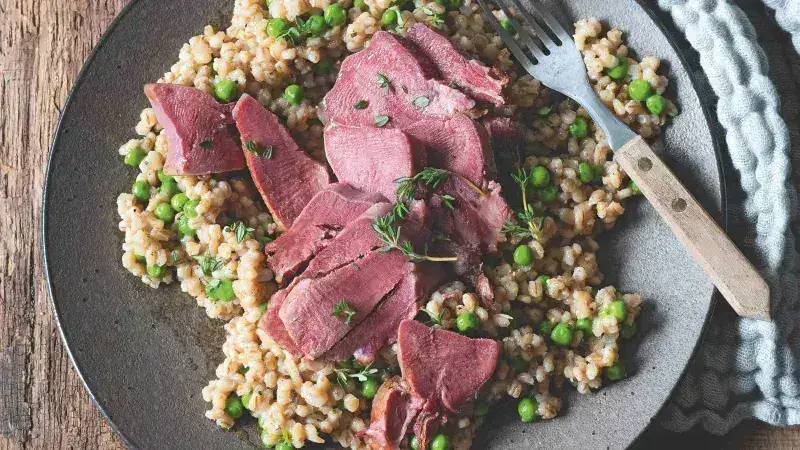
Pork tongue with pea porridge
La lengua de cerdo tarda mucho en cocinarse, y una vez cocinada, hay que pelarla, al igual que la lengua ahumada. Su textura es delicada. Es una pieza versátil que se puede cortar en rodajas y comer sola, con salsa o frita. Cocinamos la lengua ahumada y le añadimos sémola y guisantes.
Ingredientes · Raciones For 4 people
- 800 g pork tongue
- 1 onion
- 1 bay leaf
- 5 balls of allspice
- 5 whole peppercorns
- 1 sprig thyme
- 1 tbsp pork lard
- 1 onion
- 300 g of groats
- 100 ml white wine
- 1 liter of broth
- 1 tsp marjoram (rubbed)
- 2 cloves garlic
- 300 g sugar snap peas
Método · 1 h 25 min
- Cover the tongue with plenty of cold water, add salt, onion, and spices, and cook until soft - this takes about 40 minutes in a pressure cooker.
- Remove the tongue from the broth and place it in cold water; this will make it easier to peel.
- Heat the lard in a saucepan and fry the onion until translucent. Add the drained groats and fry for a while, then pour in the wine and let it boil. Then add 300 ml of broth, salt, stir and bring to the boil. Cook without a lid for 10 minutes, then remove and add broth as for risotto until the groats are soft. Peel the tongue from root to tip, put it back in the broth if there is any left and heat it in it. If there is no broth left, heat the tongue over steam.
- Stir the marjoram and garlic into the gravy. Add the peas and heat through. Slice the tongue and serve with the gravy sprinkled with thyme leaves.
Pork tongue takes a long time to cook, and the finished meat must be peeled, which also applies to smoked tongue. The consistency of the meat is delicate. It is a versatile piece that can be sliced and eaten as is, with sauce or fried after cooking. We cooked the smoked tongue and added groats and peas. We haven't enjoyed it like this in a long time.