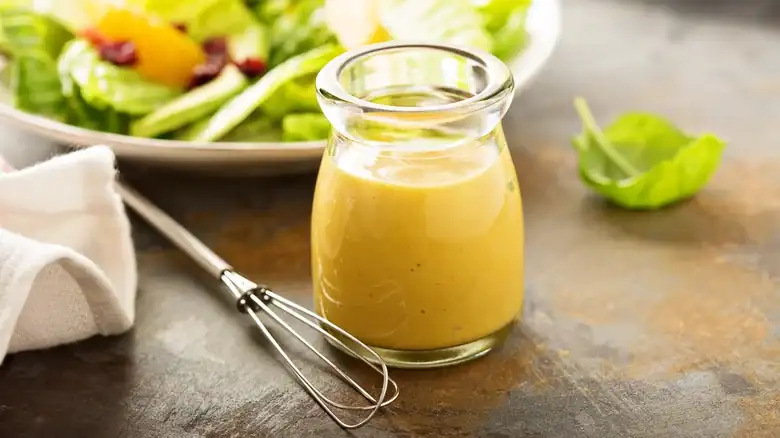
Boost The Flavor Of Vinaigrettes Using A Liquid Primarily Used In Booze
You know how a bottle of bitters seems to last so long? Turns out there's a lot more you could be doing with that vial of Angostura or Peychaud's than simply using it in classic cocktails like a martini or a Sazerac. Bitters are herbal extracts that are crucial in several cocktails.
While there are a few iconic bitters like the ones mentioned above, you can now get a staggering variety of both alcohol and nonalcoholic bitters. There are some with strong citrus or spice notes, others with deep herbaceous aromas, and even walnut and cacao-flavored ones. Combined with all the different types of vinegar you can use to make a vinaigrette, from apple cider to sherry vinegar to rich balsamic vinegar, which is sometimes confused for a vinaigrette itself. Start with a variety pack like the Strongwater Cocktail Bitters Sampler Set so you can try different combinations, and also have bitters with different flavor profiles to match with whatever salad you plan on making.
Cocktail bitters add instant complexity and aroma to vinaigrettes
A vinaigrette is essentially an emulsion of oil and vinegar with salt, pepper, and myriad flavoring ingredients. Mustard is a commonly used ingredient, but more than flavor, it actually helps prevent the oil and vinegar from separating. Bitters are water-soluble (since they are meant to be mixed into cocktails) and should therefore be added to the vinaigrette along with the vinegar, oil, and emulsifier (like mustard) to form a smooth emulsion. Due to their potency, a small amount goes a long way. It's good to start small and then add more after taste-testing the vinaigrette. As a good starting point, use a teaspoon of Angostura bitters for about a cup of vinaigrette.
Now comes the fun part, pairing bitters with salads. Fruity and relatively lighter-flavored bitters are good for sprucing up summer salads. Orange bitters are particularly delicious in any salad that uses citrus flavors. More intense varieties like Angostura can go both ways — they add delicious contrast to a sweet fruit salad, but also bring depth to hearty bowls of salad that incorporate roasted meats and vegetables. A dash of smoky bitters can do wonders in a herbed potato salad. Finally, some bitters have very specific notes, like cardamom or cacao, that don't pair well with just anything and you should start by using them in salads that already have similar flavors. As a finishing touch, level up your salad game by using chilled plates to serve your bitters-infused creations.