Ready-to-drink products are growing by double digits. Italy discovers ready-to-drink
While alcohol consumption is declining, premixed drinks are a growing segment. Among large groups and small producers, an Italian rush to produce canned and bottled cocktails is emerging, with an increasingly focused focus on alcohol-free options.
While the alcohol market is struggling and struggling to maintain its position, ready-to-drink (RTD) is the rising star of the beverage world. For example, the Wine and Spirit Trade Association (WSTA) report highlights double-digit growth in the category in UK distribution (+12% in volume and +17% in value year-over-year), generating off-trade revenues of £704 million (approximately €814 million). Meanwhile, spirits lost nearly £40 million in the final quarter of 2025 alone. The picture is also stark in the United States: in 2025, total alcohol volumes fell by 5%, while spirits-based ready-to-drinks grew by 14%. The Italian market is experiencing the same dynamic, albeit on a more modest scale. According to Circana data, the segment in large-scale retail trade is worth nearly €26 million (+13.4%), with nearly 14 million units sold, or a 10% increase (April over April). The phenomenon is global and structural. According to IWSR, ready-to-drinks currently account for 3.5% of alcohol consumption occasions in the ten main markets (up from 1.1% in 2014) and remain the only major alcohol category expected to grow in 2026. The push comes primarily from younger consumers, who are increasing their consumption frequency. And the big players are investing, including in Italy.
NewPrinces' targeted investment
The agri-food group NewPrinces has decided to bet heavily. With an investment of approximately €100 million, it has acquired the former Diageo plant in Santa Vittoria d'Alba, in the Cuneo area, renaming it Princes Ready to Drink. "We have created the largest production platform for beverages (both alcoholic and non-alcoholic) in Italy," remarks Angelo Mastrolia, president of NewPrinces, "and this complements our drinks segment, which has a turnover of approximately €350 million. This combination, I am sure, opens up very interesting opportunities." A clear strategy is thus emerging. "We want to increase production capacity to serve our customers in the drinks sector and will remain a co-packer for Diageo, but we are also launching new products under our own brand, especially energy drinks, which are currently the most cutting-edge products." On the other hand, the consumption trajectory seems clear to the entrepreneur: "Young people's demand is increasingly shifting toward alcohol-free RTD. We can also produce products with alcohol, but they seem to have less appeal. Diageo itself is introducing alcohol-free products, and even the major brewing groups are increasingly focusing on zero alcohol. It's an unstoppable trend. Alcohol will become a niche, a beverage whose consumption will become increasingly limited." As for the numbers, "the group's beverage segment generates a turnover of around €500 million, and the RTD portion is worth around €150 million." Therefore, values already beyond the niche, but destined to increase, according to the entrepreneur.
Caffo: “An expanding niche”
Caffo 1915 is also focusing on the RTD segment, though it remains a niche. "It's nothing new to us," explains Nuccio Caffo, CEO of the Calabrian group, "since we started around 2000 with the first test, a Capo's drink based on Vecchio Amaro del Capo. Then we slowed down because it didn't seem to catch on in the market, but more recently we've seen developments like Capo Arrabbiato and CapoTonic. These are products we sell primarily in Italy." The acquisition of Cinzano also brought another RTD: Cinzano Bitter Soda, "a sort of wine-based Americano, a mix of vermouth and red bitters, sold primarily in Spain with great success. It was introduced as a ready-to-serve cocktail as early as the 1960s. So RTDs are nothing new; they've been around forever, but it's true that they're now booming, and that's precisely why we decided to bring them back here in Italy." Caffo, however, urges us to look at the numbers realistically. "Since we restarted RTD, growth has been steady, it's true, but it still accounts for a small portion (around 1% of turnover), because the bulk of our revenue comes from Caffo liqueurs and Cinzano vermouth and sparkling wines." Broadening his focus to the sector as a whole, the Calabrian entrepreneur notes that double-digit growth like that seen by Circana in large-scale retail trade remains "an evolving niche." This means that "it's certainly an interesting segment, but it can't yet offset the declines seen in pure spirits."
From wine to cocktails
Sabrina Rodelli, export manager for Cantina Pizzolato, confirms that market interest is encouraging, even though "the share of turnover reaches one million (including dealcoholized products) and therefore hasn't yet had an impact on wine." The Treviso-based winery debuted in the RTD world in 2025, and initial feedback is positive. "We started with a Spritz Zero, a Bellini, and a Hugo (in cans and mini-bottles), all zero-alcohol, made from dealcoholized wine, and certified organic. Since exports represent 93% of our turnover, we immediately focused on foreign markets. Demand is growing and the placements are interesting, and in June we'll begin distribution in the United States through Eataly." Pizzolato's products enjoy a doubly favorable positioning: "They fit both the zero-alcohol niche and the RTD category, and while the bottled version is sold through specialized distribution, the canned version enjoys a higher ranking than non-organic alternatives, especially in the HoReCa and hotel sectors." Milan-based company Sfuso Buono began with large formats. "After quality wine in bag-in-boxes, we moved on to drinks in three-liter and one-and-a-half-liter formats, debuting with a bitter, an aperitif, an Americano, and amari," explains co-founder Alessandra Costa. Launched in 2021, "practically just born, precisely to demonstrate that we didn't want to focus solely on wine but to explore beverages in their entirety," the RTDs are growing, and this year saw the launch of the ready-to-serve spritz, a 20cl can: "the right amount for the right glass." There's demand, "especially because we're able to fit into contexts like catering, parties, and events, where there may not be a bartender and a more convenient way to consume." The product is the result of a partnership with Distilleria Quaglia in Piedmont. "We managed to convince them not to bottle their product but to have us handle it first in a bag-in-box and then in a can. We also work with them on custom recipes, because our goal is to find versatile and popular flavors that appeal to both young and old aficionados." Regarding the relationship with wine, Costa rules out a cannibalization effect. "We would have risked that if we had continued to treat wine in a traditional way. But a couple of years ago, we started lowering the alcohol content, introducing lighter, fresher wines, and cocktails are something that complement wine consumption, not replace it." And he previews the next steps: "We'll also be canning the Americano, Gin and Tonic, and Margarita, while we're exploring the idea of a bar in Milan with the entire cocktail component already prepared." And a leap is expected in 2026, compared to the 200 thousand euro turnover in 2025.
Cocktail premium in bottiglia
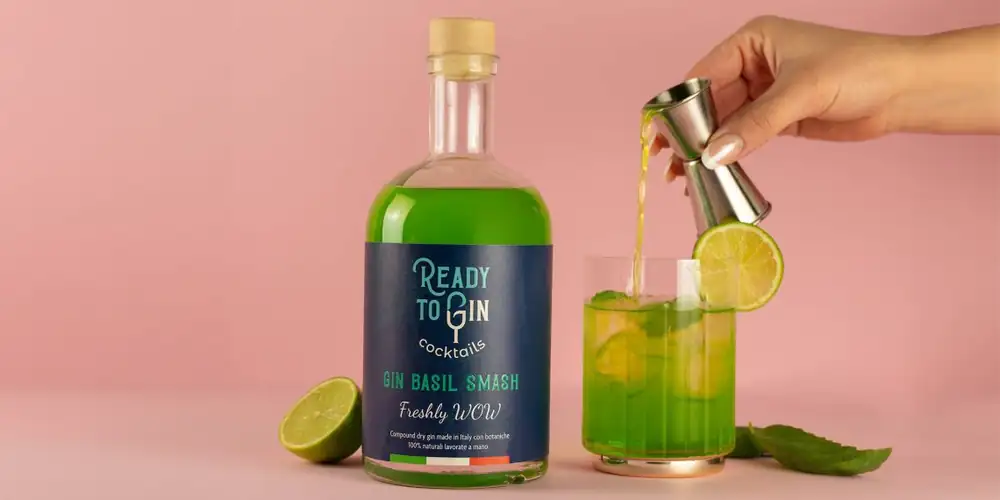
The approach to RTDs is varied, with a focus on premium cocktails. While an Italian startup like Ready to Gin has decided to specialize in ready-to-drinks based on artisanal gin—from Negroni with a Trebbiano Emiliano twist to Clover Club, from Aviation to Gin Basil Smash, not to mention a non-alcoholic line—a major brand like La Maison & Velier is also turning its attention to pre-mixed drinks. With one goal: to make them ambassadors of quality. "With Velier, we pioneered a world of unique and extraordinary rums, from Clairin to the Hampden bottlings in Jamaica, but precisely to make these products accessible to a curious public, I created the Allpossible Daiquiris project," explains Daniele Biondi, who developed it within LM&V. As a rum specialist, Biondi firmly believes in bottled cocktails "as a link between the bar industry and the spirits industry, because they give everyone the chance to experience a Hampden or a Clairin, which in the bottled version are expensive, high-proof, and not very accessible. So, the daiquiri is the easiest way." Accessibility is therefore the other key to the success of RTD products.