Forgotten Wine: A Book About 500 Years of Wine in Peru
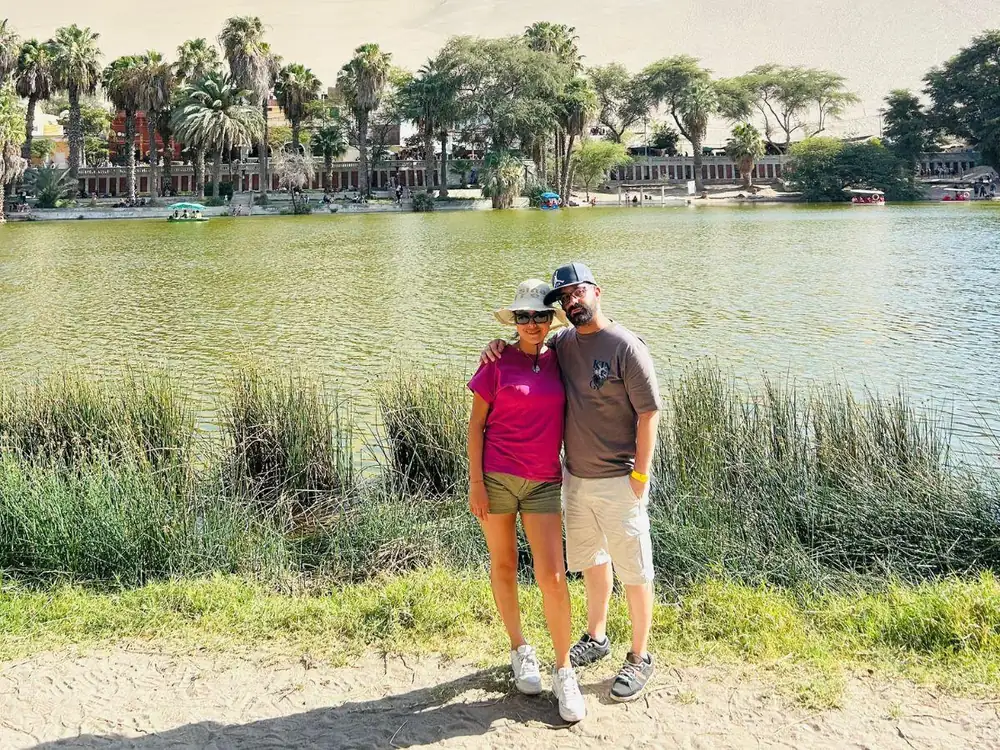
Matteo Enna and his wife, Edith LB, follow the ungrafted vines of the Peruvian desert, planted in 1540 and spared from phylloxera.
In 1540, among the dunes of Ica, ninety kilometers from the Pacific, someone plants a vine shoot.
From that first gesture descended a viticulture that is still vibrant, whose history is retraced in 143 pages in the book "The Forgotten Wine. Five Hundred Years of Roots in the Peruvian Desert" written and published by Matteo Enna and his wife Edith LB.
A narrative essay that sheds light on a little-known heritage of Peru: the ungrafted vines that escaped phylloxera, the Quebranta (the native grape variety that is the raw material for Pisco) and the puquios, the irrigation canals dug by the Nazca two thousand years ago and still in operation.
Against this historical and agronomic backdrop, a truly intriguing question arises: how can a country that preserves one of the continent's oldest winemaking legacies remain marginalized on the global wine map?
The volume was born from two trips to Peru and reconstructs the region's winemaking evolution through eighteen chapters, accompanied by the bilingual section "Voices from the Desert" with contributions from sommelier Lucero Villagarcía and trainer Rosa Lyn Joy Way.
It all began in 1540, when Francisco de Carabantes introduced the first cuttings from the Canary Islands to Ica, sparking a winemaking adventure that would later give rise to the Chilean grape variety País. For centuries, the valley prospered, alternating wine production with that of Pisco, the spirit created to withstand the long journeys to the mines of Potosí. Until the 1687 earthquake, the 1969 agrarian reform, and tensions related to Sendero Luminoso (Shining Path) pushed viticulture to the margins, leaving Pisco as a national symbol.
Only since the 2000s have brands like Tacama, Intipalka, Santiago Queirolo, and Tabernero led the revitalization of the area, now faced with climate threats and pressure on water resources.
Matteo Enna is originally from Baratili San Pietro, the land of Vernaccia di Oristano, and experienced his first harvest at just five years old alongside his grandfather, father, and uncles. After a stint at one of Europe's leading wine e-commerce sites, he now serves as CTO for a fintech platform working in the wine sector.
His wife, Edith LB, born in Lima, works in the field of computer embroidery: despite having no formal winemaking background, in a year and a half she has tasted over one hundred and fifty labels from both the Old and New World, giving the book a Peruvian perspective.
The perfect snapshot of a bond between two different lands, sealed in the dedication addressed to their respective families in Sardinia and Peru: in the worst case scenario, as the authors write, "we are a graft."
The volume "The Forgotten Wine" expresses its best value in its investigative approach, rather than as a tasting guide. The chapters dedicated to soil grain size and the "invisible debt" to the ancient builders of the puquios are the most successful: the theses are well-argued, and the source material clearly distinguishes between hard data and mere hypotheses.
The same caution is found in the analysis of the vineyards. While it's true that the current plants are derived from colonial cuttings, it's important to remember that not all of the valley is ungrafted, and the impact of rootstock on the wine remains an open question.
A thoughtful work that fills a real editorial gap. Recommended reading for anyone who writes, selects, or serves wine, and for anyone who wants to add a new region to their wine map.