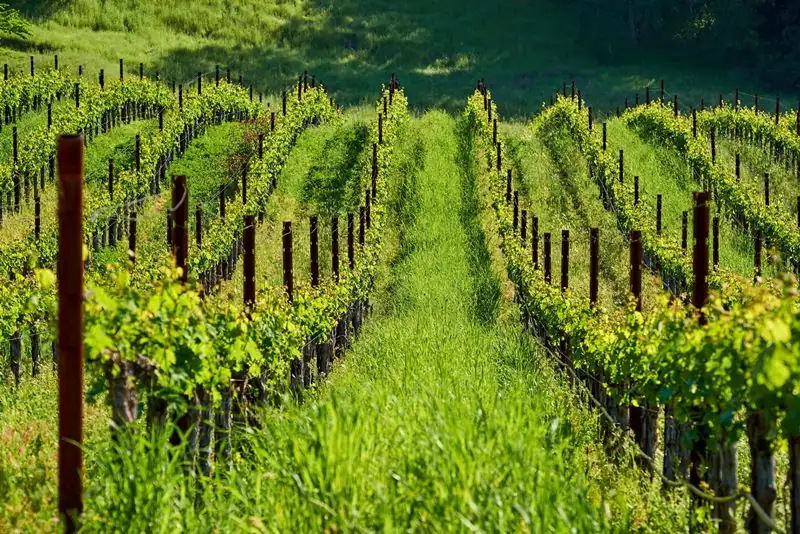
France is expecting one of its shortest wine harvests in three decades
France forecasts 33.9 million hectoliters, one of its lowest harvests in the last three decades.
Wednesday, September 16, 2026
Vineyards in France's Rhône department will have to wait to be included in the first round of the ISN, the public compensation system for climate losses, in a season where France anticipates one of its smallest wine harvests in the last three decades. Estimates released this Tuesday, September 15, by Agreste place the 2026 wine production at 33.9 million hectoliters.
That volume would be 6% lower than in 2025 and 17% lower than the average of the last five years. Agreste places it among the lowest figures of the last 30 years, a sign of the impact weather events have had on French vineyards.
The decline would be much more pronounced in Beaujolais. In that region, the reduction would be around 33%, both compared to 2025 and to the five-year average, according to the same estimate. The initial potential of the season, which started out promising, was diminished by hail, lack of water, and several heat waves.
The grape ripening also accelerated, bringing forward the harvest. This, combined with smaller berry size and lower juice content, two factors that reduce pressing yield and help explain the final decrease in volume.
Meanwhile, Rhône winegrowers are still waiting for the National Supply Index (NSI). The French Ministry of Agriculture included the department among the 18 territories mentioned after the initial meetings on this mechanism, but this inclusion does not imply automatic recognition of the entire territory or all its production. Vineyards are not currently included in this first round.
This difference has a direct effect on access to aid, because these systems are applied by crop and by zone, not automatically for an entire department. In the case of the Rhône, the summer drought has not yet resulted in the vineyards being included in that first round, which delays access to compensation linked to the ISN (National Subsidy).
For the wine industry, a smaller harvest can reduce the volume available to wineries, cooperatives, and distributors, potentially impacting prices and sales planning in the coming months. In areas that are still excluded from the first round of aid, the financial pressure on farms may be even greater while awaiting a possible expansion of the program.
The difference between the French average and the Beaujolais region reflects that the impact is not uniform across territories. While the country as a whole anticipates a 6% decline by 2025, in Beaujolais the drop is close to 33%, a disparity that leaves the Rhône vineyards awaiting further decisions from the Ministry regarding the ISN (National Settlement Index).