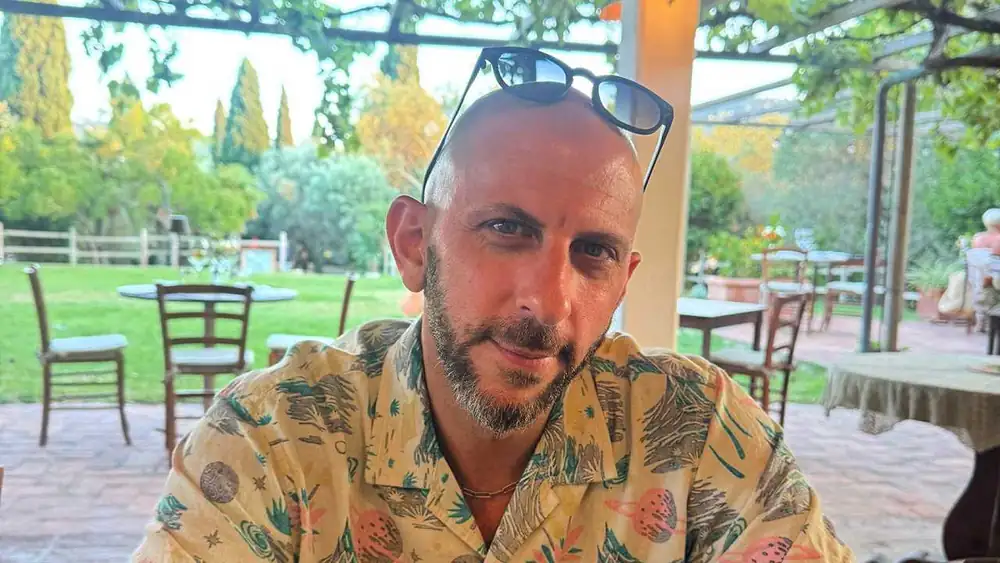
Franchino the Criminal and the Authenticity of Restaurants on TV
We've gone from Alessandro Borghese to Franchino Er Criminale, and even just looking at the names says it all.
It's crisis food, in vogue for over a decade, pimped up by the pandemic and reinforced by the most popular word of the moment: authenticity. Finding good dives, chatting like friends at the bar, preferably after a couple of beers. Think of a Chef Rubio, but even more rugged.
The show has now been brought to DMAX, along with our host's statements to Corriere della Sera that he'd like to gradually retire, fed up with the toxic internet, haters, and even covert advertising; a fairly popular refrain among internet stars. In short, instead of retiring, he'll host a show inspired by his work as a YouTuber.
The new “criminal” format
The program is titled "They Called It Lunch Break," starts September 3rd, and is a tailor-made project: the neighborhood boxer talks to the workers and takes them to their favorite spots for lunch.
It goes without saying that workers, and possibly not those in the service sector, are living proof that authenticity still exists in the world. These will obviously be neighborhood trattorias and diners, because one of the show's underlying themes is that real people go to cheap places and struggle to buy groceries. Let's be clear: the high cost of living and the low purchasing power of salaries are a real and very serious problem, but are we sure that shows like these aren't more like hagiography of it?
The program's judging method will develop a "criminal score" based on three programmatic categories: "local grit," "hunger vs. bill," and "taste sensation." Finally, the judge will vote on the "criminal specialty," a dish Franchino tastes of his choice. In each episode, three restaurants will compete, with only one winning.
It's impossible not to think of Borghese's Four Restaurants, in a version that's anti-luxury and proud of it. We can only note that the vocabulary of this new, authentic gastronomy also leverages the word "criminal," which may be a refrain that has almost completely changed its original meaning over time, and yet... I wonder if Franchino will make us nostalgic for the food critic whose starred restaurant bill was paid by the newspaper? Now that would be a welcome change.
Since when did the food we want to hear about become only the popular kind? Is it really all a question of economics, or is it rather a reactionary mechanism that prevents us from dreaming? And how much of this is to blame for the celebrity chef system?
Perhaps the answer won't come from Franchino Er Criminale, but we should give an answer – sooner or later.