From small village to the world: Chilean País grape sun-dried wine regains prestige and markets
The País grape variety, one of Chile's oldest, was the star of a sweet wine considered high-end during the 19th century.
For decades, the País grape variety was seen in Chile primarily as a product destined for the production of chicha and traditional wines. However, long before the Andean country developed its modern wine industry, this grape gave rise to one of the most prized wines of the time: vino asoleado, a sweet wine that came to be considered a luxury product.
In the context of the recent Chilean Wine Day, researchers from the Agricultural Research Institute (INIA), under the Ministry of Agriculture of Chile, highlighted the process of revaluation that this historic variety is experiencing and the potential it offers to strengthen the wine production of small producers in the dry interior.
The País grape variety is considered one of the oldest in Chile. It is found primarily in century-old vineyards in the Maule, Ñuble, and O'Higgins regions, where it has been preserved by generations of small producers. Although for years it was considered a lower-quality variety compared to later introduced European varieties, today there is a growing interest in rescuing its historical, cultural, and oenological value.
For many years it was considered a variety of lower organoleptic quality than European varieties. However, small producers always saw its intrinsic value and maintained and preserved it.” MARISOL REYES, researcher at INIA Chile.
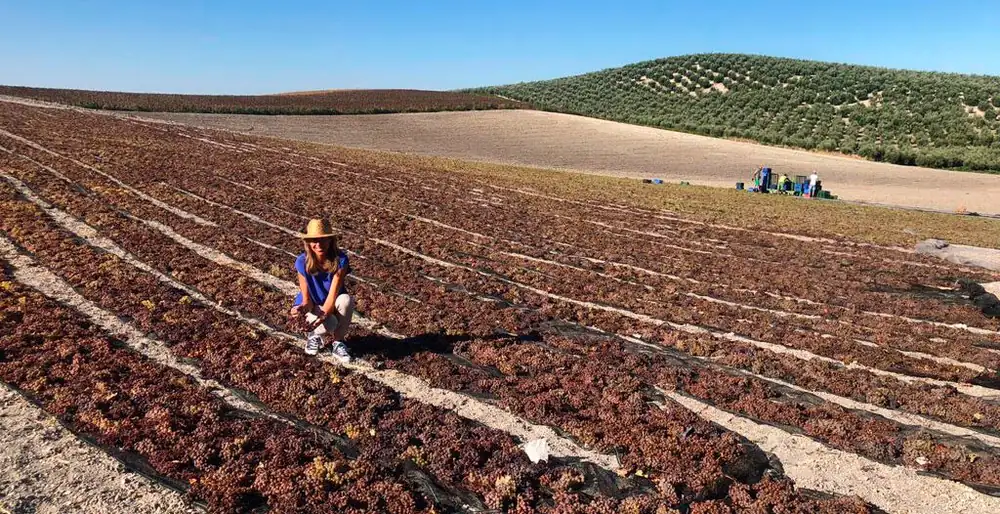
One of the most representative examples of this variety's potential is sun-dried wine, a traditional preparation made by exposing the grapes to the sun to concentrate sugars and aromas before vinification. During the 19th century and before the War of the Pacific (the armed conflict between Chile and the alliance of Bolivia and Peru, from 1879 to 1883), this sweet wine achieved great prestige in Chile. Its arrival in major cities was announced well in advance, and it was considered a high-end product in the national market.
Over the years, production declined in importance and became restricted mainly to the rural areas where this tradition originated. Currently, researchers and producers are working to restore its recognition and reposition it as a distinctive product of Chile's winemaking heritage.
From chicha to the new País grape wines.
While chicha remains one of the best-known expressions of this variety, the País grape has demonstrated remarkable versatility in winemaking. Today, this grape can be used to make:
- Country Rosé Wines
- Country Reserve Wines
- Sun-dried wines
- Dealcoholized wines
"This variety lends itself very well to other wine products that are well-known in the area. There are highly regarded sparkling wines from País on the market that are worth trying, in addition to sweet wines, sun-dried wines, and other wines," Reyes noted.
With the aim of strengthening this tradition, INIA is working with producers on projects designed to authenticate sun-dried wines and differentiate them from imitations on the market. The research includes the development of chemical and organoleptic profiles, as well as protocols to maintain product quality over time and increase its commercial value.
The initiative seeks to provide tools that benefit small producers and contribute to preserving a unique winemaking tradition in Chile.
Resilience to drought and climate change.
In addition to its heritage value, the País grape variety possesses characteristics that are now particularly relevant to agriculture. According to researchers, this variety shows greater tolerance to water scarcity and high temperatures, conditions that are becoming increasingly common due to climate change. Many of its vineyards are dry-farmed, relying primarily on water collected during winter rains.
In addition, it has a lower sensitivity to powdery mildew, one of the main fungi that affects the vine, which reduces the need for treatments and promotes more sustainable production.
For specialists and producers, the main challenge is to change the historical perception that exists about this variety and show consumers the diversity of wines it can offer.
The centuries-old vineyards of Maule, Ñuble and O'Higgins represent not only an agricultural and cultural heritage, but also an opportunity to promote the development of rural communities that have preserved these vines for generations.
In a scenario where consumers seek authenticity, origin and products with territorial identity, the País grape variety appears as one of the great protagonists of the Chilean wine renaissance, reclaiming a history that was close to being forgotten.