Rukumilla, the garage wine that is born at ten years old
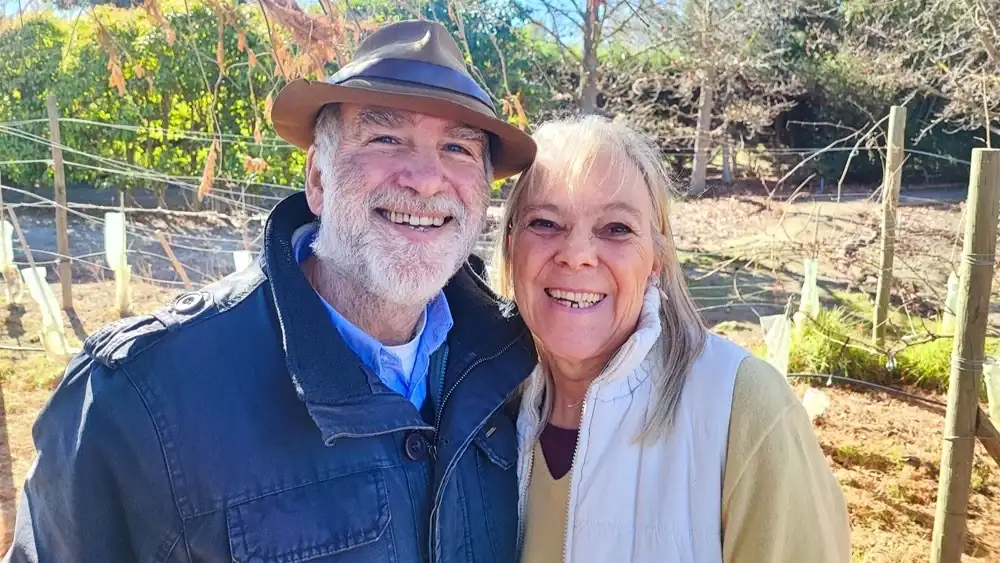
They arrived in March 1994, with a six-month-old baby and a far less clear idea of what they have since built.
Andrés didn't know how to make wine either. He was a sailor and an electronics engineer. He ended up entering the wine world through an unexpected door: accepting the challenge of manufacturing the first stainless steel tanks for Chilean vineyards, when the local industry was just beginning to modernize and move away from the large vats made of raulí, the local wood. It was the 1980s, and, thanks to state-funded innovation missions, he traveled to some of the most prestigious wine-producing regions in the world. There he saw small projects in Europe and began to wonder why everything in Chile had to be on a grand scale.
“When I started building steel tanks, all my customers needed tanks for 60, 80, 100 hectares of vineyards,” he says. “And on these trips to Italy and Spain, I realized that there were people who had half a hectare, like the one we have today. In Chile, everyone told me it was impossible to have a small vineyard.”
Andrés's last sentence places his story in a time when the Chilean market was dominated by large brands focused on exporting volume: good, attractive, and cheap. The idea of making wine in a backyard, without being a winemaker, without aspirations for growth, and without prior export considerations, sounded eccentric, not like a business. Andrés recalls it honestly: “I always believed that something could be done. Now, I didn't start planting vineyards as a business. I started out of passion.”
They first planted to fill a neighboring vacant plot. Their oldest vineyard dates back to 2000. Two more plantings followed, in 2009 and 2010, and later a small vineyard next to the house. Among them are Cabernet Sauvignon, Malbec, Syrah, and Cabernet Franc. All are ungrafted, planted in ancient riverbed soils with rounded stones. From the beginning, they cultivated everything using organic farming methods, although they no longer have the certification. Angélica explains this with a compelling reason: “It was the children’s playground.” Just anything couldn’t be allowed there. “We couldn’t do anything that wasn’t organic, nothing.”
The house and the vineyard grew together. Four children, neighbors, relatives, friends, dogs, weekend harvests, hand-picking, nights spent destemming grapes, and a lot of learning through trial and error. The first attempt ended in vinegar. Andrés laughs when he tells the story: he had asked how to make wine and mixed yeasts and sulfur dioxide without understanding which went first or why. Nothing happened. Or rather, everything that shouldn't have happened did. From that failure came the help of winemaker friends and the conviction to keep things simple, observe carefully, and make only the necessary changes.
Although they have several varieties and could have made several wines, they decided otherwise. “We said: no, we’re going to make one wine. We want to make a blend.”
This blend, however, isn't defined in the usual way, on a table full of bottles with different varieties or sections. Only the flawless grapes are harvested, and dehydrated or problematic grapes are discarded. Then, with several finished wines in different containers, "we don't prepare the blend," says Andrés. There might be more Cabernet Sauvignon, more Malbec, more Syrah, or more Cabernet Franc depending on the season. There's no fixed formula. There's no intention of matching vintages. "This is what we have here, and we just have to take good care of it."
The winery maintains that same logic of scale. Small tanks, stainless steel barrels designed in-house, hand-selected grapes, fermentation with native yeasts, no acidity correction, no filtration, and a cold pre-fermentation maceration that can last a month. Andrés's technical explanation always revolves around the idea of time. "Our wine is meant to age. What interests me is that after 10 or 15 years, the first thing you perceive is fruit; and that's achieved by macerating without alcohol at a low temperature."
As expected, Rukumilla doesn't release its wines young. It can spend four or five years in oak barrels and then another five or six in the bottle. Its 2026 vintage, for example, will spend four more years in barrels and won't be released until 2036. There's no rush. "We're not in a hurry," Andrés reiterates. "With less time, the wine is simply young."
Angélica offers an important insight into understanding this patience. She recounts that initially, not all the wines were aged for ten years. They tasted them and felt they were still too tightly packed. “Let’s keep it for another year, let’s keep tasting,” she recalls. “And that’s when we realized that in three months it changed; it was a different wine.” In her view, there’s another variable: “Since the wine isn’t corrected, it isn’t held back. So, it can continue to evolve.” During the visit, we opened three vintages of Rukumilla: 2016, 2012, and 2005. More than comparing wines, the tasting allowed us to understand the essence of the project. This isn’t a blend designed to replicate a specific profile, but rather a wine that changes with the year, with aging, and with time in the bottle. And most importantly: after ten, or even twenty-one years, it remains vibrant, still providing pleasure, with its distinctive bright red color, fruit, aromatic layers, and a lively palate.
The 2016 vintage emerged as the smoothest and most polished, likely influenced by a rainier year. The 2012 displayed a more evolved nose, with notes of mushroom, a deep color, and a more assertive structure. The 2005 masterfully explained the wine's aging potential: dehydrated red fruit, strength, depth, and a surprising vitality for a twenty-year-old wine. "I prefer the 2005, by far," says Angélica. I prefer the 2016 and 2005: both with pure, juicy fruit, elegant, and taut on the finish. Even so, the interesting thing wasn't finding a "better" vintage, but confirming that time is part of the style. Those who visit them at their winery and vineyards can experience the aging process; they can also participate in the fairs where they are part of MaipOrigen, a group that brings together small winemakers like themselves from the valley; and they are also part of MOVI, the independent winemakers movement.
This decision to age wine is still very rare in Chile. It involves immobilizing wine for a decade and forces a different approach to sales. Rukumilla produces between 900 and 1,600 bottles a year. While they once exported to Belgium, Finland, England, and Brazil, today they prefer to focus on the local market. “We only sell in shops, hotels, and restaurants where someone can tell its story; explain the aging process, open the bottle with time, change the atmosphere,” says Andrés. Rukumilla is named after a Mapuche female figure and also as a personal tribute: to Angélica, to women, to that time when they started making wine and the whole neighborhood was raising children. The name, says Andrés, means “golden breasts,” and refers to a woman who breastfeeds. For both of them, although the train is only now promising to arrive nearby, the vineyard has long been the heart of their family. Their children grew up there, helped with the harvest, brought friends, and watched the winery being built. They won't necessarily take over, and it doesn't seem to be a requirement. What's important to them has already happened: Rukumilla is their home.