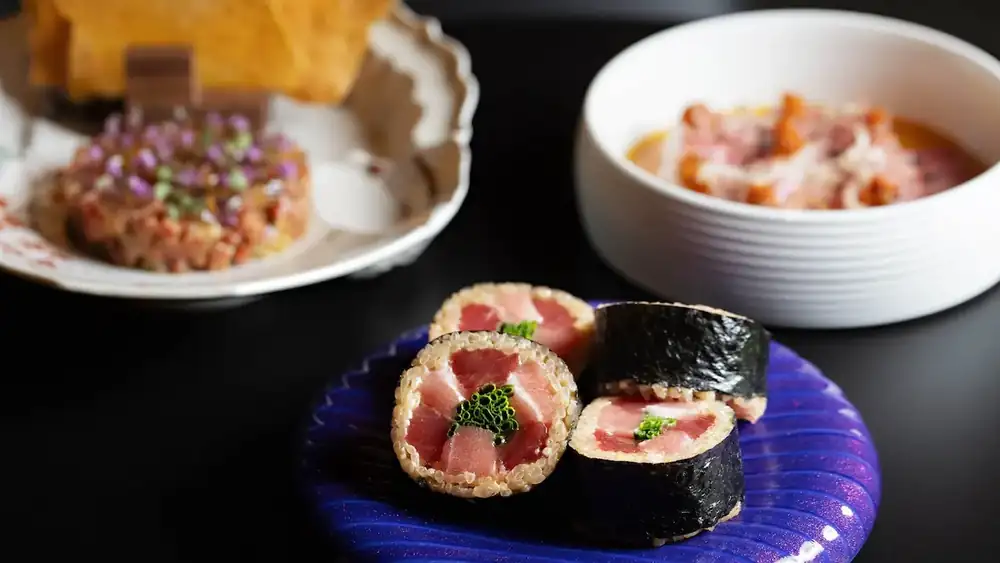
You can finally get into this Yorkville Michelin spot without dropping hundreds on a tasting menu
After nearly a year of wait, Yorkville’s Michelin-starred Aburi Hana is finally re-opening this month.
“We have reimagined the bar, music, art, design, and service to create an experience that feels more dynamic, expressive, and inviting, while still maintaining the level of refinement our guests have come to expect.”
That’s right, former chef Ryusuke Nakagawa has left the restaurant that had previously offered a kyō-kaiseki cuisine, a multi-course experience with ties to traditional Japanese tea ceremonies. Now standing in his place in the kitchen is head chef So Sakata. Sakata already has the Michelin title under his belt, having earned the accolade in 2022 and 2023 with the now-closed Frilu in Thornhill, before a brief stint opening Bay Street’s Dopamina.
According to a media release, the reimagined Aburi Hana, created by Aburi Restaurants Canada, will have more focus on flexibility, with guests able to dine from a seasonal and refined à la carte menu at their own pace, indulge in the tasting menu, or pull up at the bar for cocktails, sake, or wine. The team even promises a prix fixe menu to come soon.
“The original Aburi Hana was very much about experiencing a story through a structured tasting menu. With this new chapter, we wanted to maintain the same level of quality and attention to detail while giving our guests more freedom to shape their own experience,” says executive pastry chef Aiko Uchigoshi. “Someone might join us at the bar for a cocktail and a few dishes, while another guest may choose to share several plates and spend the entire evening with us. Introducing an à la carte menu allows Aburi Hana to be experienced in different ways and gives guests more reasons to return.”
The new chapter for Aburi Hana takes inspiration from the hanamachi (a Japanese cultural entertainment district) of Edo-era Japan and puts a contemporary approach on it. Defined by the rule of the Tokugawa family from 1603 to 1868, the era is named after the city of Edo, which is modern-day Tokyo.
“The Edo period was an important time in the development of many traditions that continue to influence Japanese food culture today. It was also a period when craftsmanship, art, design, entertainment, and social culture flourished,” says Uchigoshi, who has been with Aburi Hana since its inception. “What inspires us is not the idea of recreating the Edo period literally, but the spirit behind it — craftsmanship, creativity, playfulness, and the ability to create something new from tradition. At Aburi Hana, we are interpreting that spirit through a contemporary Toronto lens, bringing it to life through the food, cocktails, art, and overall experience.”
The culinary program will follow the rhythm of Japan’s seasons, evolving throughout the year to showcase ingredients at their peak. Think refined offerings like Kinmedai Prosciutto ae and Saffron Tasazu Hamachi. Japanese ingredients and techniques will combine with Canadian products and contemporary influences for the Premium Bluefin Tuna Roll, Saffron Tosazu Hamachi, Kombu-Cured Wagyu Tartare, and Wasanbon ice cream.
One dish Uchigoshi says will embody the new chapter of Aburi Hana well is the Matcha Shokipan with foie gras parfait, narazuke, Kinzanji miso, and hazelnut which she says brings together “familiar comfort with traditional Japanese ingredients and elements of fermentation.”
“It reflects the philosophy behind the new Aburi Hana: rather than simply reproducing tradition, we take inspiration from it and interpret it with creativity and a sense of playfulness,” she says. “That approach extends beyond the food into the entire experience of the restaurant.”
Leading the beverage program is new bar director Troy Gilchrist, one of Canada’s most respected bartenders. As general manager and beverage director, he led the opening of No Vacancy, which earned a number of accolades.
Gilchrist’s beverage program promises to take inspiration from Japanese ingredients and culture while maintaining contemporary perspectives. Premium sakes, intentional wines and a refined collection of spirits sit alongside the expanded focus on cocktails — highlights of which include those with inventive names like the Bullet Train, Moshi Moshi and The End Has No End.
“The evolution goes beyond the food,” Uchigoshi says. “We have reimagined the bar, music, art, design, and service to create an experience that feels more dynamic, expressive, and inviting, while still maintaining the level of refinement our guests have come to expect.”
As with the original restaurant, Uchigoshi says Aburi Hana will remain committed to seasonal, integral ingredients and focus on details, while remaining true to the spirit of Japanese omotenashi (a philosophy of wholeheartedly looking after guests).
“We see this as much more than a reopening. It is a new chapter for Aburi Hana,” she says. “We want Aburi Hana to be a place not only for special occasions, but somewhere guests can experience in different ways — whether they are joining us for a full dinner, sharing dishes with friends, or simply stopping by the bar for a drink. Ultimately, we want to create a restaurant that guests can return to again and again and discover something new each time.”