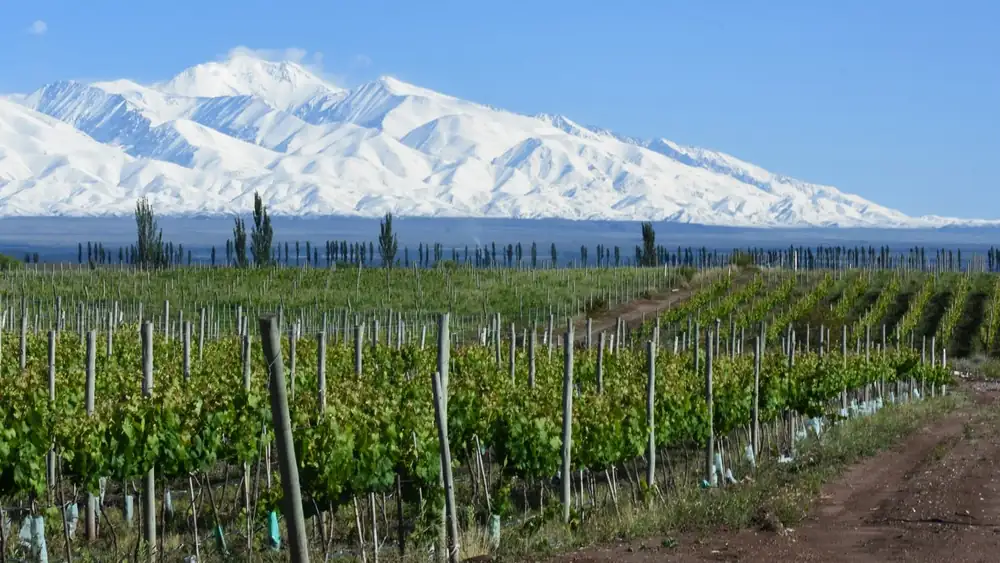
Uco Valley soils fracture the Mendoza wine map beyond mere altitude
A detailed survey of Mendoza’s Uco Valley reveals that alluvial soils and microclimates, rather than altitude alone, dictate the structural geometry of the bottle in your cellar.
A detailed survey of Mendoza’s Uco Valley demonstrates that short physical distances drastically alter vine growing conditions. Altitude, Andes proximity, and alluvial deposits of sand, gravel, and calcium carbonate create a mosaic of distinct landscapes rather than a single homogeneous terroir. For the reader keeping a cellar and booking a table, this geological fracture means the label's specific sub-region now dictates the wine's physical architecture in the glass. You are no longer buying a generic high-altitude red, but a precise structural profile born from specific stone and cold. In the north, Gualtallary’s vineyards above 1,300 meters yield wines of chalky texture and nervous energy. This exuberance under tension is captured in Zuccardi’s Finca Las Cerrilladas malbec and El Enemigo’s Gran Enemigo torrontés. Conversely, the humid, cold oasis of San Pablo near 1,400 meters produces delicate, saline whites and tense reds like Zuccardi’s Aluvional San Pablo. Moving to Paraje Altamira in San Carlos, the geometry shifts from expansive to strictly vertical. Wines such as Mendel’s Gran Revancha and Altos Las Hormigas’ Jardín de Hormigas Los Amantes offer austere, massive tannins that feel longer than they are wide. Nearby Los Árboles shares the mountain cold but delivers a harder, tenser grip, evident in the massive structures of Viña Cobos’ Chañares Estate and Bodega Vistalba’s Tomero Cuartel 41. Los Chacayes in Tunuyán builds on poor, fast-draining gravel to forge robust, sometimes wild tannins, as found in Raquis and Matervini blends. Yet calcareous pockets within the same zone yield sharper finesse, proving the soil is never a simple recipe. Far south in El Cepillo, frost dictates the vine, splitting the output between the austere herbal notes of El Enemigo’s Single Vineyard and the intense, wild textures of Canopus’ La Gran Nave. The true revolution here is not the mere discovery of cold or stone, but the realization that a wine’s physical weight on the palate is now entirely predictable from its soil map. The serious cellar must be organized by geological geometry rather than just grape or altitude, transforming the act of pairing at the table from a guessing game into an exact science of texture.