¿Cómo es un "gastropub moderno"? Descubre tres marcas que marcan la pauta
Durante siglos, las tabernas de la Britania romana, las cervecerías anglosajonas y los pubs londinenses de principios del siglo XIX tuvieron un propósito principal: servir cerveza (y mucha).
For centuries, taverns in Roman Britain, Anglo-Saxon alehouses, and early-19th-century London pubs served one primary purpose: to serve beer (and lots of it).
Food took a backseat until 1991, when two British pub owners coined the term “gastropub”—a concept that got under way to reinvigorate pub dining in London and spread to the U.S. in the early 2000s. The gastropub has evolved notably since then. San Diego’s barleymash restaurant exemplifies a modern approach, shed of any pretension.
Since 2012, it has brought rotating local craft beers, a bourbon-forward cocktail program, and scratch-made bar fare that celebrates the richness of American culture to the downtown community. “There was a time that the gastropub stood for very elevated bar food, and then people would get crazy with foams. All of these different things where you’d read the menu and say, ‘What is that?'” states executive chef Kevin Templeton. “I wanted barleymash to feel elevated in the sense that it’s all the things you know and love, but we’re making the mayonnaise from scratch. We’re using fresh herbs and going as organic and sustainable as possible.”
The spicy shrimp skillet is one of Templeton’s favorite dishes—not overcomplicated, just fresh shrimp sautéed in garlic. Shallots, deglazed with tequila, and served with homemade garlic chili butter, wasabi cream, and focaccia bread. Then there’s the slow-braised short ribs, on the menu since day one, smothered in red chili and garlic, served with arugula-infused mashed potatoes, roasted farmhouse veggies, and crispy tobacco onions.
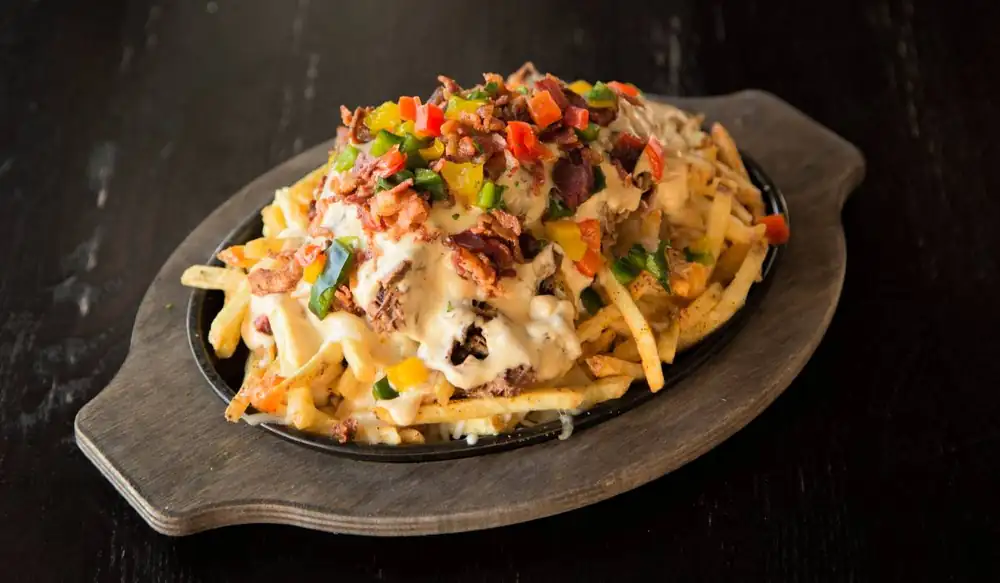
It’s elevated, but approachable—heavy portions of house-cut fries available in a variety of toppings, mac and cheese smothered in beer-cheese sauce, and creative flatbreads. “A modern gastropub is elevated, but not pretentious.
You don’t have to have just fried foods … There’s so much variety with gastropubs, from fresh salads to pickled vegetables and different craft beer options,” Templeton explains. “It’s a vibrant, open place where people feel safe and come together in the age of social media.” But modern gastropubs take many forms.
The Edison, sitting at the heart of Disney Springs in Lake Buena Vista, Florida, represents a different interpretation—an industrial-style, 1920s-inspired destination that blends American cuisine, craft cocktails, and live entertainment with theatrical flair. The dishes have a theatrical presentation.
For starters, there’s the clothesline candied maple black pepper bacon, served with sweet and spicy pickles and held up on clothespins. The classic Bavarian bar pretzel, delicately hung on a stand, comes with honey mustard and pimento cheese.
The Edison’s twist on a deviled egg, called Angeled Eggs, is served on a crispy potato cake with an ounce of caviar for those who yearn for an exquisite, yet familiar experience. “Because of our location at Disney Springs, we try to do a lot of different things to appeal to a wide range of people. Have things that are approachable,” executive chef Benjamin Dodaro explains. “Our Angeled Eggs are served with a full one-ounce tin of caviar instead of paprika and bacon, so it’s a little bit more of an elevated experience, but the egg becomes a familiar vessel.” The same principle applies to the cocktail program.
The gilded Old Fashioned features Whistlepig 18-year whiskey, bourbon-barrel-aged Vermont maple syrup, Bittercube Trinity bitters, torched bacon, and is presented tableside with two gold coins. The Strawberry Fields Forever (inspired by the Beatles) drink features Wheatley vodka, St-Germain, lime juice, local honey, strawberries, and mint.
Yet another model exists in American Social, which operates five restaurants throughout Florida. Its award-winning modern American menu is deliberately curated for sharing, indulging, and gathering—with local craft beers and carefully crafted cocktails woven into the narrative.
Executive chef Ryan Leonard articulates this philosophy clearly: “When I think of ‘social,’ I think family. And family means familiarity. Everything I put on this menu is designed to feel like something you recognize, something that makes you lean in.
I think of our menu as a road trip—and road trips are always better together.” The sharables section reflects this philosophy.
Goat cheese croquettes with a red chili guava glaze nod to South Florida’s Hispanic influence. Nashville hot chicken-inspired sandwiches and New Orleans-inspired barbecue shrimp served over pimiento cheese polenta honor Leonard’s childhood in Southern Appalachia.
American Social of late went through the most comprehensive menu overhaul since the brand’s first day, states Kathryn Raponi, director of innovation and brand experience. That includes a new beverage program across cocktails, shot callers, wine, and beer; daily features like Burgers & Barrels on Mondays and Wine Down Wednesday; a full Boozy Brunch program; and a new late-night menu, AmSo After Dark, which launched in April. “Every single one of those builds from the same foundation: familiarity, shareability, and an excuse to stay a little longer, anytime, any day,” Raponi explains.
American Social was born in 2013, in the thick of the craft beer explosion. Leonard’s “from scratch” mentality holds across the kitchen and bar—from local beers and handcrafted cocktails to hand-rolled croquettes and hand-breaded chicken.
Like The Edison, culinary and experiential work together as they’re built from the same intention—to create a winning guest experience. “The drinks don’t inform the food, or vice versa,” Raponi explains. “It’s all connected.
When approaching the menu, the customer experience is as much of a product as anything on the plate.” The three restaurants represent different expressions of the same modern gastropub philosophy: barleymash champions approachable elevation, The Edison marries theatrical presentation with familiar flavors, and American Social centers the social experience—food as an excuse to gather.
Yet all three share the core belief that a true gastropub pulls from everything and provides a space for everyone. “Our menu pulls from a wide range of inspiration—fine-dining techniques, regional American cooking, pop culture, nostalgia; [and] you end up with an eclectic mix of elevated and simple,” Leonard says. “You have to look at all of this comprehensively to find the sweet spot, and do it on the regular.
That sweet spot is the whole philosophy [of a modern gastropub].”