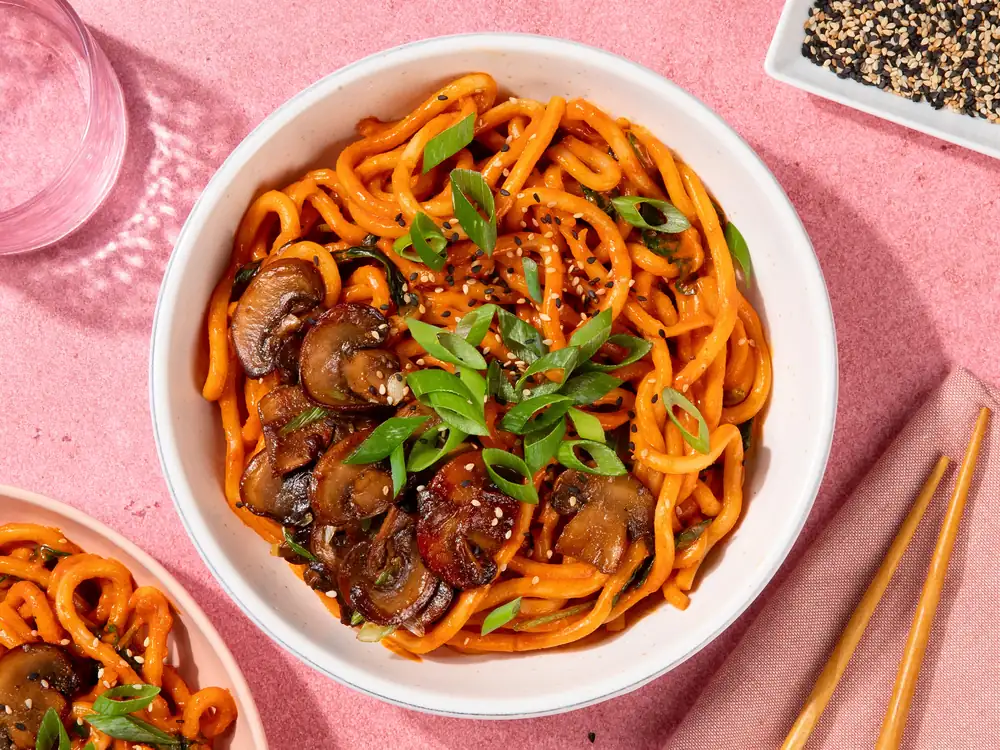
15-minute creamy gochujang udon with mushrooms
Creamy udon, tangy gochujang, and golden-brown fried mushrooms: Sounds like comfort food, but it only takes 15 minutes! Thanks to miso and peanut butter, the sauce is wonderfully creamy, rich, and full of umami, while the gochujang provides a pleasant kick.
- 400g Udon noodles (pre-cooked)
- 250g Mushrooms
- 75 g Baby spinach
- 1.5 EL Gochujang Paste
- 1.5 EL Miso Paste
- 2 tbsp peanut butter
- 1 tbsp rice vinegar
- 1 clove of garlic
- 1 spring onion
- 1 tsp vegetable oil
- 1 tbsp agave syrup
- Sesame seeds (for garnish)
- Clean the mushrooms and slice them. Slice the spring onions diagonally into thin rings, reserving the green parts for serving. Peel the garlic and finely grate it into a small bowl. Add the gochujang, peanut butter, one-third of the miso paste, rice vinegar, and half of the agave syrup, and stir to combine.
- Heat oil in a large frying pan over medium-high heat. Add the white parts of the spring onions and the mushrooms and sauté for about 4–5 minutes until golden brown. Add the remaining miso paste and agave syrup, mix with the mushrooms, and sauté briefly again. Remove the mushrooms from the pan and set aside. Heat the udon noodles in hot water according to the package instructions and separate them. Drain, reserving some of the cooking water.
- Wipe out the previously used pan and add the prepared gochujang sauce and a little of the pasta water. Stir and heat briefly. Add the udon noodles and baby spinach and mix well until the noodles are evenly coated with the creamy sauce and the spinach has wilted. Add a little more pasta water if needed. Divide the udon among plates and garnish with the fried mushrooms, spring onions, and sesame seeds.
Creamy udon, tangy gochujang, and golden-brown fried mushrooms: Sounds like comfort food, but it only takes 15 minutes! Thanks to miso and peanut butter, the sauce is wonderfully creamy, rich, and full of umami, while the gochujang provides a pleasant kick. If you prefer it milder, simply start with less gochujang and gradually add more. When mixing, add a little of the cooking water at a time. This will make the sauce nice and smooth, perfectly coating the udon. The recipe is also incredibly adaptable to whatever you have in your fridge or what's in season. For a bit more protein, you can add tofu, chicken, or shrimp, for example. You can also choose your vegetables based on what you have on hand: edamame, snow peas, and bok choy work particularly well, but broccoli, spinach, or carrots also work nicely.