Robata Kan, in Milan, offers grilled robatayaki and outstanding service.
At Robata Kan in Milan, the service is as important as the cuisine, with customers seated at a long bar facing the grill.
In Italy, it's hard to find quality front-of-house staff, and finding a welcoming, friendly, and competent team accounts for more than half of a restaurant's value. At Robata Kan, the service stands out without detracting from the cuisine or the ambiance: customers sit at an L-shaped bar, facing the grill chefs and servers, and are greeted with smiles, friendliness, and, ultimately, bows.
It's not your typical sushi restaurant. The specialty here is robatayaki, grilled or barbecued food, which is unusual in Japanese restaurants in Italy. There are sixteen seats at the low bar, a tatami room where you can go barefoot, and a couple more tables.
According to the restaurant, the style originated in ancient times, when fishermen and farmers gathered around the irori, the traditional family hearth. Tomya Ameya opened an inn called Kyodo Shutei Robata, where guests ate dishes cooked on the irori with salt, and from that experience, robatayaki was born, spreading throughout Japan. The Zekkocho group, with 15 restaurants in Tokyo, has taken up the legacy of that inn.
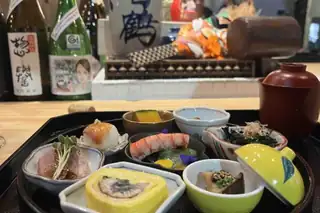
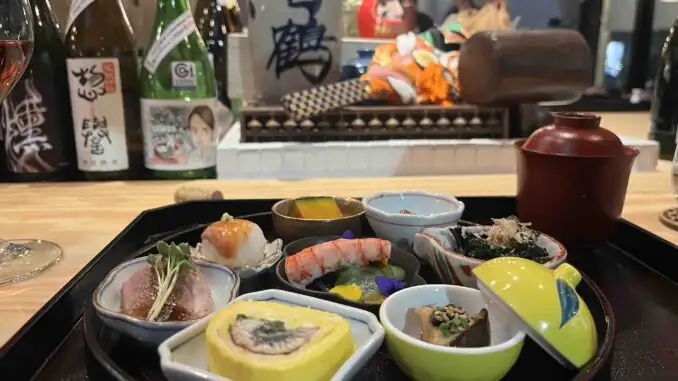
Robata Kan occupies several premises on the corner of Via Lazzaretto and Viale Vittorio Veneto. It offers an à la carte menu and several tasting menus, starting at €75. The welcome includes a tasting of excellent sake, and to begin, you can order a Hassoun, a tray of eight tastings that vary according to the season, for €18.
The grilled mackerel, at €26, is seared tableside: it's shown whole, cleaned, and served butterflied. It's paired with a Grayasusy, Roberto Ceraudo's rosé dedicated to his daughter Susy, sister of Caterina, the Michelin-starred chef at Dattilo. The wine selection is limited, but the sake list is long and excellent.
The rice in donabe, with scallops, daikon radish, and bottarga, is less prized than the mackerel because the sticky rice produces what's known locally as "mappazzone." The amberjack teriyaki, well-choreographed but somewhat small, costs €15. The Unagi Mochi, at €8, is spectacular: a sugar-free mochi served with eel and seaweed.
The mochi still doesn't quite convince, but the visit ends with the staff's amused bow.