Baló: Juventud, elegancia y un toque británico
Si tuviéramos que imaginar un restaurante, probablemente se parecería mucho a Baló. Un comedor sencillo con colores neutros y techos altos, cuadros en las paredes, mesas con manteles impecables y un servicio atento y amable, pero sin resultar demasiado familiar.
If we were asked to imagine a restaurant, it would probably look a lot like Baló. A simple dining room with neutral colors and high ceilings, paintings on the walls, tables dressed with crisp tablecloths, and attentive, friendly service, but not overly familiar. The menu offers three options that prioritize unpretentious enjoyment over Instagram-worthy presentations.
A script that's more about feeding the audience than surprising or reinventing anything. And where, perhaps, the only unexpected detail is peeking into the kitchen and discovering that the two people behind the project are closer to 25 than 30.
Lea María Grané and Ricky Smith opened Baló in early 2022. In less than two years, it has carved out a niche for itself on Barcelona's culinary map, accumulating several accolades. The Michelin Bib Gourmand last spring confirmed the restaurant's excellent value for money. And, they acknowledge, it gave them a significant boost. In fact, the restaurant was among the favorites to receive a star in the latest edition, which was presented in Barcelona, but they were unsuccessful.
From London to Barcelona
“Baló is two young entrepreneurs who love what we do and want everyone to enjoy it in our home” the letter reads upon opening. It also answers the question that Grané and Smith have likely had to answer most often over the past few months: Baló refers to Barcelona and London.
It was there that this couple met while working in the kitchen of a London restaurant. Once in Barcelona, while looking for a place, they came across this one and decided to take a big risk.
They are young and ambitious, they acknowledge when asked about the star. “The Michelin Guide helps us a lot, and I think it helps many restaurants. We are two ambitious people and we enjoy the victories, but our goal is to enjoy the journey and then see what the destination is” she explains.
What was initially intended to be a small tavern where he would start his first business ended up becoming a large-scale restaurant that, from the very beginning, seems to want to play in the big leagues.
Besides the name, the Anglo-Saxon influences are also evident in the cuisine, with the use of pickles and fermented foods, or in dishes like the pork sandwich or the scallop. This product, so beloved by the British, usually ends up in bland dishes, but here they manage to liven it up with an interesting coffee and milk sauce.
Can we talk about Anglo-Catalan cuisine? The idea is appealing and newsworthy, but it's probably a gimmick that benefits the writer more than anyone trying to understand what's cooked and eaten in this house.
What's truly interesting is how these distinctive characteristics of each chef's cuisine and background are seamlessly integrated into the four-handed approach that underpins the restaurant. It brings personality, context, and history, without attempting to impose a specific brand or label.
Modesty
And labels are always tricky. A classic restaurant? They vehemently deny it. “It’s true that we use tablecloths and the space is large and open, but perhaps we would call it a minimalist and clean space, and we believe that goes quite well with our cuisine.” They’re absolutely right.
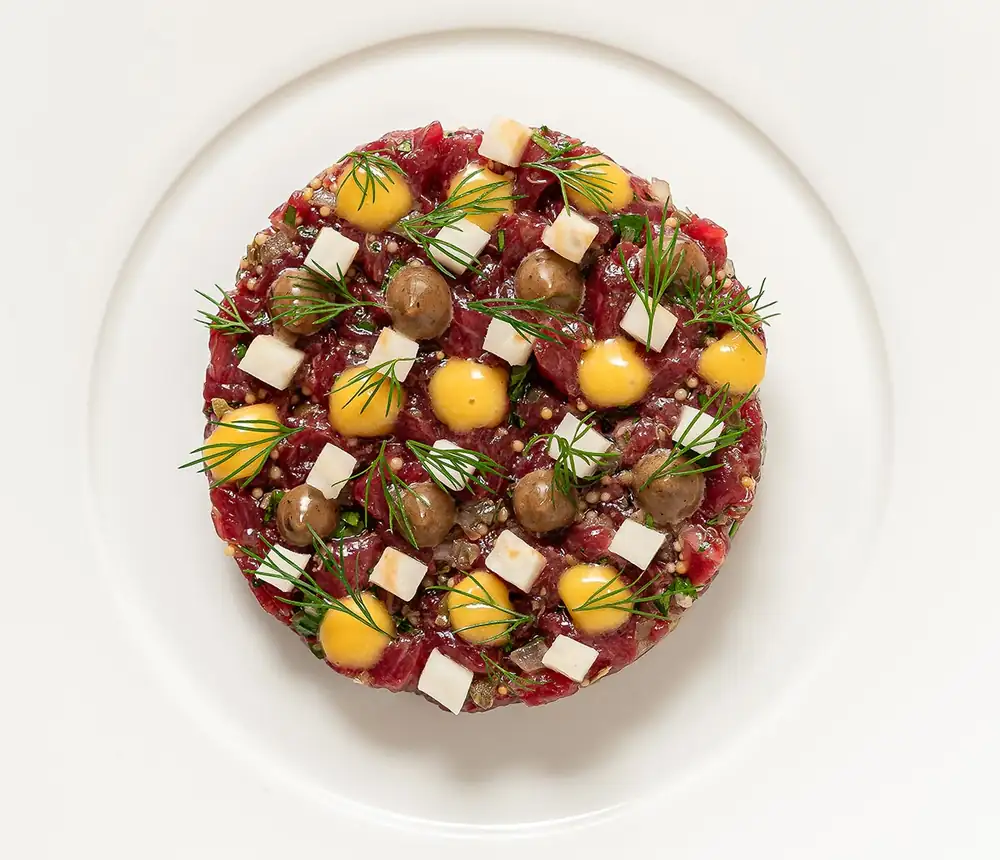
Slow-cooked egg with potato foam and mushrooms. Sea bass with meat sauce and noisette butter, Iberian pork shoulder with asparagus and crispy rice, pistachio and white chocolate financier… Well-defined flavors, meticulous presentations, and, ultimately, evidence that they are embarking on a path with great potential and where there is room to take more risks. If they so choose, of course.
So, can we talk about classic cuisine? They propose a different kind, one they've been championing since they opened: a restaurant that offers the dishes they themselves would like to find on their own tables when they eat out. It's a great definition of hospitality, really.
And all this at prices that haven't spiraled out of control. In fact, their €28 set lunch menu, offered on weekdays, is what earned them the aforementioned Michelin Bib Gourmand. "These days it seems to be a competition to see who's cheaper or more expensive; we stick to our style and humility," the chef explains.
They also offer two other tasting menus. The shorter, seven-course menu costs €60 per person, while the longer menu adds five more courses, bringing the price up to a very reasonable €90. Wine pairings are also reasonably priced, at €30 and €50 respectively.