The Prince of Pompeii: Gian Marco Carli's Contemporary Cuisine
In Pompeii, Gian Marco Carli cooks at Il Principe, heir to one of the first Michelin-starred kitchens in southern Italy, with a contemporary approach.
Il Principe compels us to use the most overused phrase in gastronomic communication: between tradition and innovation. In this case, it's almost unavoidable, and the city itself points in that direction, with the Roman excavations, the sanctuary, and the hotels springing up in the area. Gian Marco Carli is heir to one of the first Michelin-starred kitchens in the history of southern Italy, a constant reference point between what is and what was.
People don't come to Pompeii just to contemplate the past. Increasingly, they come to enjoy the gastronomy of the present. Sitting down to eat at Carli's means understanding how a cuisine can be born from memory without being imprisoned by it, and transform tradition into a living, dynamic, and even uninhibited language.
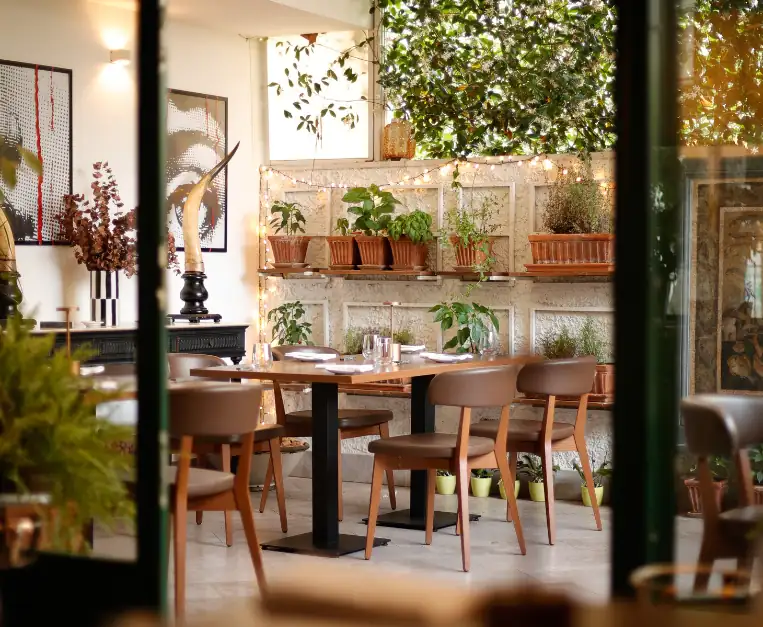
Just steps from the excavations and the sanctuary, the restaurant rejects the notion of a tourist trap. The ambiance is that of a salon, carefully designed without ostentation, where every detail serves a narrative purpose: creating an emotional context that complements the food. The terrace, open when the weather permits, is equally charming. The dining room, gracefully and precisely managed by Claudia Langella, is an integral part of the experience: elegant and understated.
Carli was born into a family that has written important chapters in the history of Campanian gastronomy. He has chosen a less obvious path than simply "returning to his roots": he carries with him his own past, filtered through international experiences ranging from London to Latin America, and through prestigious restaurants such as Don Alfonso 1890 and Quattro Passi. The result is not a cuisine contaminated in the superficial sense of the term, but rather a personal grammar, in which techniques learned from around the world serve to better express the essence of Campania.
The dishes are clear and recognizable, but far from banal. The artichoke truly tastes like a Sunday artichoke, and the pasta with peas is exactly what you'd expect, though with prawns and lemon that subtly alter the flavor, just enough to give it a fresh twist without losing its essence. It's a cuisine that works through emotional subtraction rather than technical addition: the complexity lies in the thought, not the form.
It's worth pausing to consider the artichoke, or carcioffola as it's called here, the restaurant's signature dish and a sort of initiation rite. If someone mentions having been to Il Principe, the first question they usually receive is whether they've tried the artichoke. It's cooked three ways: grilled, roasted, and simmered at a low temperature, and served in a smoky, ash-infused cream that visually and symbolically evokes the history of Pompeii. It's one of those dishes that manages to be both profoundly local and surprisingly universal.
Another standout dish is spaghetti with tomato sauce, a classic made with fresh, sweet, aromatic, and slightly acidic tomatoes. It seems simple, but it's one of the most difficult dishes to prepare because it doesn't allow for mistakes: it either works or it fails. Here, it works almost flawlessly and becomes the epitome of Carli's cuisine, based on balance, moderation, and respect for fresh ingredients. This tension between roots and travel is also evident in the main courses. The cod, a fundamental ingredient in Campania's culinary tradition, is prepared using an Iberian-inspired technique, pil pil, and is accompanied by green river peppers and cherry tomatoes confit with vanilla. The duck evokes Eastern influences, with glazes, fruits, and sweet and sour notes, without resorting to exotic artifice: everything remains crisp, coherent, and clean.
Desserts complete the circle with the same logic. They are never mere whims, but intelligent reinterpretations of archetypes. A dessert that pays homage to the coffee affogato is a good example: ironic, nostalgic, and contemporary, capable of evoking a collective imagination without turning it into a fetish.
Il Principe is one of those exceptional places where the cuisine has its own distinct and recognizable voice, a mature voice that needs little explanation because it makes itself understood dish after dish. In a city that draws its strength from the past, it is one of the few places where the future of Campanian gastronomy is perceived as a natural evolution: a cuisine that rejects nothing, but no longer settles for mere replication. A cuisine that, at last, has the courage to be itself.