Picnic, Rafael Osterling continúa abriendo restaurantes
Siempre he creído que Rafael Osterling es un chef diferente, acostumbrado a abordar sus proyectos con trabajo duro, amplios conocimientos y un éxito notable.
I've always believed that Rafael Osterling is a different kind of chef, accustomed to tackling his ventures with hard work, considerable knowledge, and remarkable success. His career path is one that sets him apart: his restaurants are born to be good businesses, rather than supposed springboards to fame, and although he doesn't always achieve that, the pandemic accelerated the closure of Félix, his third venture in Lima, he operates within that framework.
Rafael opened his flagship restaurant in the first year of the century, and despite the prevailing trend, "grow and multiply" seemed to be the mantra driving Lima's emerging kitchens, it took him another ten years to open his second venture, El Mercado, the ceviche restaurant next door to La Mar, which quickly became a success. Contrary to the image of the successful chef with more of a public life than a professional one, Rafael Osterling was among the exceptions who visited his restaurants every day, lunch and dinner, and interacted with his customers.
Picnic is the latest venture, perhaps the second-to-last of the moment, you never know, given how things are going, a neighborhood restaurant recently opened on Tudela y Varela, a street in San Isidro that was not frequented by local restaurants, just a café on the very end of the street, until the arrival of Cosme by James Berkemeyer and, just after the pandemic, its branch Alado, practically across the street. A little further down, Picnic completes a triangle that focuses on a local clientele of upper-middle-class standing and recognizable faces. I wouldn't say they compete for exactly the same customers, but almost.
It's only been a few days since it opened, and Picnic's dining room is practically full. A little over half is indoors, and the other half occupies a terrace with eight or nine tables for two, semi-hidden from the street by hedges and an awning, three meters below ground level. Opposite the staircase leading down to the entrance is a small bar. The bar has always been important in Osterlinghg's businesses. Rafael's bar was for years one of the most sought-after spots in Lima for late-night cocktails and mixed drinks, and El Mercado's bar is usually packed with diners.
I don't see the clientele that packs this dining room as particularly inclined to eat lunch sideways, staring at the bottle rack on the wall (no bar has room to tuck your legs in and sit comfortably facing forward), or coming to linger into the evening with margaritas and daiquiris, but with the crowd Rafael Osterling attracts, anything is possible. You see the guy who filled the dining room the other day; all he was missing were slippers and pajamas to emphasize his sense of belonging.
The value of the difference
For now, it's a success, as is Rocco, the Italian restaurant that opened about a year ago, and El Mercado and Rafael. Picnic's formula, whose kitchen is in the hands of the young Lucas Cifuentes, is simple and seeks to avoid complications, in what we should present today as a familiar approach: known, homey dishes, uncomplicated, with a touch that reinforces the feeling of distinction.
The usual fare is selling less and less, and it's foolish to waste space and time on something you can eat anywhere else. So, the culinary offerings consist of a short and easy menu, one that doesn't provoke dilemmas, big surprises, or fuss, reinforcing the idea that our local cuisine is losing popularity. The local clientele wants what they haven't had before at a trendy restaurant: Korean-style fried chicken, hamburgers, roasted carrots (organic, of course), tacos, empanadas, pasta, and two fish dishes. I think the diners around me are missing salads. In total, twenty savory dishes and five desserts: finally, a bit of sanity in the management and development of the business.
The result is decent, with a few ups and downs. The bean hummus works, the menu says it's made with green beans; I imagine they mean fresh beans, because the color is an immaculate white and the taste has no hint of greenness, smooth and pleasant, although it could use a bit more flavor, partially compensated for by the topping of dressed raw cauliflower florets and the half-dozen white beans that crown the dish. The brioche-like bread that accompanies it seems excessive for an appetizer: it's filling but doesn't add anything. The "Chorrillan Bun" is tasty, a version of the battered silverside sandwich that they call tempura. This isn't the first place to confuse tempura with what isn't. Why has this Lima decided to call a regular flour and egg batter "tempura"? In cookbooks, they call it "Roman-style frying"; tempura, a light and delicate fry created by Japanese cuisine, is something quite different.
Tacos and spaghetti
The Baja California Taco starts with a delicious suckling pig stew in barbacoa sauce, flavorful, pleasant, and eaten by hand, slightly sticky, which is exactly what you want in these kinds of dishes. It's a shame the tortilla is so thin and lacks the necessary firmness to withstand the challenge; it gets soggy too quickly and breaks when it shouldn't and where you least expect it. The formula that made the taco famous includes the tortilla's durability among the variables to be determined (the unknowns), and in this case, the result falls short.
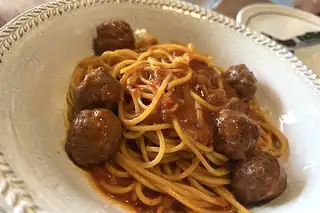
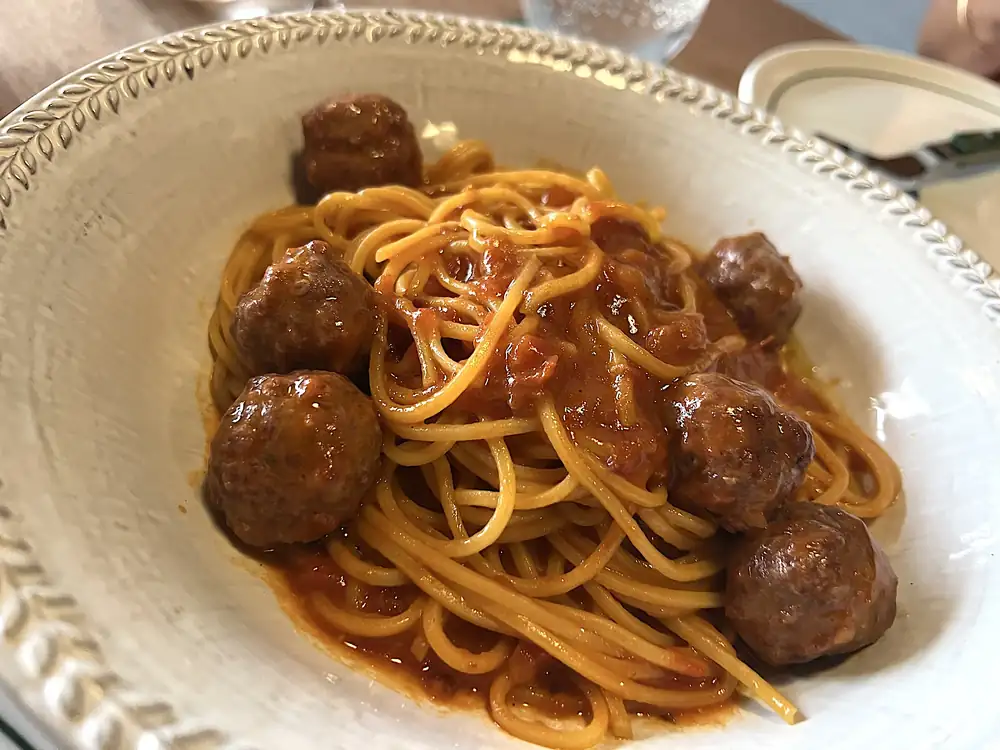
The spaghetti with meatballs is a good choice, while the chicken schnitzel adheres to the Viennese escalope recipe: meat (this time chicken, though that doesn't lower the price) breaded (flour, egg, and breadcrumbs) and fried in clarified butter. It arrives tender and crispy, with capers scattered on top and a butter sauce thickened with the caper juice that ultimately proves inconsequential. The ice cream is visually appealing, glossy… and has the right amount of sugar to suit local tastes.
The service is friendly and professional, although their eagerness to know what the customer thinks of the food from the first bite can backfire on the restaurant.