Comer en casa del presidente
La ciudad de Ávila huele a barbacoa. Es imposible caminar por sus calles sin percibir un nuevo aroma: cordero a la parrilla, chuletón, cochinillo asado. La zona dentro de las murallas también tiene sabor a habas y rinde un ferviente homenaje a Santa Teresa y sus dulces de yema de huevo.
The city of Ávila smells of charcoal grilling. It's impossible to walk down a street without encountering a new aroma: grilled lamb, ribeye steak, suckling lamb again. The area within the city walls also tastes of dried beans and pays fervent homage to Saint Teresa and her egg yolk sweets. In this setting, Diego Sanz and Adrián Abella (both born in 2000) cook and welcome guests with their young and vibrant teams, friendly and relaxed, all under the watchful gaze of the city walls.
Opened in November 2024, Caleña restaurant is making unstoppable progress, championing teamwork, complete unity between the front of house and kitchen, and forging its own path, both within the culinary world and beyond the conventional. Awarded its first Repsol Sun in the 2025 edition of the guide, recently presented in Tenerife, this very young team holds the record for the fastest recognition in the history of the Repsol Suns.
Caleña is located within a hotel steeped in history, situated in what was once Adolfo Suárez's summer residence. At La Casa del Presidente (the beautiful and intimate 5-star hotel with 10 rooms that houses the restaurant), history permeates everything from the reception area, the office where, for example, the legalization of the Communist Party was signed, to the kitchen, where breakfast is served, the lounge, and the historic foosball table, the oldest in Spain. Tradition, memories, and a sense of home: this is the starting point for every dish at Caleña.
A tradition that sheds the constraints of a city that, as Adrián comments, is "about steak, beans, fried pork belly, and paprika." They step outside those boundaries, but while respecting them, Caleña is a place for restless locals and day-trippers, and it owes its existence to the people of Ávila who enjoy food and eating.
The restaurant's approach isn't based on a tasting menu, which everyone equates with fine dining, but rather on an à la carte menu organized into six sections: hand-prepared dishes, pickled items, winter garden produce, stews and legumes, grilled dishes, and desserts. It's recommended to order a couple of hand-prepared dishes per person and one dish from each of the other sections to share. The menu changes seasonally, reflecting the availability of produce from the garden, the land, and the sea, though they do (whenever possible) keep some dishes that diners are reluctant to part with.
After the bread (from the Abantos bakery in San Lorenzo del Escorial (Madrid), recognized as one of the 100 best bakeries in 2022 and winner of the Best Bread of Madrid Championship of the Matador Club this year) and the oil, a hot broth prepares the body for a very creamy croquette of cured beef and goat's milk with a name and surname: Elvira García cheese factory, in the neighboring Barraco.
When we asked about the egg white bread, Eli (a very young, yet elegant and attentive waitress) explained the reason behind it: it was simply a way to use up all the leftover egg whites from the carbonara and flan. The staff was sincere and relaxed, explaining the creative and resourceful approach to cooking, which resulted in a delicious dish with a kind of light, warm sandwich bread, perfect for accompanying the wild boar stew.
The entire menu embodies the Caleña style: local produce, traditional cuisine, and a fresh perspective. After a deliciously creamy escabeche of prawns and oloroso sherry, Eli theatrically plates a grilled Sahagún leek accompanied by marinated sardine and garum made from its viscera; Adrián dazzles by finishing the carbonara of grilled cabbage (but in the Ávila style, with pork belly and Cantoviejo cheese, Elvira García's influence is once again evident) and Diego presents a surprising oyster topped with pig's ear demi-glace, crispy ear, and brava sauce.
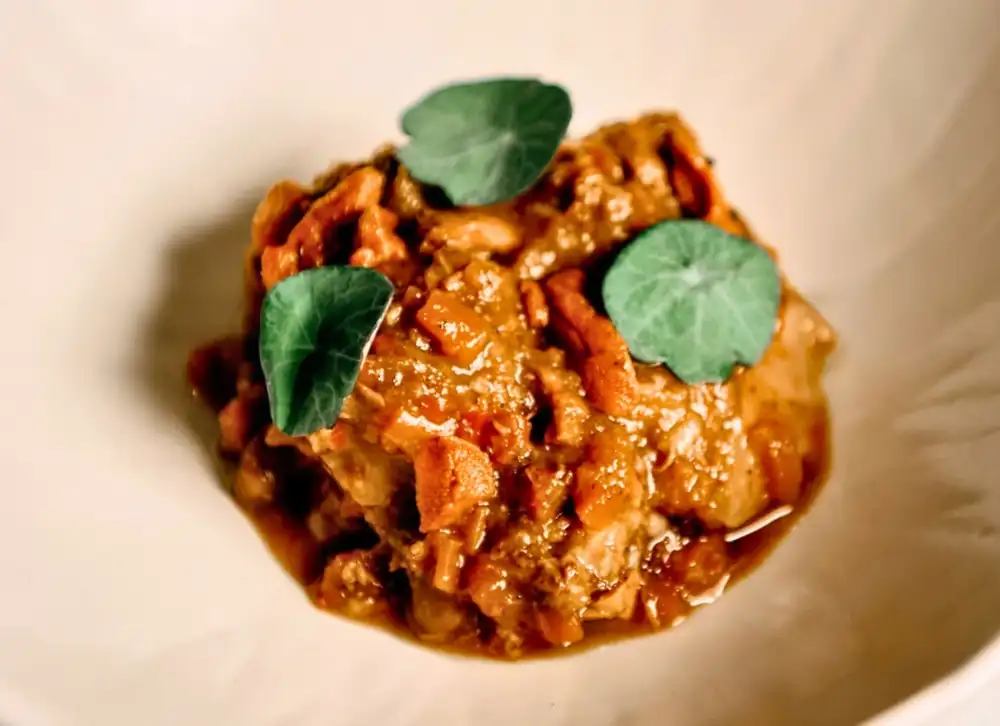
As he himself explains, “it doesn’t have tomato, it’s pure pork, and it’s made with fresh ham and chorizo” and black radish kimchi, which he says “comes from some friends, Huerta de la Era, in the Sierra de Gredos mountains.” The menu continues, adapting to the pace and choices of each diner, offering dishes and desserts that are more or less traditional, more or less innovative, always guided by the judgment of Diego and his team, as young as they are discerning.
And the experience is created - in addition to the 6 kitchen staff - by a team of 7 people (led by Adrián) along with José Gómez as guardian of the wine cellar; reclaiming the role of the dining room in the latest revolution that the kitchen is missing.
Caleña is a place for the people of Ávila who are celebrating, for those visiting the hotel who want to complete their experience, and for feeling, in the words of the team, "not just at home, but better." With the caleña (the limestone oxidized by time) of the city wall as both guide and companion, this restaurant begins its life in Ávila, the city that has the wall as its symbol, the egg yolk as its flavor, and history as its character, in a promising and exciting way.