Why top chefs opt for secondary brands
As is happening in many parts of the world, in Peru, some of the most renowned chefs have opted to create secondary brands. More accessible and approachable concepts. Projects born with a single mission: to bring their culinary vision to new audiences without sacrificing quality or identity.
As is happening in many parts of the world, in Peru, some of the most renowned chefs have opted to create secondary brands. More accessible and approachable concepts. Projects born with a single mission: to bring their culinary vision to new audiences without sacrificing quality or identity. These restaurants often move away from their original clientele, the formality and the white tablecloth, but they retain the technique, the ingredients, and, above all, the signature style of their creator.
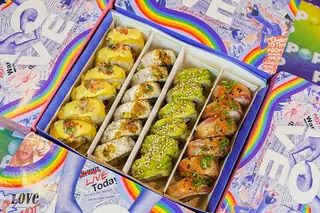
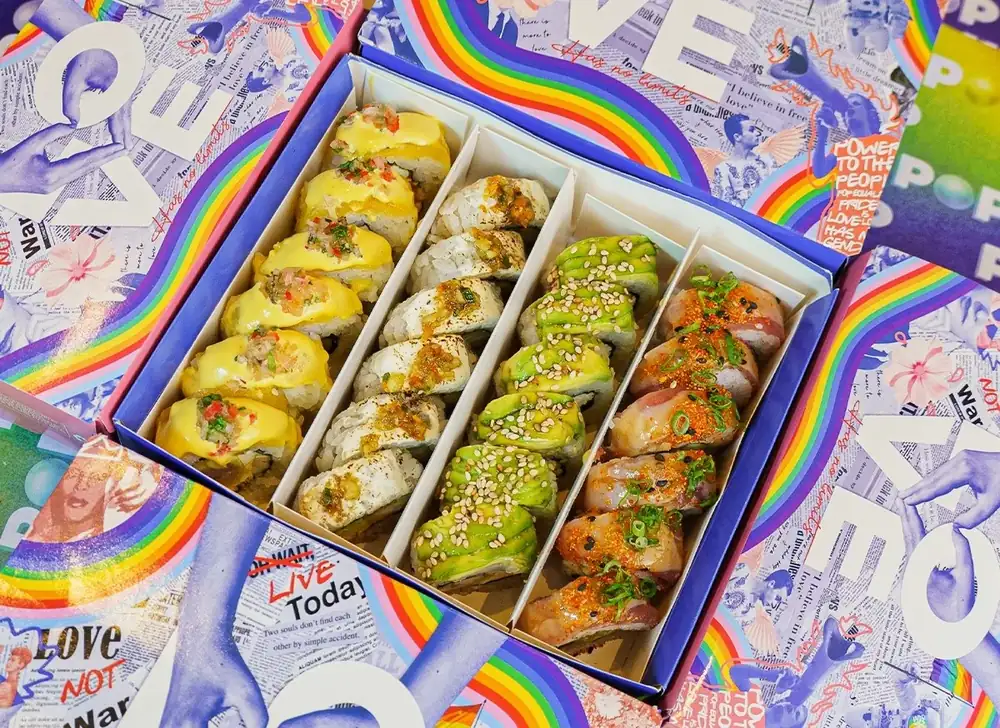
In Lima, Mitsuharu Tsumura, chef of Maido, joined this trend with Sushi Pop, a more casual Nikkei sushi bar than Maido (ranked 5th on the World's 50 Best Restaurants list), aimed at a younger crowd, but no less thoughtfully crafted. He also launched Tori, a chicken restaurant where rotisserie chicken is served alongside anticuchos (grilled beef heart skewers) and Korean, Japanese, and Peruvian sauces. Unlike Maido, where the tasting menu costs €233 without wine pairing, at Tori, a quarter of a rotisserie chicken with two sides costs just €7. Jaime Pesaque, the creator of Mayta (ranked 41st on the World's 50 Best Restaurants list), diversified his offerings with several brands such as 500 Grados, Sapiens, and Mad Burger, a space that translates his expertise in grilling into a sophisticated yet accessible burger. For his part, Héctor Solís, who has voluntarily stayed away from the lists, has maintained a focus on northern Peruvian cuisine at La Picantería, but with a more relaxed and affordable format than his classic Fiesta Gourmet. And Gastón Acurio, an absolute pioneer in this field, developed an ecosystem of brands ranging from La Mar to El Bodegón, including Panchita and Papacho's. Each with its own identity, but all under the umbrella of his narrative: democratic, flavorful Peruvian food with a contemporary twist.
Chef Rafael Osterling, on the other hand, has maintained a different approach. Although he has opened diverse concepts such as El Mercado, Rocco, and Picnic, and announces more on his website, his restaurant Rafael, ranked 19th on the World's 50 Best Restaurants list, remains the epicenter of his culinary vision. With his new concepts, he doesn't stray far from the same price point nor does he seek mass appeal. His strategy has been to preserve a consistent culinary style, even if that means retaining the same type of clientele.
This phenomenon is not unique to Peru. In New York, French chef Daniel Boulud, known for his three-Michelin-starred restaurant Daniel, has developed a small empire of secondary brands that include names like Bar Boulud, Joji, Brasserie Boulud, and Maison Boulud, each with its own distinct character, but all recognizable as part of his culinary universe. Italian chef Massimo Bottura launched Torno Subito in Singapore and Miami, a playful interpretation of Italian cuisine, featuring simple yet expertly executed recipes in a vibrant setting.
René Redzepi opened Popl, a neighborhood burger joint that originated in Copenhagen's old port. After the pandemic, faced with the absence of tourists visiting his restaurant, he tested the concept of a pop-up shop, which sold 65,000 burgers in just five weeks. This idea quickly evolved into Popl, a more intimate format that leverages Noma's expertise in product and supplier selection. Everything here comes from Noma's ecosystem, not only the meat, but also the vegetables from biodynamic farmers, the fermentation experts, the craft brewers, and the ceramicists specializing in tableware. Another example is Daniel Humm, who, before his vegan shift, replicated part of the spirit of Eleven Madison Park, with its four New York Times stars and three Michelin stars, in the now-closed NoMad. And Albert Adrià, after elBulli, preferred to break the mold with more informal spaces like Tickets and 41º.
Behind all these openings lies a business logic, but also a creative one. For many chefs, these secondary brands represent freedom: the opportunity to experiment without the demands of a tasting menu, the constraints of awards, or the constant judgment of critics. They are places where you can play, fail, and adjust. And, at the same time, scale: they are more agile concepts, with higher sales volume, faster turnover, and more efficient cost structures. That combination, creative freedom and financial sustainability, is powerful.
Furthermore, these brands allow restaurants to reach audiences who, due to price or format, would not otherwise have access to the fine dining experience, and that has enormous symbolic value. For a young diner, a burger created by a celebrity chef can be their first introduction to more complex cuisine. For a neighborhood, it can signify the arrival of a new standard. For a chef, it means reaching new audiences.
But it's not all gain. If not handled carefully, this model can end up diluting the chef's brand. More locations mean more operations, more teams, and a greater risk of losing control. Not all formats work in every city, nor do all audiences respond the same way. We've seen this lead to the sale or disappearance of many concepts, such as Rafael Osterling's Felix Brasserie or Gastón Acurio's Los Bachiche. The line between diversification and fragmentation is thin. And in some cases, secondary brands can end up cannibalizing the flagship restaurant or confusing customers about what the chef truly represents. There's also a deeper risk: the erosion of the narrative. If the sole motivation is growth, opening for the sake of opening, without a story to support each concept, the narrative runs out. What was once a smart expansion can become a soulless franchise.
The key lies in balance. In ensuring that each proposal makes sense on its own, not as a replica, but as an independent chapter of the same story. In maintaining impeccable technique, coherent narrative, and equally carefully crafted experience, even if more casual.
Fine dining no longer needs formality. It can be served in a box, on bread, or in a cardboard bowl. The important thing, and those who have matured professionally know this well, is that what is served still makes sense.