
Haruki Nabe Kaiseki: The touching elegance of Japanese food at Damansara Jaya
Hidden behind the discreet facade of the Atria Shopping Gallery mall in Damansara Jaya, this restaurant offers an experience of seasonality, subtlety, and moving narratives.
Inside, the world slows down. Shoji-style cubicles are bathed in the soft glow of lanterns, and dishes peek out from a simple wooden window reminiscent of traditional Japanese ryokans. Jazz plays softly in the background, and for a moment, you're no longer in Petaling Jaya, but in a hidden alleyway in Kyoto or Meguro.
While sushi and teppanyaki dominate the Japanese scene in Malaysia, this spot distinguishes itself with a refined kaiseki menu based on nabe, the traditional Japanese stew, known for its communal spirit and nutritious essence.
It is offered in select four-, six-, or seven-course tasting menus. The Chanko Nabe Kaiseki is the star: a succession of dishes, each served and presented with care. The seven-course menu begins with four appetizers: a cloud-light potato salad that balances richness and acidity, tororo (grated yam) topped with fish roe, sliced fish with spicy ponzu, and impeccable sashimi, served at just the right temperature to preserve its marine purity.
Next comes the himonoyaki, a thick piece of seasonal fish, delicately charred. This is followed by crispy vegetable tempura and golden karaage, both light and perfectly fried.
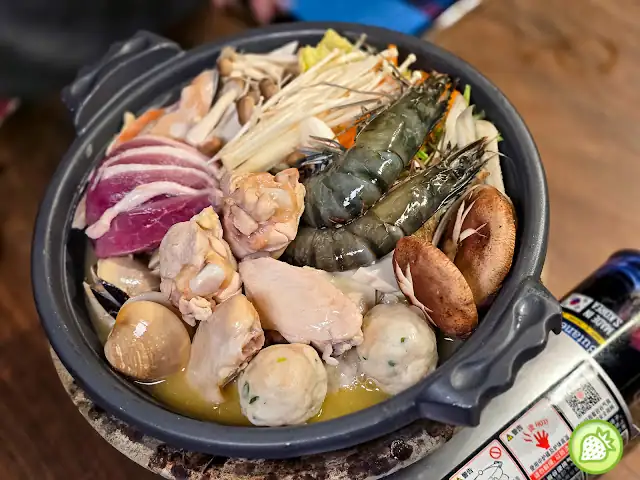
When the nabe arrives steaming at the table, the pot is brimming with sweet prawns, tender oysters, succulent clams, and silken salmon, along with chicken, duck slices, tofu, and mushrooms. Traditionally, nabe was consumed by sumo wrestlers for sustenance and strength; this version is distinguished by its refinement. The clear broth is free of MSG, and its umami flavor comes from the time, care, and quality of the ingredients.
Finally, the donabe rice is cooked with layers of sole fillets and fresh oysters in a traditional clay pot. The rice takes on an earthy aroma and develops the okoge, the coveted golden crust that adds a smoky and crispy touch. A hint of soy sauce and the umami flavor of the seafood complete the dish.