Varra, in Madrid, combines a signature dining room, a tapas bar and a quality wine cellar
Varra, with only a few months of existence, is one of the best things that has happened to the Madrid hospitality industry in recent times.
A traditional restaurant often conjures up images of a place steeped in history and a menu untouched by trends. That image is merely a preconceived notion: the term applies to any establishment dedicated to good food, quality ingredients, and customer satisfaction, whether it has been open for decades or just a few months, like Varra.
The project is spearheaded by two chefs as young as they are experienced, Jorge Velasco and Joaquín Serrano, who have been joined by Gonzalo Menéndez as head chef. Velasco spent a decade at Ramón Freixa (Madrid) as head of gastronomy; Serrano worked at El Celler de Can Roca (Girona) and was responsible for Ephemeral, a project as interesting as it was short-lived, with a name that, coincidentally, proved prophetic. The quartet is completed by Juanma Galán, head waiter and sommelier from Estimar, with extensive experience at Ramón Freixa, El Portal de Alicante, Numa Pompilio, and La Terraza del Casino. His arrival places a high-quality wine cellar alongside the kitchen.
Varra is also a bar. On the ground floor, a casual tapas menu is a hit with regulars, who keep coming back: ham croquettes, slices of Spanish omelet, patatas bravas, toast with Palamós prawns, cured picanha beef tartare, and the now-legendary crispy pig's ear. The dining room, with the restaurant's menu, occupies the first floor.
The success of three of these dishes has led to their inclusion on the restaurant's menu, with the chefs' own twists. The prawns are infused with lemongrass and ginger, the most exotic item on the menu, according to the chefs' jokes. The beef tartare is served with pigeon pâté and truffle emulsion, and the pig's ear, with caviar instead of brava sauce, a rather controversial choice.
These bites serve as a link between Varra's two worlds. The restaurant's menu brings together seasonal vegetables, robust broths, and classic sauces, such as béarnaise or hollandaise, in dishes that never include more than three or four ingredients. They cook with real passion, and a lot of it.
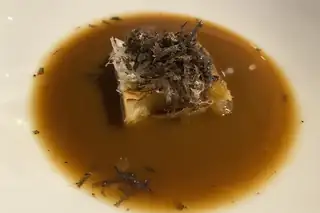
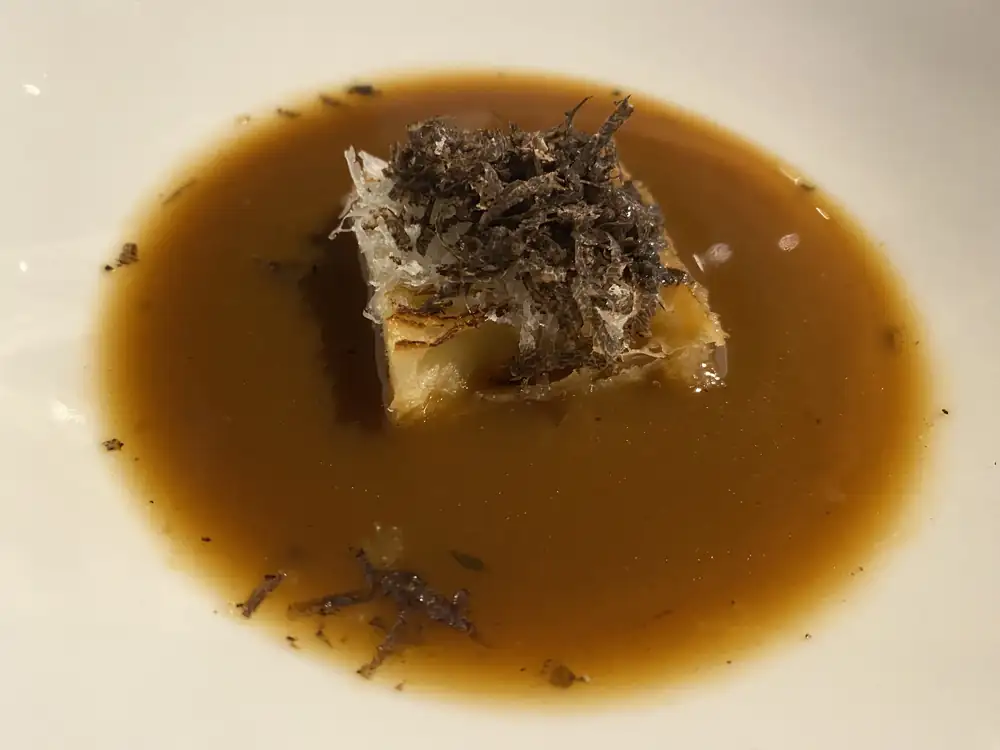
After sampling almost the entire menu, there are at least five dishes that could be considered standouts: Maresme peas sautéed over embers with escudella broth; tender broad beans with pea cream, cabbage jus, and bacon; leek cooked in duck broth with capon carcass and truffle; confit artichoke with foie gras soup, Pedro Ximénez sherry, and smoked eel; and onion soup with Iberian ham, poultry broth, Idiazabal cheese, and truffle. These are exceptional and comforting dishes, with each ingredient perfectly identifiable.
One step below, in the seafood and meat dishes, are the chard with carbonara and kokotxas (hake cheeks) and the red mullet with cod tripe and Perol sausage. Among the meat dishes, the Bresse pigeon with cauliflower cream and pickled kale and the grilled venison loin with tarragon béarnaise are impeccable. If one had to choose a finale, it would be the Asturian bean stew with pheasant and black trumpet mushrooms.
Dessert offers three options: semi-caramelized apples with sherry and dairy, creamy flan with 70% cocoa, and pears poached in wine with celeriac. Most opt for the flan. Since Galán's arrival, the wine selection has become a fundamental part of the offering: the sommelier doesn't start with an encyclopedic approach or focus on brands, but rather with the question, "What kind of wine do you like?" and then suggests based on the answer, without imposing.