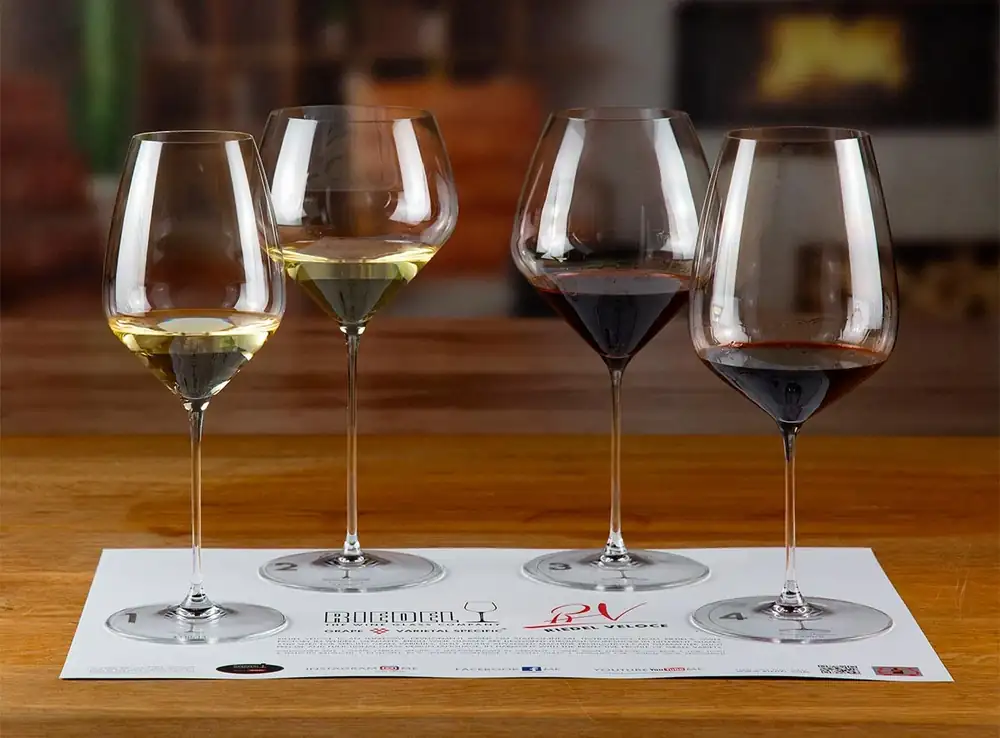
Maximilian Riedel explains why a glass changes the perception of a wine
The Austrian glass manufacturer Riedel, with more than 250 years of history, argued in Barcelona that the shape of the glass changes what is perceived about the wine.
Although they are neither a winery nor do they own vineyards, few family dynasties are as closely linked to wine as the Riedels. This Austrian glassware company has been in business for over 250 years and boasts a catalog of more than 1,500 varieties, with glasses designed specifically for each grape variety. Maximilian Riedel, the current CEO, presented in Barcelona, to 200 people in two sessions at the Hotel Majestic, how and why a glass can change the perception of a wine.
Riedel won over a large part of the audience, who had arrived with doubts. Many were skeptical of the idea: a Riesling glass isn't suitable for a good Chardonnay, while a glass designed for that variety brings out its best qualities. "The only way to explain it is by tasting it," he said before the seminar. For the test, the wines can be from any origin, but they must be single-varietal.
The wines in the tasting were French, "so as not to offend any Spanish producers for having been excluded," Riedel explained. These bottles cost between 50 and 100 euros in stores, and some glasses soften their character while others bring out their full splendor. "You'll smell a wine in three or four different glasses and you'll be surprised by the difference. And the taste too. I can change the perception of a wine. We don't change the liquid; it's the same wine and the same temperature, only the glass changes."
Developing a glass for a particular grape variety begins by checking if any existing design works with that grape. If not, a new one must be created. Riedel warned that a glass can ruin a wine: "I could serve you a Pingus in a blind tasting in an unsuitable glass, and you'd tell me it wasn't good." When a wine isn't well-received, the blame is placed on the wine itself, the vintage, or the serving temperature, but the glassware is rarely mentioned.
Riedel recommended "shock decanting" to sommeliers, a technique that significantly oxygenates the wine and, in his opinion, can be beneficial for the young red wines commonly consumed in Spain. For the average consumer, the answer to whether there is a glass for every wine is no. His advice is to choose glasses suited to the grape variety you prefer: there isn't a specific glass for Tempranillo, but Shiraz glasses would work, he explained.
Riedel also manufactures whisky glasses, cocktail glasses, beer glasses, and coffee cups, developed in collaboration with Nespresso. They receive several emails each week from Spain asking if there will be a Riedel porrón, and the short answer is no: "The porrón doesn't do justice to expensive and complex wines." Instead, they introduced the Swan jug, which costs around 400 euros and vaguely resembles the porrón, although it doesn't look very comfortable to drink from.