Fervor, a Colombian cuisine without salt and based on fermentation
Fervor, in Chapinero Alto, brings together a small dining room with signature cuisine and its own laboratory where ferments, misos and vinegars are made.
The ground floor of this blue house on the south corner of Chapinero Alto, a neighborhood in the Colombian capital, is dominated by a pizza oven and houses La Terraza, a casual space with a relaxed menu. Fervor occupies the upper floor, with a small dining area that opens onto a large window overlooking the kitchen. Víctor Guerra and Andrea Pardo radically transformed a previous project to create both spaces.
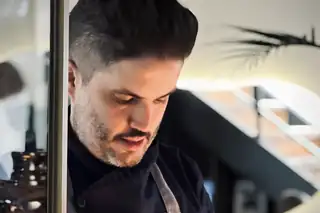
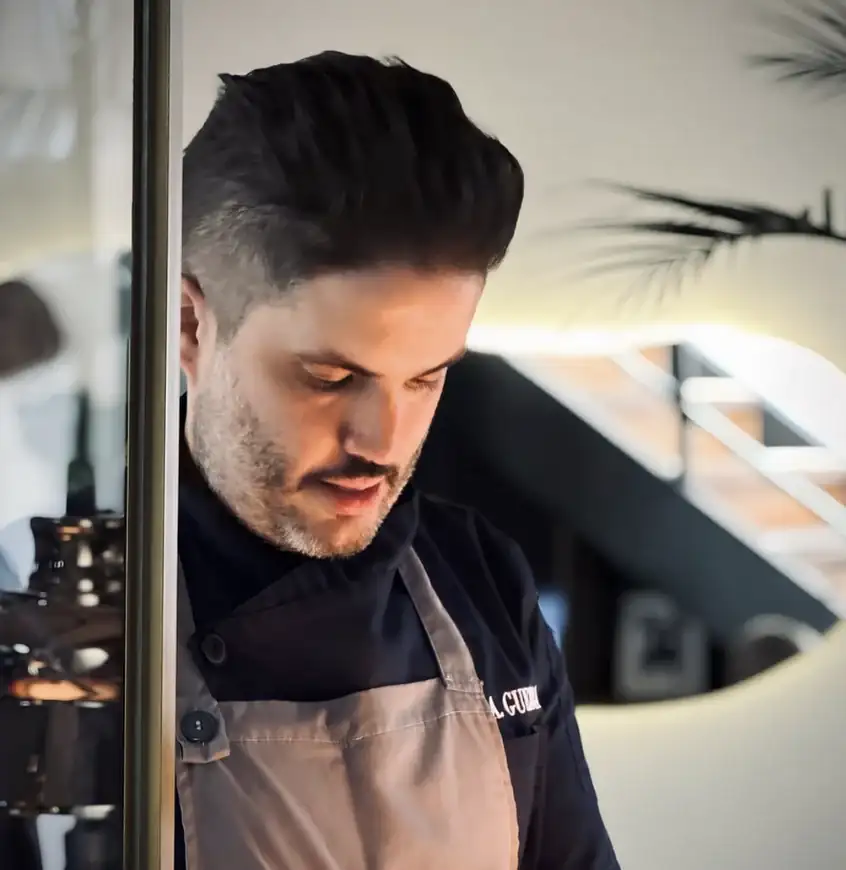
Guerra worked in Michelin-starred restaurants in the United States, such as Per Se, Eleven Madison Park, and Quince, and belongs to the new generation of Colombian chefs who have returned to the country in the last five years. Fervor has just thirty seats spread across seven tables. Its cuisine combines Italian, American, European, Asian, and Colombian influences, drawing on the country's larder and biodiversity.
Among the starters are French toast with lobster ponzu, Caribbean crab, lemongrass and nori; sweetcorn croquettes with smoked rabbit and yellow cubio, an Andean tuber; and green plantain tarts with lamb tartare, labneh and melon cucumber, refreshed with macambo shavings, the seed of the Amazonian cacao.
Fervor's cuisine uses no salt. It relies on homemade ferments and derivatives such as garums, amazakes, misos, and seaweed, as well as fruits, legumes, vegetables, vinegars, and smoked foods. Sommelier Tomás Durán and chemical engineer Juan Sebastián Rubiano, a member of the Slow Food Colombia collective, work with Guerra and Pardo in the upstairs laboratory. They maintain nearly 300 of their own products, used at Fervor or cataloged for production at any time, including fifteen varieties of miso.
The cocktails use fermented ingredients and lab-grown products, such as falernum, various types of kombucha, pineapple in three varieties, mandarin and lemon limoncello, and bay leaf and passion fruit liqueurs. A menu called "Fervent Cocktails" complements the food. With the same focus, the establishment produces its own sake using rice from the Colombian Llanos, prized for its high mineral content.
Main courses include a creamy rice with lamb and Pacific snail, coconut, sorrel, and cuchuco (a traditional Colombian soup), and two pork dishes that evoke the Colombian countryside with rhubarb, cabbage, yucca, green figs, cubio (a type of tuber), and chayote. Homemade pastas are flavored with cilantro, chontaduro (peach palm fruit), avocado, or achiote, such as the orange pappardelle with pork head ragu and XO green mussels.
The four desserts combine ingredients from different Colombian departments: cupuaçu sorbet, rambutan vinegar, arazá cookie, tree tomato veil, coconut and lulo textures, and Ocaña onion in the chocolate dessert.
Fervor confirms the path of other Colombian chefs towards cultural reinterpretation and the enhancement of the national pantry.