Alcohol-free wine: Three producers show how it's done
1. SineVino
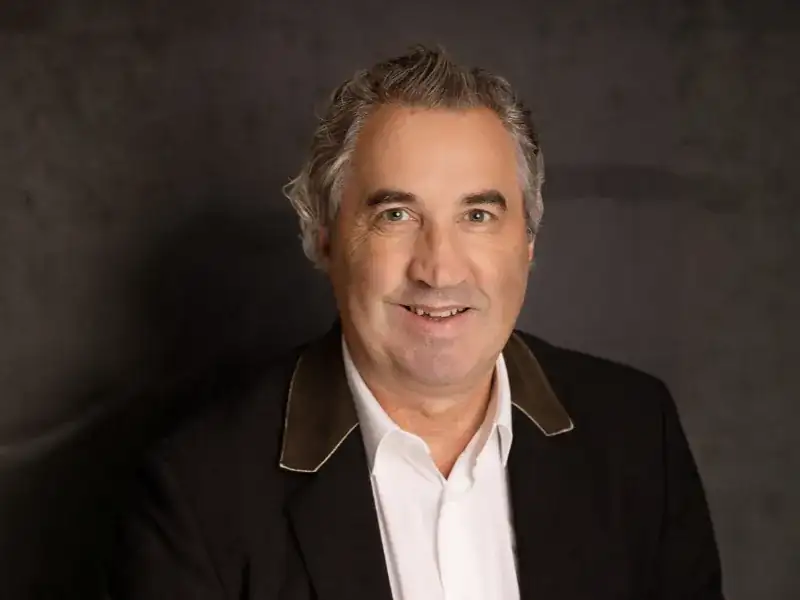
Of course: an Austrian. Who else would come up with the idea of developing non-alcoholic drinks made from fruit and grape must? After all, the Alpine republic is at the source – for excellent wine and the finest fruit. A home game for Reinhard Mösl, 55, from Haag in Lower Austria. "The Mostviertel region is my home," he says, "a region where enjoyment has always been paramount." Mösl grew up among orchards, helped harvest pears, apples, and apricots as a child, and turned his passion for fruit into a profession – he supplies retail partners with smoothies, 500,000 bottles a month. One evening, Mösl was taken aback: At the Munich restaurant and wine shop "Broeding," the law graduate enjoyed a fine meal – with drinks completely without alcohol, creatively and harmoniously selected by sommelier Michael Wendlinger and actively offered as wine alternatives! "I'd never even heard of such drinks," says Mösl, "I wanted to make them too."
"There's a real need among many drivers here in the countryside, but there's no supply." It shouldn't be wine in the strictest sense, but rather a beverage with a strong character that could rival wine: "It should have bouquet, body, and a lingering finish, served stylishly in a wine glass." This was the starting point for SineVino, Mösl's answer to Riesling and Merlot. "Alcohol-free drinks that allow you to enjoy your meal just like you would wine." In 2021, the fruit juice producer assembled a development team of chefs, sommeliers, and tea experts and experimented with over 50 ingredients, most of them sourced regionally. The base is fruit juice, but they also use herbs, teas, spices, and the wonder ingredient verjus, the juice of semi-ripe grapes. Verjus adds a lot of acidity to the drink while revealing complex aromas – ideal for softening the heavy sweetness of fruit juices, which would otherwise overwhelm a dish. With SineVino, Mösl has achieved a remarkable coup: food pairings that evoke wine without imitating it. Mösl has developed four fruit-wine varieties and two aperitifs.
"Verjus White Pepper," for example, with its aroma of blossoms and peach, is reminiscent of a Pinot Blanc. The verjus acidity with its peppery note provides a harmonious counterpoint to dishes like fish with beurre blanc or shellfish. The "Sloe Juice with Pink Pepper" also offers surprising depth—it is both fruity and tart, with a slight smokiness, a delicate cassis note, subtle spiciness, and the herbal spice of thyme. It pairs very well with duck breast, venison, or pot roast. Mösl says it reminds him of a Pinot Noir. "I enjoy it with venison fillet with red cabbage and bread dumplings!" The gently fruity "Nana Mint Berry" tastes good with steaks and soft cheeses, while the sweet "Verjus Isabella Grape" is a lovely accompaniment to desserts or Comté cheese.
Trying tips
The aperitifs are also impressive and could accompany dishes – such as “Apricot Rosemary” for example with vegetable dishes with pumpkin or antipasti, as well as “Pink Sunrise” made from pear juice, lime, mint and vermouth.
2. Villa Noria
From the south of France come beverages that could represent a paradigm shift in non-alcoholic wine production. Even the name of these varieties is ingenious. Levin is actually a common first name. However, when pronounced in French, it can also mean "le vin," "the wine," or "levain," "sourdough." Both of these meanings are what the producers of these drinks are aiming for. They are made from grapes but are not dealcoholized. They aren't wines, but in a way, they taste like them. How is this possible? Cédric Arnaud and Fabien Gross, the two founders of the Villa Noria winery, have chosen a completely new approach to producing a wine-like beverage from their grapes. The winery was founded in 2010 in the hilly foothills of the Terrasses du Larzac in the Languedoc region.
From the outset, the goal was to operate the 90-hectare estate in a climate-neutral and organically certified manner. The idea of producing alcohol-free wines arose early on, but "removing alcohol from finished wines" was out of the question. The high energy expenditure required for dealcoholization was a deal-breaker, as was the rather dull aroma that often results from it, a characteristic still present in many dealcoholized wines today. So Fabien spent a long time developing an alcohol-free fermentation process that fully utilizes the aromas without producing any alcohol. For these wines, the grapes are harvested when fully ripe, but as early as possible to guarantee a crisp acidity and the lowest possible sugar content.
Alcohol-free fermentation takes place using strains of bacteria and yeast (including some from sourdough) that initiate lactic acid fermentation. This process is deliberately carried out at cool and slow temperatures, as only then do the yeast strains avoid producing alcohol as a byproduct. This results in alcohol-free grape beverages that are certified organic, produced in a climate-neutral and vegan manner whenever possible. They taste drier than most dealcoholized wines. Currently, there is a still and a sparkling Chardonnay, a rosé, and a Pinot Noir. All four wines exhibit clear fruit flavors and a particularly silky texture; the red Pinot Noir also has pleasant tannins. For me, these are currently the most exciting alcohol-free beverages made solely from grapes.
Trying tips
Levin Blanc de Blancs
Fragrant sparkling wine with classic notes of vanilla, bread crust and white fruit. €14.50.
Levin Pinot Noir
Elegant, dark fruit, subtly spicy with a silky texture and fine tannins. €11.50.
3. Haardt Hills
Haardt Hills sounds like California or Australia. Far from it: Haardt Hills is located in the heart of the Palatinate region, in the small village of Gimmeldingen on the Haardt, the distinctive low mountain range on the eastern edge of the Palatinate Forest. Behind the estate is Gregory Emmel, a native of Baden and a career changer who found personal happiness and a new home here after studying economics. He is driven by the idea of shaking up the wine scene with premium non-alcoholic wines. And the wine scene is currently undergoing a major transformation. A new non-alcoholic culture of enjoyment and conscious consumption – for Gregory Emmel, this was inspiration enough to explore new vinological paths and launch the Haardt Hills project in 2024.
“Those who don’t want to or can’t drink alcohol, including conventional wines, shouldn’t just be limited to water and juice,” says Emmel. “First-class non-alcoholic wines can also be made from grapes, offering enjoyment on par with the classics.” For Gregory Emmel, non-alcoholic wines are more than just an alternative and a trend. They should make the best of the origin, the soils, and the interplay of climate and grape variety tangible – just without the alcohol. The grapes come from carefully cultivated vineyards belonging to friendly family farms around Gimmeldingen, who also produce the wines.
From the 2025 vintage onwards, only organic grapes will be used. Palatinate, home, craftsmanship, and quality from the very beginning. "Of course, technology plays a major role in the production of alcohol-free wines. We rely on a gentle process that uses membranes to carefully remove the alcohol, while preserving the delicate spectrum of aromas in all their complexity and finesse. All without chemical additives," explains Gregory Emmel. Emmel markets around 20,000 bottles under the Haardt Hills label; currently, three 2024 wines are available: a Riesling, a Chardonnay, and a rosé made from Portugieser, Pinot Noir, and St. Laurent. Three wines that demonstrate clarity, elegance, and aromatic depth—characteristic wines that live up to the "premium" standard.
Trying tips
Riesling: A juicy wine with typical Riesling aromas, carried by an invigoratingly fresh acidity.
Rosé: Lively and expressive, the delicate taste is a fruity blend of clear aromas of red berries (strawberry) and a hint of citrus.