Quick recipe: Salmon with broad beans and polenta
- 1/2 organic lemon
- 1 bunch of dill
- 1 onion
- 250g thawed frozen broad beans
- 2 tsp Butter
- 180 ml fish, vegetable or poultry stock
- 40 g cornmeal (polenta)
- sea salt
- black pepper
- 2 salmon fillets with skin (boneless) at 120-150 g each
- sea salt
- 1 tbsp rapeseed oil
- For the topping, wash and dry the lemon, then remove the zest with a vegetable peeler. Finely chop the zest and place it in a small bowl. Remove all the white pith from the lemon and cut out the segments. Add the segments to the zest. Use the other half of the lemon for something else.
- Sort through the dill, wash it, and spin it dry. Set aside two sprigs of dill for garnish. Finely chop the remaining dill and add half of it to the lemon segments, stirring to combine.
- Peel the onion, halve it, and dice it finely. Remove the skins from the beans, leaving only the bean kernels.
- For the polenta, put 1 teaspoon of butter and half the onion in a saucepan and sauté over medium heat for 3–5 minutes until translucent. Then pour in the stock, bring to a boil, and stir in the cornmeal. Reduce the heat to low and let it simmer for another 3–5 minutes, stirring occasionally and stirring in the remaining dill. Season with sea salt and black pepper.
- Wash and pat dry the salmon fillets. Heat a pan over high heat. Season the salmon all over with sea salt. Pour the rapeseed oil into the pan and place the fillets in, starting with the first cut side, and fry for a maximum of 7 minutes. Turn the fillets over, ensuring both skin and cut sides are exposed. (Internal temperature 58–64 °C).
- For the beans, put 1 tsp of butter in a second pot with the remaining onions and sauté for 3–5 minutes until translucent. Then add the beans, cook for another 2–3 minutes and season with sea salt and black pepper.
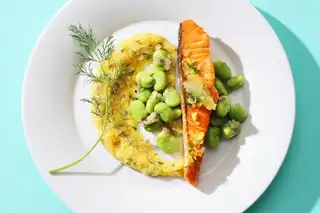
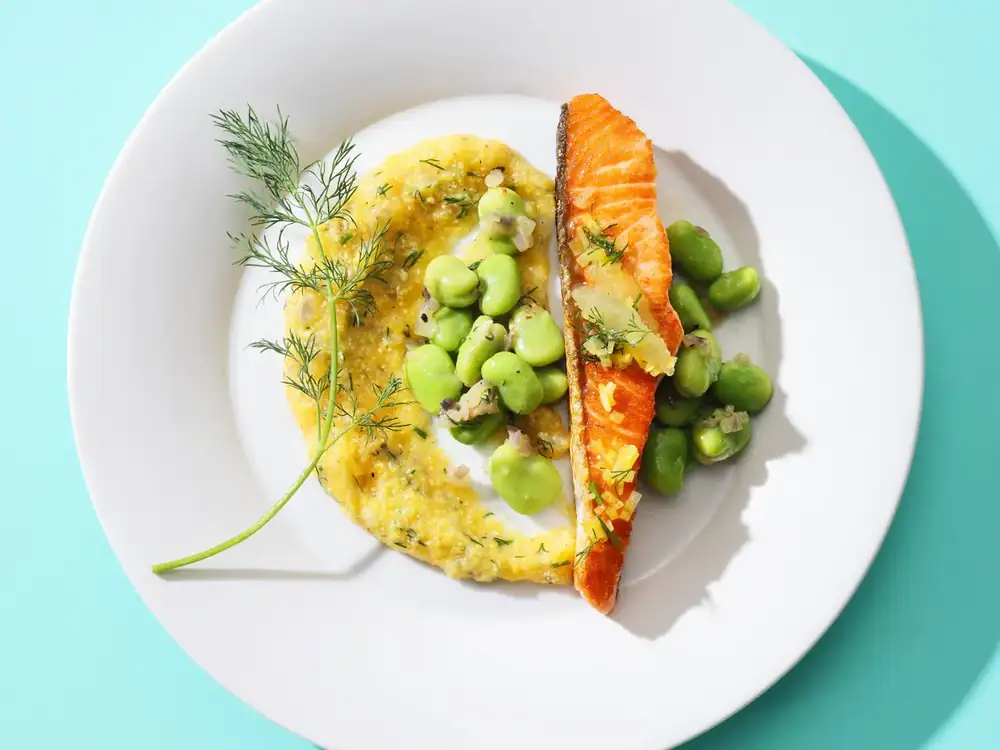
- To serve, spread the polenta onto the plates and place the beans in the center. Add a salmon fillet to each, season with pepper, and top with lemon-dill drizzle.
1. For the topping, wash and dry the lemon, then remove the zest with a vegetable peeler. Finely chop the zest and place it in a small bowl. Remove all the white pith from the lemon and cut out the segments. Add the segments to the zest. Use the other half of the lemon for something else.
2. Sort through the dill, wash it, and spin it dry. Set aside 2 sprigs of dill for garnish. Finely chop the remaining dill and add half to the lemon segments, stirring to combine.
3. Peel the onion, halve it, and dice it finely. Remove the skin from the beans, leaving only the bean kernels.
4. For the polenta, put 1 teaspoon of butter and half the onion in a saucepan and sauté over medium heat for 3–5 minutes until translucent. Then pour in the stock, bring to a boil, and stir in the cornmeal. Reduce the heat to low and let it simmer for another 3–5 minutes, stirring occasionally and stirring in the remaining dill. Season with sea salt and black pepper.
5. Wash and pat dry the salmon fillets. Heat a pan over high heat. Season the salmon all over with sea salt. Pour the rapeseed oil into the pan and place the fillets in, starting with the first cut side, and fry for a maximum of 7 minutes. Turn the fillets over, ensuring both skin and cut sides are exposed. (Internal temperature 58–64 °C).
6. For the beans, put 1 tsp of butter in a second pot with the remaining onions and sauté for 3–5 minutes until translucent. Then add the beans, cook for another 2–3 minutes and season with sea salt and black pepper.
7. To serve, spread the polenta onto the plates and place the beans in the center. Add one salmon fillet to each, season with pepper, and top with lemon-dill drizzle.