The language of wine and its misuse (I)
When we speak, we not only communicate, but we also draw boundaries, crafting phrases that evoke memories. Learning is the act of acquiring knowledge that satisfies our curiosity. Learning is the most underestimated of pleasures, one we must delve into to its very depths.
To age, to mature, to refine
In Spain, we use words far too casually, words that are never neutral and each has its own history. Let's delve into several elusive terms. Let's start with "añecimiento" (aging), which wineries on their websites, winemakers, journalists, critics, tasters, and sommeliers use to refer to the maturation of a wine. As we'll see, wines don't age in barrels, vats, tanks, or concrete eggs. The definitions in the Royal Spanish Academy Dictionary (RAE), in its latest update, further muddy the waters because they use "hacer viejo" (to become old) as a synonym for deteriorating, worsening, spoiling, wearing out… the complete opposite of what happens when we age a wine.
Our French and Italian neighbors don't fall into that trap because they seek to dignify that important moment. The oft-remembered Beppe Rinaldi explained to me, with his usual dry wit, that wines don't age, but people do.
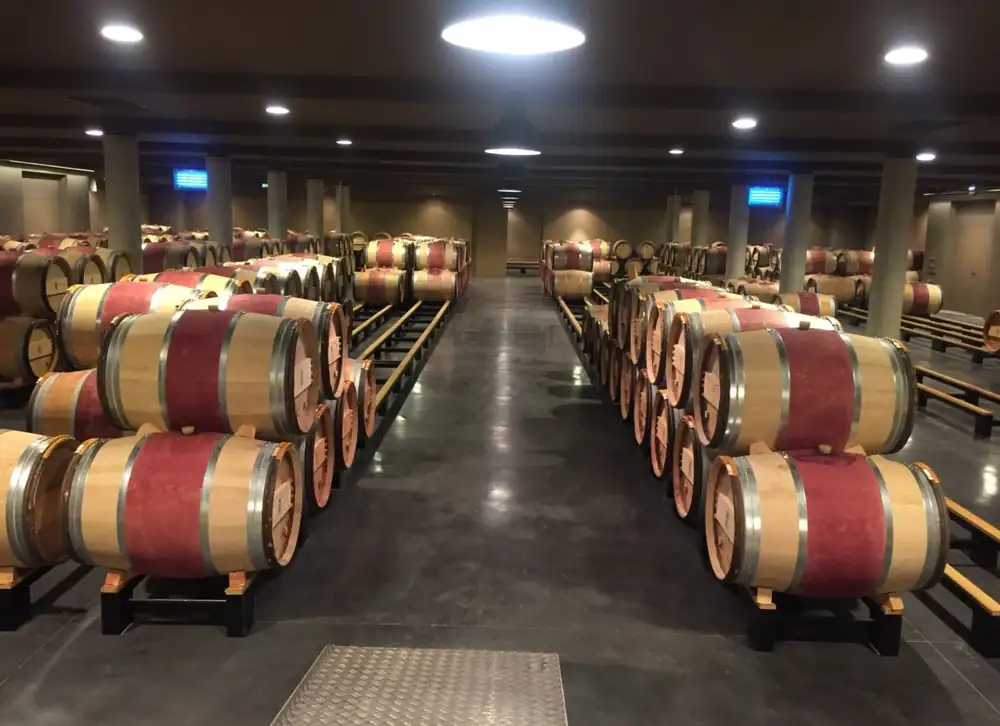
In Italy, wine matures in barrels or botti (large vats). Italians use the verb *maturare* to describe this important moment. During aging, the wine matures slowly and refines. And the bottle doesn't age it either, but rather completes its refinement. Italians use the word *affinare*. Words are beautiful, and precision makes them even more so. The nuances, as the economist Schumacher would say, highlight that "small is beautiful." Maturation and refinement are a phase of continuous evolution in wood that continues in the bottle. It is the passage from youth to maturity. It is the melody of our memory. *Affinamento*, *matturità* are beautiful words.
The French are not to be outdone. They use élevage or élever to refer to the aging of wine. But it means much more. It is the pedagogical act that forms part of its "education," because the verb also means to educate. Therefore, it refers to maturation and refinement, not aging. The French go even further because the verb also means to elevate, and that is a whole new level, because this process that takes place in the barrel is not only about educating or raising the wine, it also means rising to a higher plane, perhaps even speaking with God.
Aging refers to the ability to last over time. It is the process by which wines change, acquiring their own bouquet; it is the experience a wine undergoes after maturation and refinement, through its education, until it reaches eternity.
Cutting, cutting, cutting, assemblage, assembly
Another word that makes you cringe and causes problems when you're trying to sell wine is "coupage," "coupage," "cupatge"... If you cross the French border and want professionals to taste your wine, you should never mention "coupages." For a French person, "coupage" is for artisans who mix inexpensive wines, while the artist achieves greatness with "asemblage" (assemblage), where they blend plots, wines, or varieties to reach excellence. A Champagne cellar master or a Bordeaux winemaker considers themselves an artist performing that magical process of blending. If you mention the word "coupage," they'll tell you to leave.
Cupaje or cupatge is a Gallicism, recently added to the Spanish and Catalan dictionaries, in contrast to asamblea, which has been among us for a long time, as evidenced by the eminent philologist Joan Corominas in his Critical Etymological Dictionaries of the Catalan and Spanish languages. We are faced with a dichotomy, a question of quality versus a mechanical one. Art versus craft.
Since the creation of the Protected Designations of Origin (PDOs), there have been rules regulating what winemakers can and cannot do. In Burgundy, blending (adding a little water or another wine to increase the alcohol content) is prohibited, and wines are made from a single grape variety (Pinot Noir or Chardonnay). Elsewhere, blending different grape varieties to make a wine is permitted, but only under certain conditions.
Giacomo Tachis, the eminent Piedmontese winemaker and author of the great Tuscan and Sardinian revolution of the 1980s (Sassicaia, Tignanello, Solaia, Terre Brune, Cervarodella Sala), liked to repeat: "Io non sono un enologo, sono un umilemescolavino," "I am not a winemaker, I consider myself a humble wine blender." He boasted of never having made a single-varietal wine.
There was a time when words reflected reality. The language of Cervantes or Emilia Pardo Bazán, or that of Pla or Montserrat Roig, is as beautiful as that of Dante, Petrarch, or Susana Ginzburg, or that of Molière, Simone de Beauvoir, or Camus. Let us, as professionals, not be the ones to denigrate them; we must respect them and use them in the best way possible. Let the powerful music of the voice resonate without stridency.