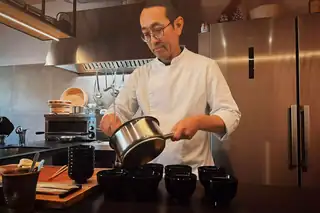
Wagokoro: una sorpresa en un pequeño pueblo de ensueño
Wagokoro Pirineu, que se traduce literalmente como esencia japonesa, es la imagen de la serendipia, un rincón inesperado y riguroso de washoku (gastronomía japonesa) en Gerri de la Sal, la pequeña localidad de Pallars Sobirà en Lleida, conocida por sus salinas.
Wagokoro Pirineu - literally translated as Japanese essence - is the image of serendipity, an unexpected and rigorous corner of washoku - Japanese gastronomy - in Gerri de la Sal, the small town of Pallars Sobirà in Lleida known for its salt pools.
Gerri de la Sal is a picturesque village, a place with a history dating back to the 12th century, fantastically small and easily missed on a road trip to Vielha or Cerdanya. Bathed by the sound of the river, the walled village preserves its stone walls, cobbled streets, and sense of peace and tranquility. Among some twenty traditional houses, Japanese curtains mark the passage to a parallel universe, to a completely different tradition.
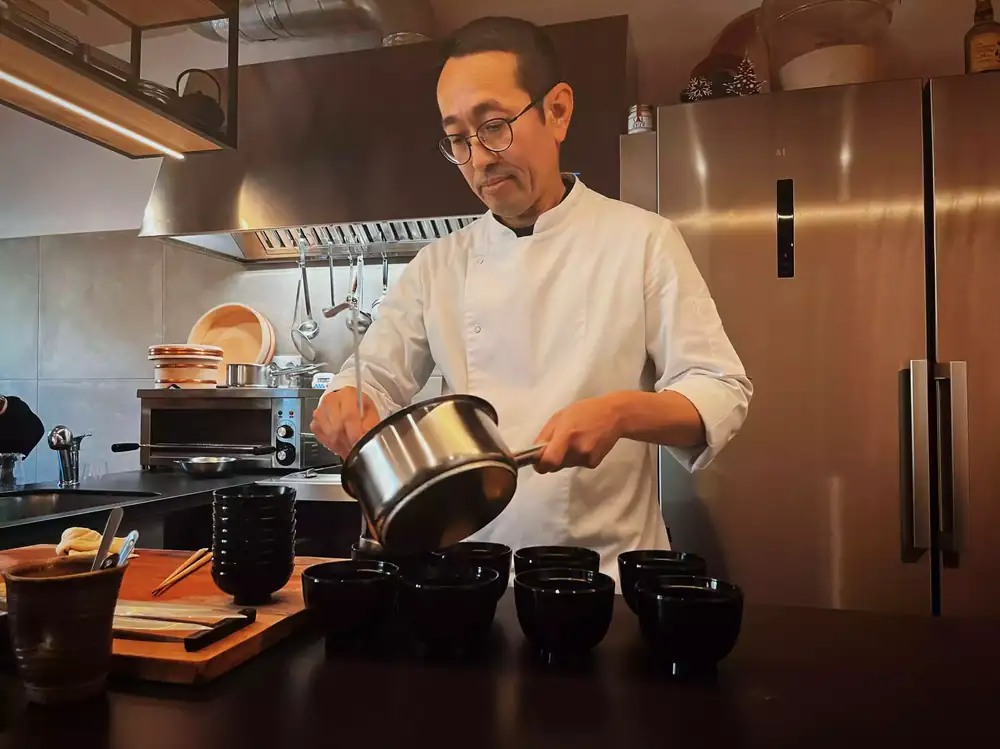
It's impossible to understand Wagokoro Pirineus without explaining the story of Kenya Nakamura and Anna Peraire, its creators. Without knowing Wagokoro Barcelona, their first Japanese restaurant located in the Sant Gervasi neighborhood, the idea seems like a dream: a Japanese chef, cooking in a Japanese style, far from his country and removed from any major city; in a village of about a hundred inhabitants, with a predominantly elderly population, far from fish markets, Asian markets, and shops, at an altitude of 600 meters and far from any major thoroughfare. As the icing on the cake, Anna, a Barcelona native, is by his side, speaking fluent Japanese with Kenya, while serving and explaining the dishes and how to eat them in a didactic way.
Wagokoro Pyrenees is located on the first floor of a traditional 18th-century Pallaresa house where Anna's grandmother lived and where she grew up during those village summers that leave a deeper mark than city winters. After living together in Berlin and Japan, where she perfected her Japanese, and after Wagokoro Barcelona, they both longed for the fresh air and tranquility of the mountains. With a renovation plan for the family home delayed by the pandemic, the project was born four years ago, finally creating an intimate space with natural light, views of the river and the medieval bridge of Gerri; a restaurant designed to be family-oriented and personal, a source of sustenance and work, but at its own pace. It is a home for entertaining and cooking, an omakase, putting yourself in the chef's hands, in its most extreme sense.
The old adage "good things come to those who wait" certainly applies at Wagokoro. Making a reservation is difficult, because the magic happens only at lunchtime; in a single seating (2:00 pm) and with a maximum of 11 diners per service, although their ideal is 8. Entering this dining room feels like a privilege, and once you're seated behind the bar, the closeness and intimacy of the two hosts leads to a sense of luxury. Wagokoro's tasting menu is set, with about 12 courses, showcasing a parade of expertly executed Japanese techniques. Intense, warm, and comforting broths; light, crispy, and juicy fried dishes; and flavorful, delicate, and fluffy sushi.
Whether out of necessity or conviction, locally sourced ingredients are combined with Japanese cuisine with a revealing naturalness, including vegetables from their own garden, mushrooms (in season), river trout (from Tavascan), cheeses from Pallars, and organic meats from the Pyrenees. The fish (tuna, amberjack, etc.), which Kenya fillets and prepares live before serving the nigiri, arrives at Gerri from Barcelona, from the same supplier they used at Wagokoro Barcelona, well-known for distributing the finest tuna to the leading Japanese restaurants in Catalonia.
In addition to their commitment to local sourcing, they embrace a slow food philosophy, which they call tezukuri. This philosophy means they don't buy pre-made or industrial products, producing everything in Wagokoro from scratch. An example of this is the miso, featured in the first courses, or the dashi in which a perfectly cooked sea bream is submerged midway through the meal. Everything that begins long before the diners are seated is finished with precision before serving: Kenya fries, fillets, grills, sears, shapes, and completes the dish just twenty centimeters from the diner, in a mesmerizing culinary ritual.
After two cold courses, which already hint at the similarity to Tavascan trout, comes the chawanmushi, a dish unlike any other in other cultures. Anna explains its literal translation (steamed cup), and the magical texture is revealed. Somewhere between creamy and gelled, with the lightness of a panna cotta and the richness of a flan, it's a comforting winter dish made with dashi, egg, soy sauce, and mirin. It's hard to find a good chawanmushi, but even harder to forget once you've tasted it.
The immediate connection returns with the next course, in which a kind of tempura fritter of artichoke and prawn (served with its fried head, to be eaten whole) is accompanied by a bowl of Gerri salt. In the village that prospered thanks to its saltwater spring, serving tempura with any other seasoning would be an affront, and for this reason, Anna recommends eating the tempura bite by bite, dipping it in the Gerri salt (previously crushed so that it adheres to the crispy surface).
Continuing with the theme of local ingredients, we have walnuts. As the star fruit of the high mountains, they replace sesame, which in Japan would likely be the ingredient of choice for soba noodles. Served simply with nori seaweed and a creamy, clean-tasting walnut sauce with a deep, sweet, and slightly acidic note, the technique here involves dipping the noodles in the sauce so they all finish at the same time, resulting in juicy, flavorful, and creamy soba.
After a Japanese stew that is finished with a very citrusy Japanese pepper (sansho) and with the numbing sensation of a Szechuan flower that cleanses the more pronounced flavors, the cadence lengthens to give way to the 5 nigiri prepared at the moment, with the instruction to eat as soon as they are served; the spectacle of the live cooking culminates in the last gunkan.
With a steaming bowl of miso soup in their hands, in the middle of the Pyrenees, in front of the Noguera Pallaresa, Kenya and Anna's omakase menu comes to an end, a pilgrimage through Japan that is well worth the trip to Gerri.