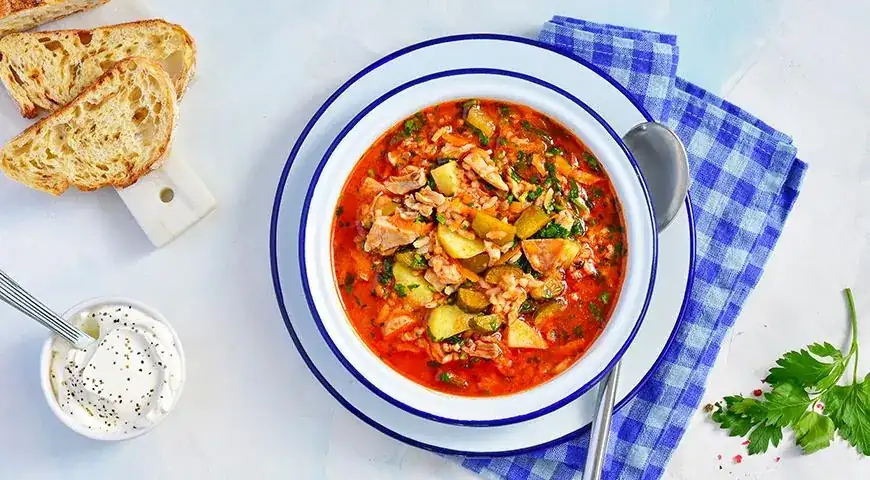
Rassolnik with rice and tomato paste
The history of rassolnik dates back to the distant 15th century. Back then, it was called kalya and was made primarily with kidneys, pickles, and brine. Today, there are many more recipes. The soup is made with beef, pork, or, as we do, chicken. A variety of grains are added alongside pearl barley.
- Chicken drumstick
- Round grain polished rice
- Potato
- Carrot
- Onions
- Pickled cucumber
- Cucumber pickle
- Tomato paste
- Butter
- Refined vegetable oil
- Bay leaf
- Ground black pepper
- Sour cream 25% (classic)
- Place the chicken legs in a saucepan and cover with 2.5 liters of cold water. Bring to a boil, add salt, skim off any foam, and simmer gently for 1.5 hours. Then strain the broth and return it to the saucepan. Remove the meat from the legs and cut into small pieces.
- While the broth is cooking, pour the rice into a heavy-bottomed frying pan and fry over medium-low heat, stirring occasionally, until beige in color, about 7 minutes.
- Peel the potatoes and cut into small slices. Peel the onion and carrot, chop finely, and fry in vegetable oil over medium heat for 10 minutes.
- Peel the pickles, slice them, and fry them separately in butter for 5–7 minutes. Add the tomato paste and a ladle of broth, stir until the tomato paste dissolves, and remove from heat.
- Bring the broth to a boil, add the chicken, rice, potatoes, carrots, and onions. Cook for 10 minutes, then add the cucumbers with tomato paste and brine to taste, and cook for another 10 minutes.
- Remove the soup from the heat, add the bay leaf, and season with salt and pepper. Cover and let steep for 10 minutes.
Rassolnik with tomato paste and pearl barley in chicken broth is a variation of the famous Leningrad soup. The only difference from the classic recipe is perhaps the addition of tomato paste, which adds a more piquant flavor. The key to a successful rassolnik is good pickled cucumbers, which are usually peeled and seeded. Homemade or barreled cucumbers from the market are best. Find the right cucumbers and you won't need to add any salt to the soup! If you try the almost-finished dish and find it a bit bland, add a little more brine—it might just be enough.
If you're unsure whether rassolnik can be made with tomatoes, just try it and see how you like it. The classic recipe, of course, doesn't allow for such liberties, but culinary creativity is always welcome. Moreover, tomato paste is usually added to rassolnik, so the tomatoes won't look too out of place in this recipe. Of course, fresh tomatoes won't add a sour taste to the soup, but the brine we've included in the ingredients will do the trick perfectly.
Rassolnik with beef and rice is the perfect cold-weather soup. It's filling, rich, warming, and, most importantly, very easy to prepare. This classic first course with pickles, dating back to the 15th century, was traditionally prepared with pearl barley. The broth was made with giblets, and vegetables such as cheap turnips, carrots, onions, and celery were added. Over time, the recipe has undergone significant changes. The broth is now most often made with chicken, turkey, or pork. The most delicious, of course, is made with beef. Modern cooks also don't always have the time or patience to wait for pearl barley to cook, so rice has become increasingly popular. This gives the soup a more delicate, creamy flavor. We'll leave the rest of the ingredients unchanged: pickled cucumbers (not marinated), carrots, potatoes, celery, and bell peppers. We'll definitely add the brine. It will give the soup that rich, spicy flavor.
Rassolnik with pickled cucumbers and rice is a very juicy and delicious first course. It has a sweet and sour flavor and a crisp, piquant aroma. Anyone who loves pickled cucumbers will definitely appreciate this soup. Traditional rassolnik is usually prepared with pickled cucumbers, but if you don't have any on hand, we suggest deviating from the classic recipe and adding pickled cucumbers. Since the cucumbers are preserved with sugar and vinegar, the broth will be completely different, more savory, with a piquant note. This recipe calls for lean pork. However, during Lent, you can cook it in water or vegetable broth. The remaining ingredients remain the same: potatoes, carrots, onions, and a couple of cloves of garlic. To speed up the cooking process, add rice instead of pearl barley. Fresh sour cream is the perfect pairing for rassolnik.
This fresh cucumber rassolnik with pearl barley will surprise those who have been confidently making it exclusively with salted cucumbers for years. But we've tested this recipe and found it to be a true success! The rassolnik has a very rich flavor, with a slight tartness thanks to the tomato paste. You can eat this soup straight away, of course, but if you want to make your life easier this winter, can it in jars (we explain how in detail at the end of the recipe). Some people are afraid to can rassolnik with pearl barley, but there's nothing to worry about: it doesn't affect the shelf life in any way. Then, in winter, all you have to do is open the jar of this soup, reheat it, serve it, and wish yourself and your family bon appétit.