La Milla de Oro del Vino se convierte en la Milla de las Estrellas
Ambivium, el restaurante de la bodega Pago de Carraovejas, ha obtenido su primera estrella Michelin. Con esta incorporación, que se suma a las ya concedidas Taller Arzuaga (Bodegas Arzuaga Navarro) y Refectorio (Bodegas Abadía Retuerta), la zona cuenta ahora con tres restaurantes con estrella Michelin asociados a bodegas. Ribera del Duero es un auténtico fenómeno, no solo en el mundo del vino, sino también en el ámbito culinario.
Ambivium, the restaurant at the Pago de Carraovejas winery, has earned its first Michelin star this year. With this addition, and adding to the previous stars of Taller Arzuaga (Bodegas Arzuaga Navarro) and Refectorio (Bodegas Abadía Retuerta), there are now three Michelin-starred restaurants in the area associated with wineries. Ribera del Duero is a true phenomenon, not only in the world of wine, but now also in the culinary scene.
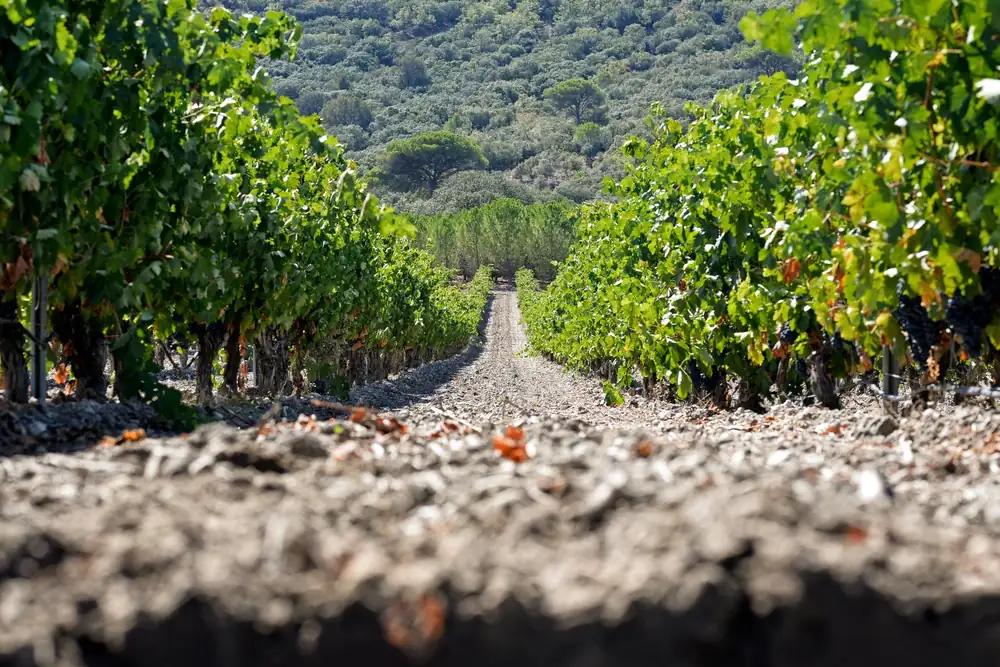
In the Ribera del Duero region, there's a strip of land stretching from Peñafiel to Tudela de Duero that's the cradle of great wines and iconic wineries. It's the well-known Golden Mile of Wine. But if we zoom in on this area, we'll discover, within this Wine Mile, an even more remarkable landmark. Within a radius of just over 20 kilometers, surrounded by vineyards and born from the same exacting standards that produce such distinctive wines, we find three restaurants located in wineries that have already earned their first Michelin star: Ambivium (Pago de Carraovejas), Taller Arzuaga (Bodegas Arzuaga Navarro), and Refectorio (Bodegas Abadía Retuerta). What is it about this enclave on the Castilian-Leonese plateau that makes it such a benchmark for wine and gastronomy?
Destination: Ribera del Duero
Ambivium is the latest addition to the Michelin-starred winery restaurants. With a gastronomic offering centered around wine, the Pago de Carraovejas restaurant has solidified the commitment of Ribera del Duero wineries to haute cuisine. “Together, we are creating a wonderful destination for both national and international visitors” says Pedro Ruiz, CEO of Almacarraovejas.
And that, ultimately, is the goal of this trend of creating gourmet restaurants located within wineries: to create a destination. “We have to think about the customer who has come to Ribera del Duero to spend a few days and to whom we must offer a range of options. There has to be a variety of choices” emphasizes Enrique Valero, general manager of Bodegas Abadía Retuerta, who understood from the beginning that this was the path to success and opted for the creation of an entire hotel, wellness, and restaurant complex, with the Michelin-starred Refectorio at its heart, linked to the activity of the cellars. Arzuaga Navarro also followed this path, with a hotel and a diverse gastronomic offering.
Fine dining, therefore, has allowed these wineries to expand their concept, pursuing a common goal that benefits the entire region, "by keeping people in rural areas," as Pedro Ruiz points out, and offering visitors a complete experience that "turns them into ambassadors not only for the winery but also for the region," concludes Enrique Valero. This path to success has only just begun because, according to Ignacio Arzuaga, director of Bodegas Arzuaga Navarro, "now that we have three Michelin-starred restaurants, we have a story to share, and collaboration will only increase."
Cooperation. Combining synergies. Collaboration. Call it what you will, but the truth is that much of the region's success lies in "this." "We are a single destination with three distinct personalities. That's what makes us rich," they tell us from Abadía Retuerta, and "we can complement each other," concludes Arzuaga-Navarro. The increase in Michelin-starred restaurants in the area's wineries is therefore seen not as competition but as an opportunity. "We have to work hand in hand. What we're selling is Ribera del Duero, a brand of Spain; it's a shared destination and a unique one. We want to promote the region and not just attract visitors to see us. We sell culture, history, nature, and also our future," summarizes the director of Almacarraovejas.
A collaboration that, according to Enrique Valero, “is more difficult in other parts of Spain, but flows more smoothly here.” Ribera del Duero is a relatively young wine region (its designation of origin was officially established in 1982), and so are its ways. “The fact that we don't have as much history as other wine regions means we're less afraid to keep evolving and seeking a new position” explains Pedro Ruiz, who, “while respecting tradition” emphasizes the area's desire to move forward. To move forward “because everything is changing so fast now” and “because excellence is the goal” concludes Ignacio Arzuaga.
Winery stars
At this point, it's undeniable that the wineries of the Golden Mile have done excellent work in the wine sector, and all indications are that the same success is being applied to their fine dining projects. What's the secret? "As wineries, we are committed to very high-quality wines, and when we ventured into the hospitality industry, we simply wanted to reflect in our gastronomy the same work we do in the wineries," explains Ignacio Arzuaga.
The commitment to quality and excellence begins with having a clear vision and a good team. This principle was applied at Refectorio, which became the first restaurant in the Ribera del Duero region to earn a Michelin star in 2014. “When we decided to open a fine-dining restaurant, we knew we had to offer something that would satisfy a discerning clientele. That's why we partnered with Andoni Luis Aduriz, who helped us develop a menu based on local produce but presented creatively” recalls Enrique Valero. Now, Refectorio continues this approach of landscape-driven cuisine, immersing itself in the local area, with chef Marc Segarra at the helm and a focus on local produce and sustainability, a philosophy that has also earned it its first Michelin Green Star this year.
They also captured a genius at Taller Arzuaga by entrusting the culinary direction to Peruvian chef Víctor Gutiérrez, who already held a Michelin star at his Salamanca restaurant, with the idea of achieving “a unique concept, unlike any other, in either concept or space” explains Amaya Arzuaga, the restaurant's director. “Arzuaga is known for producing wines with a strong personality, and the cuisine we offer must reflect that unique character we strive for” adds her brother Ignacio. Their menu features local products, especially game, and incorporates avant-garde Castilian cuisine to which Gutiérrez adds a Peruvian touch.
Finally, Ambivium has also focused on attracting talent by adding David Robledo, the former sommelier of Sant Celoni restaurant since its inception, to its gastronomic director team. This is a valuable asset for both the dining room and the wine selection at a restaurant where, as Robledo himself explains, "wine is the absolute star." "We try to rethink the concept of wine pairing. Instead of seeking pairings based on the food, we start with the wines and create menus that complement them," explains an enthusiastic David Robledo, who, "after 20 years in Madrid," is delighted to be working in the countryside, "highlighting local produce and using it at the right time, according to its seasonality."
Three Michelin stars have been awarded to “three restaurants with three very different proposals - both in our cuisine and in our presentation - that make us complementary” and, Amaya Arzuaga tells us, they are already working “on a joint project to launch when all this is over.”
Let's raise a glass to the success of these restaurants, which is driving a whole new dynamic in the future of wine tourism. With a Ribera del Duero, of course.