The History Of Draft Beer Goes Back Further Than You Think
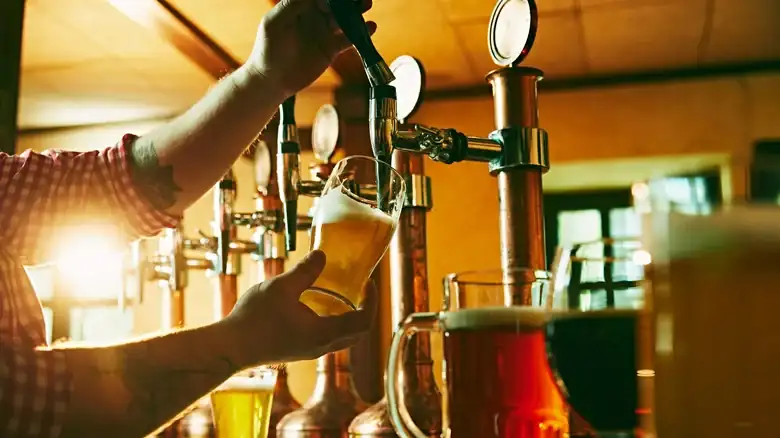
Draft beer delights with a special kind of smooth satisfaction. While a bartender pouring a pint makes the beverage appear effortlessly, an intricate system delivers the booze into the glass. Relying on a mixture of carbon dioxide and nitrogen gas, valves pump beer from keg to glass all via tap.
This tasty form of enjoyment kicked off in the late 1790s when English inventor Joseph Bramah created a device called a beer engine. The setup involved a piston that dipped into a cold cask underneath the bar, with the pumping force carried out manually by the bartender. The process is still enjoyed today for smoother-tasting cask ales — like a unique British pale ale — allowing you to sample beer history.
Beer from the tap has evolved since the 18th century
From the onset of beer consumption thousands of years back, storage came into play. During Neolithic times, Mesopotamian civilizations kept their grain-based brews in stone vessels. As the beverage spread, new materials like ceramics and terracotta became the prominent composition. The next big leap occurred during the Middle Ages when European monks started holding beers in wooden barrels. With an ability to seal and sanitize, the possibilities of beer distribution expanded. However, there was no elaborate mechanism of extracting the beer from the keg; it would simply be poured into a glass.
Come the 18th century, Joseph Bramah's invention pivoted beer history. Although enjoyment sans bottle or can existed prior to the late 19th century, his method brought the brew into the tap. The invention of pasteurization in 1864 further developed beer history, leading to the possibility of storage in steel tanks. By the early 20th century, the vast majority of draft beer became served pressurized. Forced carbonation allowed for an extra dose of artificially created bubbles while pouring; a distinguishing factor from the naturally carbonated real ale. And the intricacy of taps only kept expanding, leading to beers served at new temperatures and consistencies. By the 1970s, the modern textured beer became widespread. So next time you're pouring a beer from a tap, know that centuries of evolution went into the glass.