The Complex Political History Behind The Standardization Of Thai Restaurant Menus
Culture is more than just food, of course, but food often tops the list of easy entry points when discussing cultural differences or similarities. Our ideas of which foods belong to different cultures, however, have as much history and politics wrapped up in them as the foods themselves.
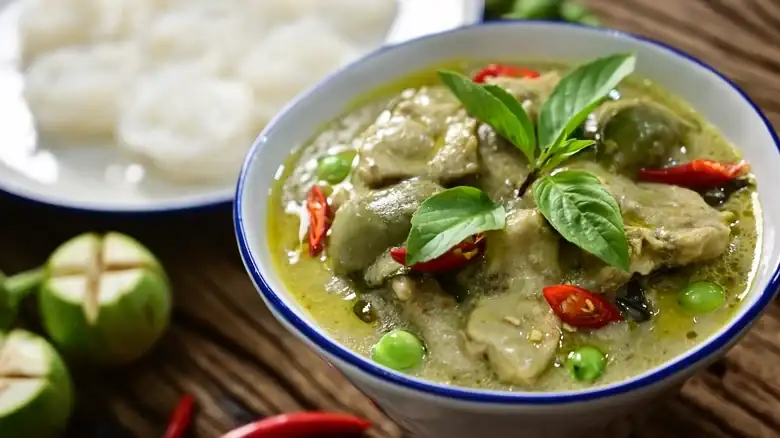
Thai cuisine illustrates the point. In America, travelers can practically count on a Thai restaurant in every city. These restaurants often serve familiar and comforting staples like green curry and pad Thai with the same reliability as your favorite diner or chain restaurant. The reason for that may be tied to the ways the Thai government has seen food as a way to raise its diplomatic profile, among other things.
Not only did the government create and standardize Thai cuisine for export, but it also studied regional food preferences across the globe to tailor menus, somewhat optimizing them for adoption in foreign lands. Pad Thai, for example, may have roots that are largely more Chinese than Thai.
Gastrodiplomacy and pad Thai
The roots of pad Thai go back to World War II when Thailand suffered a rice shortage. Prime Minister Plaek Phibunsongkhram noticed that rice flour could be stretched by making it into noodles. This presented a way to keep the people fed, arguably an important task for any ruling party.
The Prime Minister had just been a part of the overthrow of the previous monarchy and may have been looking for a way to unite his people under one cultural banner. Enter pad Thai, a dish that likely originated in China, as it was the Chinese who invented and introduced noodles to Thailand.
The dish was promoted as a nationalistic exercise in unity and duty to one's country. Cut to the early aughts and you have a dish that becomes an export tailored to fit the palettes of outsiders. Enter the Global Thai program, a successful bid in what The Economist dubbed "gastro-diplomacy."
In 2002 the Global Thai Program, created by the Thai government, began to subsidize the creation of Thai restaurants around the world. It defined three types of Thai food service and quality standards that could earn foreign restaurants a Thai Select award. The entity also trained cooks to go out and become ambassadors through tasty Thai dishes. Success may have been measured in exports of Thai food, the number of Thai restaurants abroad, or other intangible qualities of diplomatic relations.
Food chosen for you
It's important to note that Thai restaurants existed in America long before 2002. Speaking with The Splendid Table, University of Nevada Las Vegas professor of Asian and Asian American studies Mark Padoongpatt noted the prevalence of celebrities at Thai restaurants in Hollywood during the '80s, and the boost in "cultural cachet" to both.
While the Global Thai Program created its own slice of what would be deemed Thai in the name of helping to define high standards, some, like Alexandra Domrongchai in Food & Wine, argue that it also inadvertently limited the expressions of authentic Thai food.
Indeed, popular restaurants around the world offer explanations for their own food when they deviate from standard expectations of Thai tastes. Take Dee Dee of Austin, Texas, which serves food from the northern Thai border specifically. Dee Dee challenges the now prevailing expectations of what American Thai food might be by going big on flavor and herbs, whereas other Thai restaurants might load their dishes up on protein versus fresh herbs.
Thailand is certainly not the only country hoping to portray a positive image of its culinary traditions. Its success is seen as a boon to Thai people by some and a prohibitive force by others. Either way, chances are good that your favorite Thai dish was preapproved by bureaucrats in the not-so-distant past; something to chew on the next time you tuck into a spicy conch salad or cucumber soup.