13 Tips For Making Kale Actually Taste Good
Because of its bitterness, kale in soup shines with the addition of aggressive flavors like bacon, miso, and chili peppers. It is all about balancing out flavors. Bitterness can be a wonderful flavor when umami, salt, sweet, and sour are delicately incorporated.
Massaging kale might sound ridiculous, but it works like a charm. Grab the leaves and knead them by hand vigorously for a couple of minutes. This process will disrupt the cellulose in the kale leaves, forcing their fibrous tissues to yield and become supple. After massaging your kale, you will notice that not only have the leaves become more verdant in the process, they have dissolved to half their size. This spa treatment will also dampen the bitterness of kale, making it milder in flavor and easier to chew. All you will need at this point is a light vinaigrette for the perfect kale salad that won't make your jaw feel like it just gnawed through an oak tree.
Start with rendering chopped bacon in a pan. We love applewood smoked bacon or even maple bacon for extra flavor. Once you have cooked the fat out of the bacon, add a hint of apple cider vinegar and a pinch of sugar or honey. If you want to pump up the flavor, add some minced garlic or shallots into the mix. Once the vinegar, sugar or honey, and garlic or shallots have just heated through, toss the kale leaves with the warm vinaigrette. The dressing will start wilting down the greens the way they would begin to break down if you blanched the leaves. We always top this with a soft-boiled egg and a hint of gorgonzola for a delectable salad.
Use the right type of kale
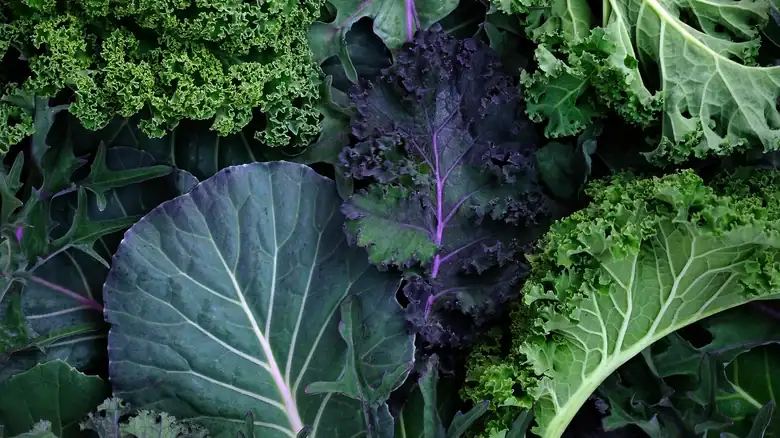
Kale comes in two types: Edible and decorative. Edible kale has four breeds — Curly, Lacinato, Russian, and Baby. Each of these varieties lends itself to specific culinary uses. Each contains numerous subtypes available in farmer's markets across the U.S. Curly kale is the kale you typically find at a grocery store. Identified by its ruffled leaves, curly kale is delicate in flavor and not overly chewy in texture. It shines in recipes for smoothies, pesto, and making chips. The leaves of this variety of kale can range from green to blue to purple. Subtypes include Winterbor, Redbor, Westlandse Winter, Scarlet, and Blue Curled Scotch. Lacinato kale, sometimes known as "Dinosaur" kale, has long, bluish-green, bumpy leaves which resemble savoy cabbage. Its flavor is ideal for sautéing, braising, or otherwise incorporating into cooked dishes. Subtypes of this variety inc
Store and clean your kale properly
How you clean and store kale is as crucial as selecting the type of kale you want to use for a specific recipe. Kale can be notoriously delicate despite its fibrous cellulose-laden leaves. Once you purchase your kale, which should be fresh with bright-colored, firm leaves, place it into a plastic storage bag wrapped in a paper towel to draw away the moisture from the leaves, and remove as much of the air from the baggie as possible. Never wash your kale before storage, or it will wilt and rot. When properly stored, kale will last for up to a week in the refrigerator. To clean kale, remove the stem and ribs. Depending upon the type of kale, this can be done by grabbing the stem of the kale with one hand and pulling the leaf off it with the opposite hand or by cutting the stem and dense ribs away from the leaf using a paring knife. Store kale stems in the free
Cut or tear the kale into small pieces
Because kale is rife with cellulose making it tough and woody, it can be hard to chew and take forever to break down, especially depending on the specific variety you are using. Cutting it into smaller pieces helps speed up the cooking process and will give it a more appealing mouthfeel when eating it raw. Depending on the specific application the kale is for, you may cut it into smaller or larger pieces. For braising or sautéeing, you can leave the kale in slightly larger chunks, as these will wilt down when heated. For salads, chop the kale finely, like a chiffonade, which gives it a more palatable texture. The key is always to use a sharp butcher's knife. When kale gets cut, enzymes immediately release that encourage cellular degradation of the kale, rendering it wilted and bruised or browned at the edges. A sharper knife will damage fewer cells than a dull kni
Soak the kale in ice water before cooking
If you perceive that your kale has wilted considerably after cutting it, you can shock it with some ice water to help reconstitute the leaves. All you need to do is place the cut leaves in a bowl of ice water and place the bowl in the refrigerator for about 30 minutes. Dry the kale thoroughly in a salad spinner or with paper towels and use immediately to avoid any further wilting. As a bonus, soaking the kale in ice water helps minimize the bitterness of the kale. This bitterness is the by-product of two enzymes, myrosinase, and glucosinolate, a sulfur-rich compound. Before being cut, these enzymes remain distinct, but the second the kale gets cut, they interconnect. The resulting isothiocyanates make kale exceedingly bitter. An ice water bath will help rinse some of these isothiocyanates off the kale, making it sweeter. This enzymatic process is one of the pr
Freeze fresh kale
Like other green leafy vegetables, kale will wilt down substantially when cooked, so the likelihood of using up what you have is pretty high. Should you have more kale than you can use before it rots, freeze kale to maintain its freshness. Frozen kale can be used in smoothies, soups, stews, egg dishes, or any other cooked dish. Kale can be frozen without any advanced preparation, but it will need to be used within four to six weeks after freezing, as the kale will continue to age, releasing enzymes that will render it increasingly bitter as time goes on. This bitterness is likely too strong to use in a smoothie or other dish where it is the star without overwhelming the recipe. When cooked in a soup or stew with other ingredients, the bitterness will get tamed by other spices and ingredients. Ideally, kale should get blanched before freezing it. Once you wash the kal
Bake your kale chips on a low temperature
Kale chips may sound like a fad, but in actuality, chips are one of our favorite ways of eating kale. You get a satiating crunch in a salty yet healthy snack. While they seem straightforward, kale chips can get soggy and drenched with oil, or burnt, making them even more bitter. There are several keys to baking the perfect chip. First, once you have washed and dried your kale, spread your kale leaves onto a baking sheet in a single layer. Leave your kale leaves whole or halved rather than cutting them into smaller pieces. The next step involves carefully adding enough oil to coat the leaves without drowning them. The easiest way to accomplish this is with a spray bottle. Transfer your oil to the spray bottle and lightly coat all the leaves. Doing so will ensure even coverage. We prefer adding flavored oils like sesame, chili-infused oil, or garlic-infused olive oil.
Jazz up your pesto
Pesto is a delectable verdant sauce originating in the northwestern Italian region of Liguria, specifically the town of Genoa. This sauce, whose name translates to "pound or crush," gets its moniker from how it's typically made — by pounding fresh basil, pine nuts, garlic, cheese, oil, and salt into a paste with a mortar and pestle. Today, pesto is more of a guideline than a recipe, with variations popping up with many different ingredients, including other herbs or greens, like kale. The key to kale pesto is to use the appropriate type of kale, with bright green curly kale being the most frequently used, although the sweeter Russian varieties can be a great alternative. You will want to combine the kale with the basil to balance the bitterness of the kale with the sweet floral basil leaves. You can also substitute different nuts instead of pine nuts, thereby
Add it to smoothies
Drinking a smoothie for breakfast is a stellar way of jumpstarting your day, especially if you aren't a big breakfast person. Whipping up something simple and nutritious to drink that is easily transported is efficient and effective. The key is ensuring your smoothie has plenty of nutritional vitamins and minerals, not just sweet and tasty. Because kale is such a low-calorie, nutrient-dense food, it is an ideal addition to a smoothie recipe. The key is to minimize its bitterness. The best way to offset the bitterness is to blanch your kale before adding it to your smoothie. This process will also improve its digestibility by breaking down the cellular structure of the leaves, enabling your body to access those nutrients and absorb them. Kale should always be paired with some fat, like nuts and seeds, which will maximize your absorption of fat-soluble nutrients, li
Use it in soups that call for spinach or any other leafy green
While several classic recipes for kale soup exist, including Tuscan Ribollita with white beans, Portuguese Caldo Verde with potatoes, and German Grünkohlsuppe with potatoes and smoked pork sausage, kale can be used as a substitute for virtually any green leafy vegetable in a soup. From spinach to collards to Swiss chard, kale can be substituted one-to-one in a recipe. Just keep in mind that depending upon the type of kale used, it may take slightly longer to cook than spinach, for example, due to its fibrous, dense leaves. Because of its bitterness, kale in soup shines with the addition of aggressive flavors like bacon, miso, and chili peppers. It is all about balancing out flavors. Bitterness can be a wonderful flavor when umami, salt, sweet, and sour are delicately incorporated. In addition, remember to thoroughly clean your kale so that your soup doe
Braise it in bacon
Braising refers to a cooking technique where an ingredient gets slow-cooked in liquid for some time. This process renders the ingredient tender thanks to the liquid and steam in the slow cooker or Dutch oven. It is particularly effective for ingredients like tough cuts of meat and root vegetables but also for fibrous, bitter vegetables like kale to soften the greens and remove excess bitterness in the cooking process. Once the ingredients have cooked, the braising liquid has concentrated in flavor and viscosity, making it delicious when served alongside the meat or vegetable. Our favorite way to braise kale is in a little bit of bacon that has gotten rendered out. We typically add some finely chopped onion and minced garlic before putting our roughly cut kale into the pot. The key is the seasonings you use, the liquid you braise in, and adding a hint of swee
Give your kale the spa treatment
Kale salads can be delicious but require some finesse to tenderize the leaves. Which kind of kale you use in salad matters. More delicate varieties like Russian or baby kale make better choices in a salad. If these varieties are not available, don't let that stop you. One way to help tenderize your kale regardless of variety is to blanch it in boiling water for two and a half minutes, followed by shocking it in ice water for an additional two and a half minutes before drying it thoroughly and throwing it into your salad. But a better way that will always work like a charm is to give your kale some TLC in the form of a relaxing deep tissue massage. Massaging kale might sound ridiculous, but it works like a charm. Grab the leaves and knead them by hand vigorously for a couple of minutes. This process will disrupt the cellulose in the kale leaves, forcing their fibrous
Acid is your friend
Another great way to help tame bitterness in kale? Add some acid. Aside from providing a balance of flavor to combat the bitterness of kale, acids like vinegar and lemon juice can break down the cellulose of the kale leaves, making them more tender, especially in a salad. The ratio of oil to acid in a vinaigrette is typically two-to-one, with one part vinegar or lemon juice to two parts oil. You can also opt for orange juice or grapefruit juice for acidity with more flavor. And finally, another great option for a tad more flavor is a dressing with some buttermilk, which also has enough acid to help both neutralize bitterness and tenderize greens. Just be sure you don't over-dress your salad. There are few things more offensive than a salad drenched in dressing to the point that it feels like you are eating a vinaigrette soup with a few wilted greens. You can alwa
Kill the kale
If you have ever eaten a spinach salad with a warm bacon vinaigrette, you have had a salad that has been "killed." Kill is just a slang term for a wilted or "kilt" salad that originated in the Appalachian country, where wild greens often got foraged to supplement the diets of those in this region. While the greens used are typically moderately firm, like escarole or romaine, this methodology can apply to greater or lesser success with kale depending upon the variety used. Again, this technique works best when you choose Russian or baby kale, whose leaves are much more similar to escarole in texture. If you only have a curly leaf or Lacinato kale, chop the leaves rather fine to increase the surface area exposed to your warm dressing. Start with rendering chopped bacon in a pan. We love applewood smoked bacon or even maple bacon for extra flavor. Once you have c