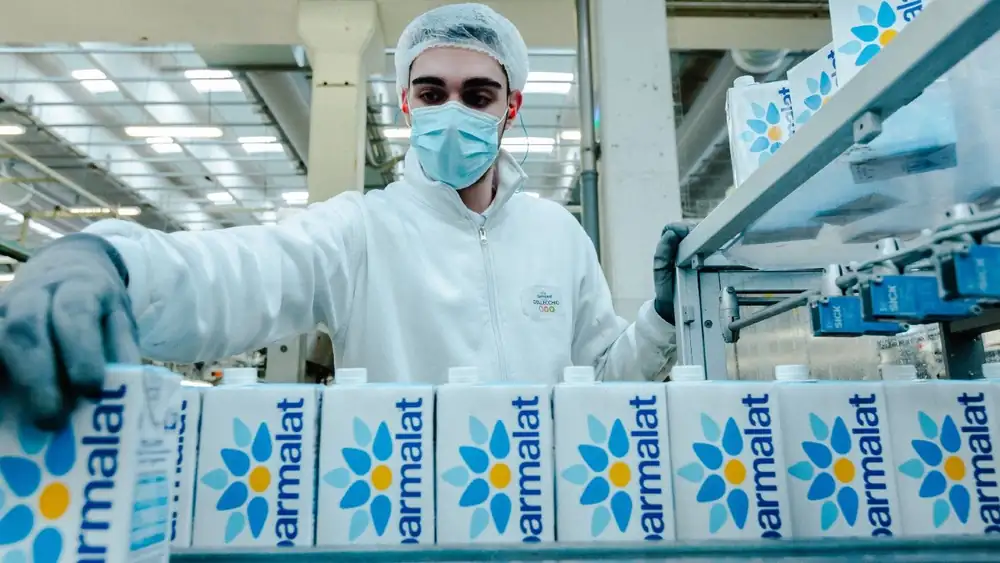
Parmalat: a history of innovation
Parma's connection to milk dates back to the 9th century, when monks reclaimed marshland and transformed it into pastureland, ideal for raising cattle. Milk and dairy production grew over time, so much so that in the 20th century the area became renowned for its specialized milk and dairy products.
In 1965, it was the first Italian company to produce long-life milk, and in 1968 it launched Zymil, a highly digestible lactose-free milk. In 1969, UHT treatment was applied to cream for the first time, resulting in the creation of Chef, an ideal ingredient for preparing everyday dishes and recipes.
Another innovation in 2001 was Puroblu, the milk that lasts longer thanks to the use of microfiltration technology, complemented by packaging in the distinctive blue bottle for better protection over time. Lactose-free yogurt was launched in 2008, and the first entirely organic line in 2017. Parmalat has also made great strides in packaging: in 1962, it was the first company to offer milk in waxed cardboard tetrahedrons, and today it uses bottles made from 50% recycled PET, the maximum allowed by Italian law.
Also with a view to contributing to consumer well-being, the latest innovation presented in 2021 is milk enriched with vitamin D. Known as the sunshine vitamin, it is the substance responsible for regulating calcium metabolism and bone health. Populations in the Western industrialized world are chronically deficient in this vitamin, and the situation has even worsened during the prolonged home confinement due to the pandemic. "The deficiency can certainly be treated with increased exposure to the sun, but also with a varied and balanced diet," explains Annamaria Colao, endocrinologist and professor of Health Education and Sustainable Development at the Federico II University of Naples. "It is found, for example, in fish, eggs, some green vegetables, and milk." The latter has the advantage of being a daily staple for many. Therefore, milk with vitamin D allows for an easy intake of the necessary amount. "Furthermore," concludes Professor Colao, "its composition makes it particularly suitable for transporting the molecule, contributing to the population's well-being with something as simple as drinking a cup of milk every morning." That's enough.