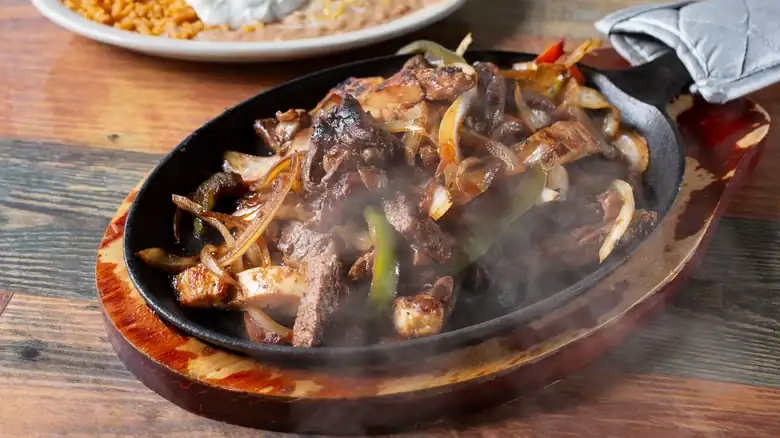
What's The Best Cut Of Steak For Fajitas?
Sure, Taco Tuesday is a weekly holiday in our books, but there's really nothing like a sizzling plate of steak fajitas ready to be spooned into a fresh tortilla. A popular Tex-Mex dish, fajitas are super easy to make at home as long as you have the right technique — and the right ingredients.
While these two cuts of meat come from different parts of the cow (flank from the abdominal muscles and skirt from the plate section), they share similar traits in that they're both tough cuts that soak up marinades well and are ideal for fast, high-heat cooking — a quintessential technique when it comes to fajitas. While they're on the tougher side, when cut thinly and against the grain, they produce tender strips of meat that work perfectly in this delicious dish.
Other tips for making great steak fajitas
Now that you know the best cut of steak to use, it's important to have some other tricks up your sleeve to make flavorful fajitas. One of the most crucial steps is to properly marinate your meat. While how long it marinates matters (a good ballpark is between three and 10 hours), it's just as vital to ensure you're using the right ingredients.
For the best result, your marinade should include oil, acid, and salt at the very minimum. Each ingredient helps your steak in its own way — oil distributes flavor by coating the meat, acid tenderizes it, and salt ensures the flavors can penetrate deeply. To hit all these notes, a good mojo marinade can work beautifully for fajitas, thanks to its classic ingredients like cumin, lime, and cilantro, which complement fajitas perfectly.
Additionally, make sure that you aren't overcooking your meat. For fajitas, aim for a cook between rare and medium-rare to achieve the best and most flavorful result. When ready, cut the meat thinly, and against the grain, for the most tender slices. When it's time to serve, you might be debating whether to use flour or corn tortillas. For fajitas, opt for flour tortillas, as they hold up better to the heavy, juicy fillings. If you want to go the extra mile, you can even make restaurant-quality flour tortillas at home.